They also highlighted the word “validation” with sticker over sticker effect, I was thinking is this targeted at me?? haha
12 « J'aime »
A Metro is a Metro. You can call it “light” based on the maximum capacity, but that doesn’t make it not a Metro.
2 « J'aime »
A four-car (two-unit) Alstom St-Laurent weighs almost as much as a nine-car Azur.
4 « J'aime »
Why can’t the REM have 9 cars ? Are stations expandable ?
Pas sans travaux majeurs.
4 « J'aime »
Intense testing happening Today Frequency approx 4 mins trains switch around at bois franc to head back west (anse à l’orme) and North Deux-montagnes) both 4 and 2 cars
20 « J'aime »
It is impossible to expand to more than 4 cars:
- Stations are designed for 4 cars.
- Traction system dimensioned for 4 motorised cars
- Evacuation structures are designed for the passengers on 4 cars
Basically there are so many things that would need to be redesigned that it absolutely does not make sense to even consider it.
What can be done is to run the trains at higher frequencies - If you double the frequency its the same as running 8-car trains. Passengers like it too because the waiting time is halved.
9 « J'aime »
Test d’aiguillage?
1 « J'aime »
To give you an example about the evacuation, NFPA 130 (the main standard for metros in North America) requires:
5.3.3.1 Platform Evacuation Time. There shall be sufficient egress capacity to evacuate the platform occupant load as defined in 5.3.2.5 from the station platform in 4 minutes or less.
5.3.2.5 Calculation of Platform Occupant Load. The platform occupant load for each platform in a station shall be the maximum peak period occupant load calculated according to the following:
- The peak period occupant load for each platform shall be based on the simultaneous evacuation of the entraining load and the train load for that platform in the peak period.
- The entraining load for each platform shall be the sum of the entraining loads for each track serving that platform.
- The entraining load for each track shall be based on the entraining load per train headway factored to account for service disruptions and system reaction time.
- Where a platform serves more than one line on one track, the calculation of entraining load shall consider the combined effect of accumulation for each of the lines served.
- The train load for each platform shall be the sum of the train loads for each track serving that platform.
- The train load for each track shall be based on the train load per train headway factored to account for service disruptions and system reaction time.
- The maximum train load at each track shall be the maximum passenger capacity for the largest capacity train operating on that track during the peak period.
Imagine an AM peak condition with a service disruption : A 4-car REM train transporting 1000 people (AW4 loading) arrives at a platform where another 300 people are waiting. If a fire alarm sounds, 1300 people now need to get to a point of safety within 4 minutes.
If now there are 8 car trains, the station now needs to handle 2600 people so the stairs/ escalators/ emergency exits need to be increased/ widened.
3 « J'aime »
The norms that you cite clearly state that the entraining load must consider both platforms. Hence, you need to add up the trains from both directions plus the platforms on both sides as well as anybody who might be in the corridor / mezzanine at the time.
As-tu vu les trains sur la branche Anse-à-l’Orme spécifiquement?
2 « J'aime »
Yes that is true.
However, you are allowed to optimize a bit with the modeling. You will not have fullly loaded trains arriving from both directions with both platforms fully occupied at the same time.
That kind of optimisation honestly should not be allowed. I don’t have a specific case in mind, but I’ve watched more than enough disaster videos and safety adjacent videos to know that not assuming full utilisation is one of those running themes in disasters. The one thing that we humans are consistently bad at is estimating demand and utilisation. The other huge issue is that we really don’t know how the sector will evolve over the next few decades as a result of this new station. The facilities might be sufficient for todays demand, but it could very well be that tomorrows demand is higher than what was planned for. That’s also a running theme in disasters.
1 « J'aime »
No because the destination were blank
Test régulier je suppose parce que j vue un train 4 voiture il n’est pas revenue pour un bout tpus les autres était des deux voitures
2 « J'aime »
Tho on Thursday i seen rem trains on the a3 at Fairview
1 « J'aime »
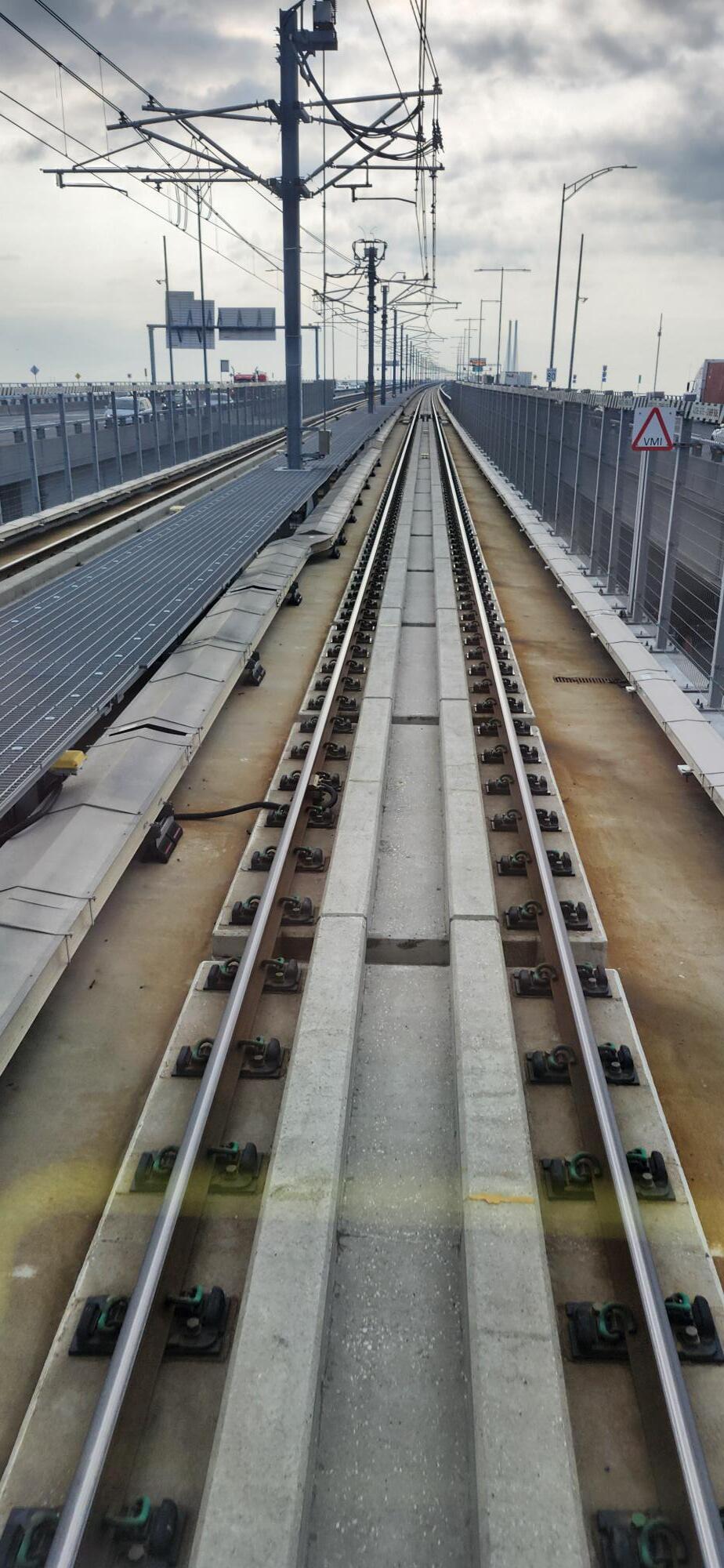
Premier voyage en REM ce matin (vers Panama / Brossard) après un trajet en autobus de plus d’une heure (Deux-Montagnes). C’était très bien. Impression marquante que les wagons sont (en effet) assez légers.
7 « J'aime »
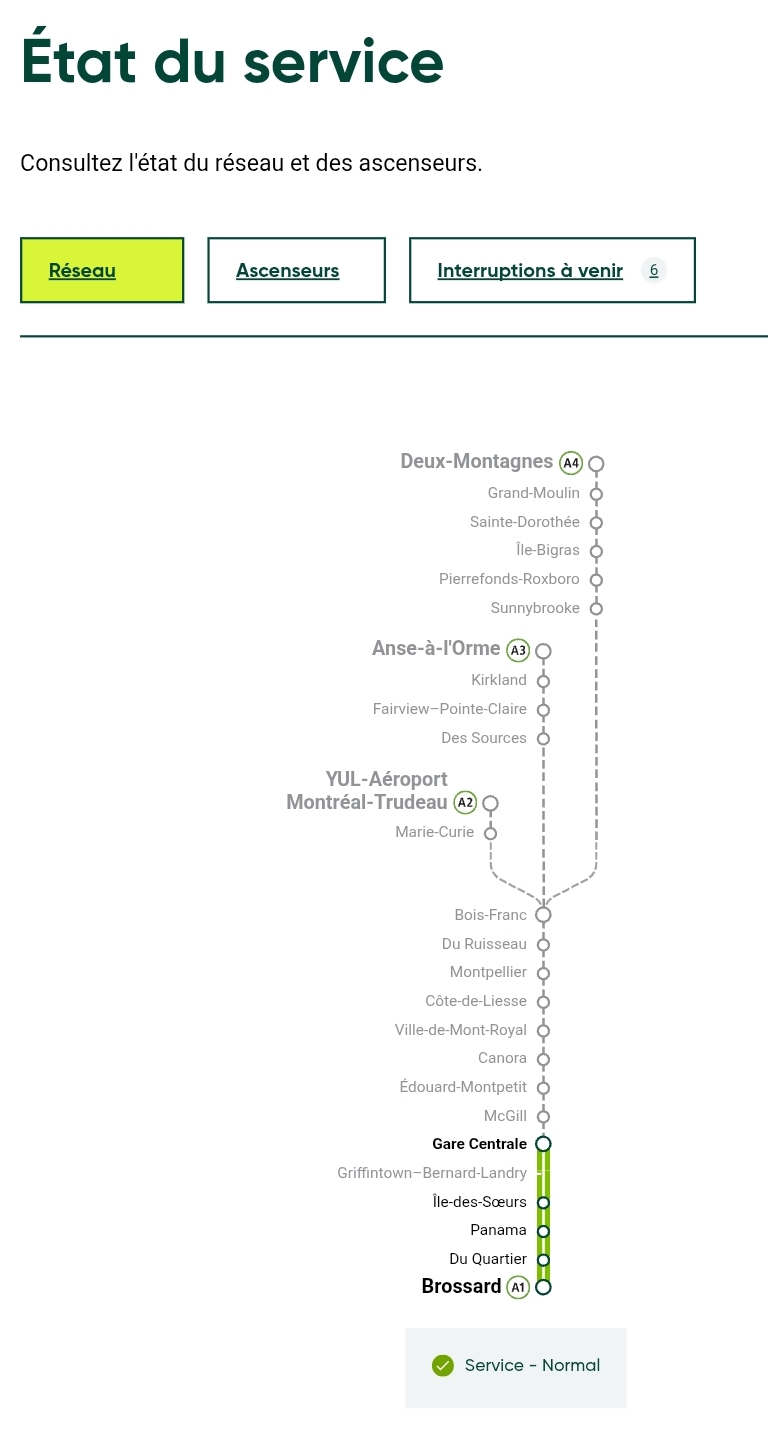
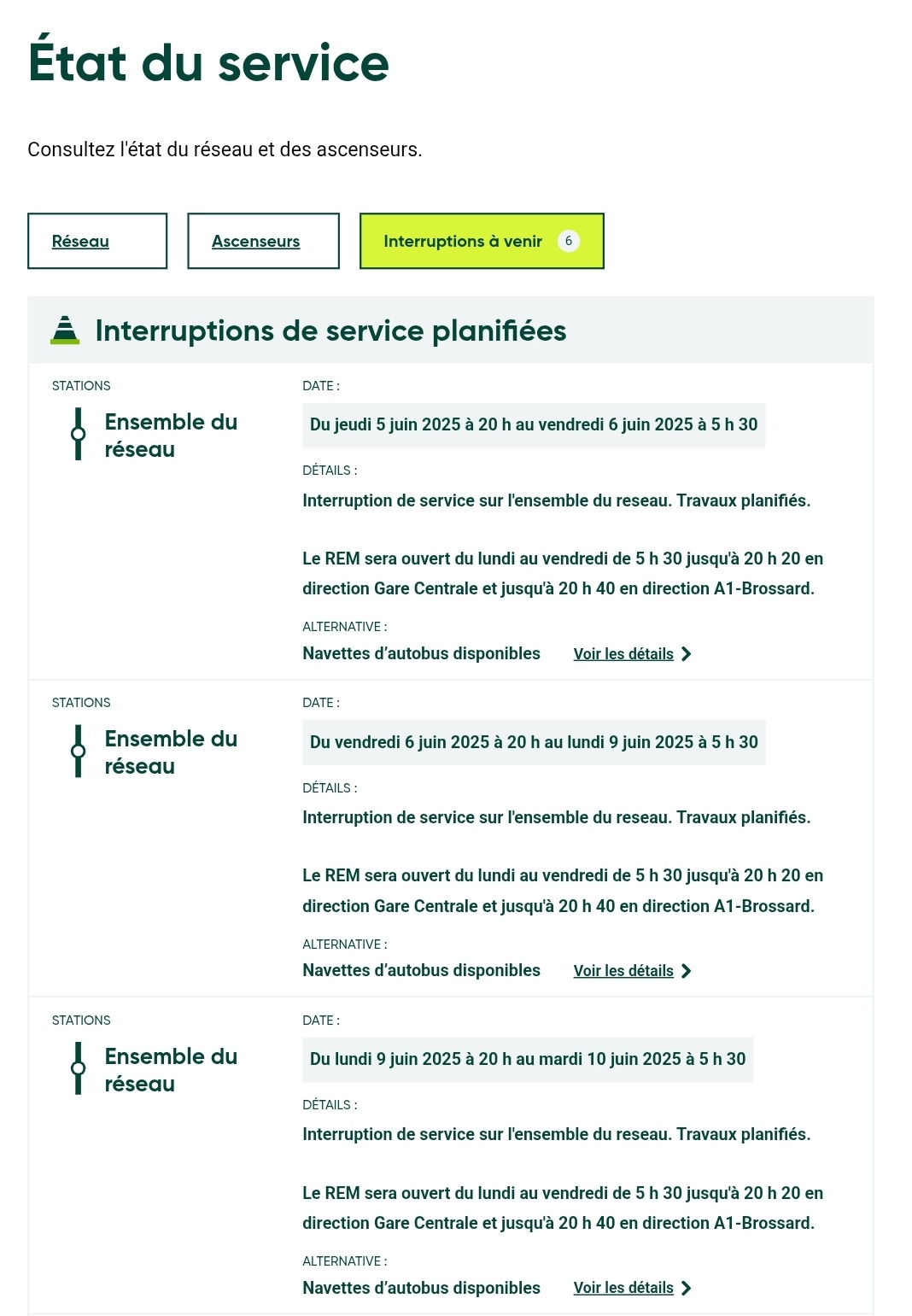
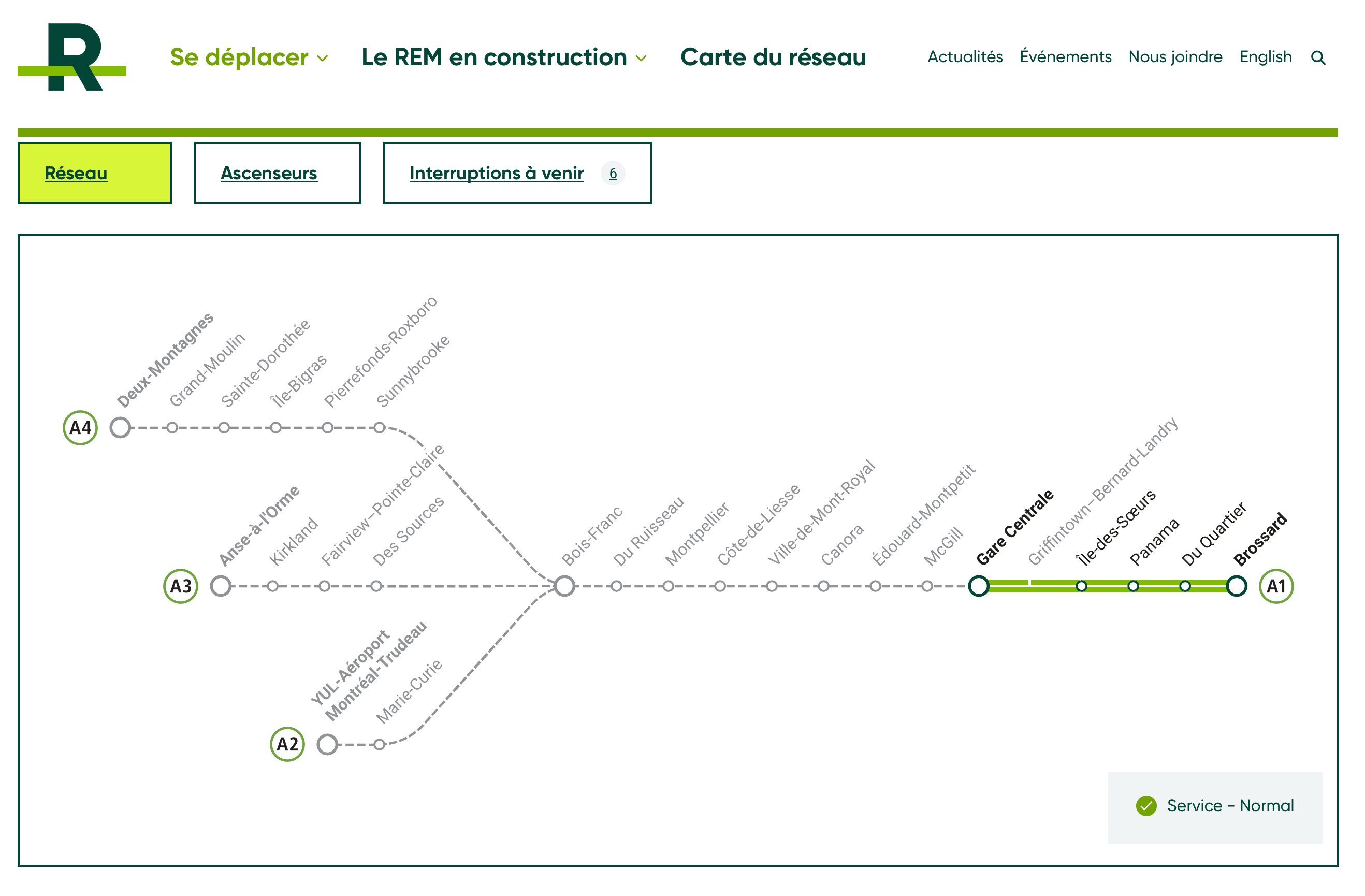
Nouvelle (?) page sur le site du REM, les interruptions sont maintenant illustrées sur la carte du réseau au complet
21 « J'aime »
Le RTL a publié les horaires pour la 722 et le T72 de cet été.
5 « J'aime »