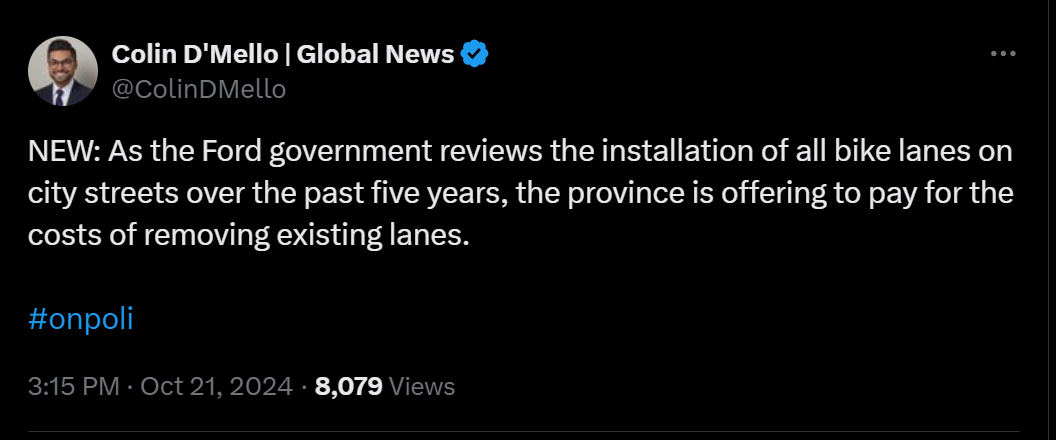
Doug Ford propose même que la province paie pour l’enlèvement des voies cyclables… 
Sur la chaîne YouTube Urban Mobility Explained : How did the Chain Bridge in Budapest become car-free?

1 « J'aime »
En 2019, une enquête de la Ville de Toronto révèle que 70 % des Torontois font du vélo, contre 54 % en 2009. Parmi les cyclistes, 44 % utilisent le vélo pour des déplacements utiles (travail, courses, famille) contre 29 % en 2009.
En parallèle, le service de vélos partagés de Toronto, Bike Share, voit aussi une hausse de son utilisation. En 2023, il comptabilise 5,7 millions de déplacements, soit 21 % de plus qu’en 2022.
La Ville de Toronto a réalisé une étude sur le tronçon de la rue Bloor Ouest (Nouvelle fenêtre), entre la rue Runnymede et la rue Resurrection. Depuis l’ouverture de cette piste cyclable, les voitures vont un peu moins vite et le nombre de cyclistes est en hausse.
4 « J'aime »
Cinq villes inspirantes pour la mobilité durable
Par Émilie Pelletier, Le Soleil
24 octobre 2024 à 00h13
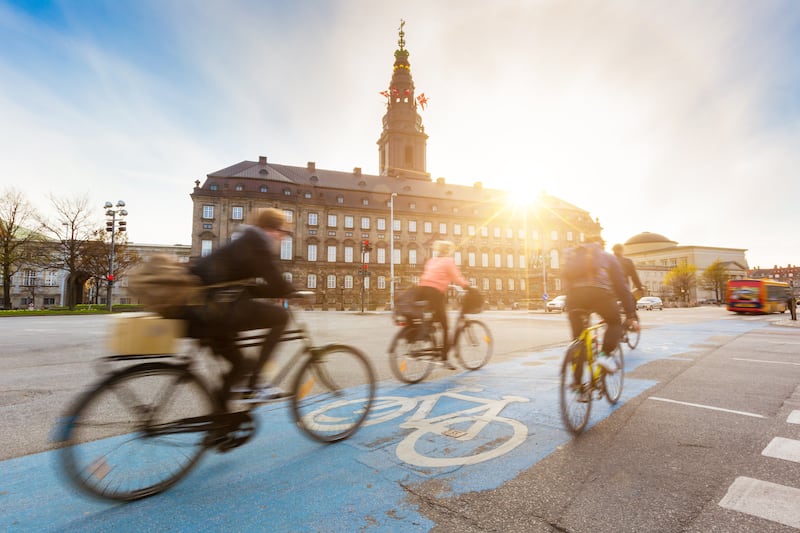
Copenhague fait figure d’exemple pour la mobilité active. (William Perugini)
De par le monde, plusieurs villes inspirent par leur caractère innovant en matière de mobilité. En voici cinq où les initiatives abondent.
Copenhague, Danemark
Voici une ville où il y a plus de vélos que d’habitants. Surnommée capitale mondiale du vélo, Copenhague compte cinq fois plus de cyclistes que d’automobilistes. Seulement à l’intersection du pont de Dronning Louise, en moyenne quelque 42 600 cyclistes circulent chaque jour, faisant de ce croisement le plus fréquenté au monde. Tout près de la moitié des Copenhaguois empruntent le réseau de 380 kilomètres de voies cyclables pour se rendre quotidiennement au travail ou à l’école. Les ponts qui traversent le port sont notamment réservés uniquement aux cyclistes et aux piétons.
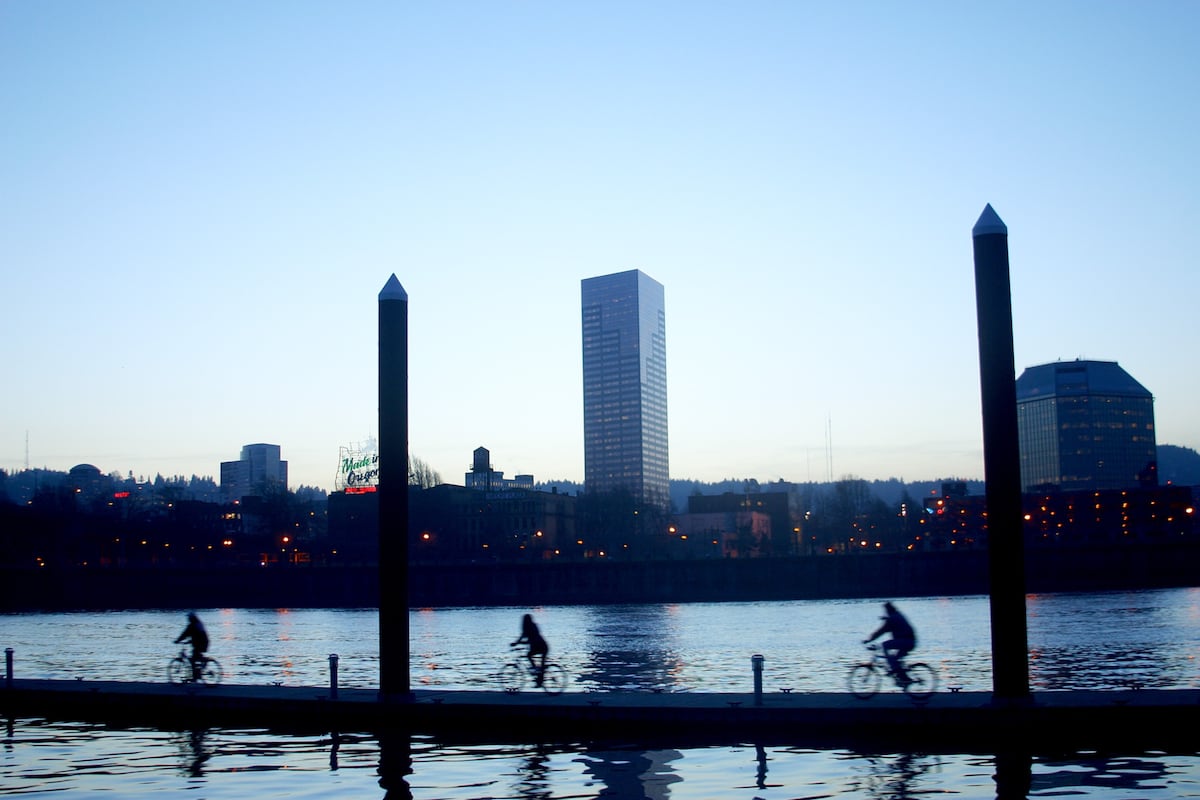
La mobilité active sur le pont de Portland, en Oregon.
Portland, Oregon
La plus grande ville de l’Oregon, État du nord-ouest des États-Unis, est reconnue comme une des villes les plus cyclables du pays. Elle se distingue pour la facilité et la sécurité de s’y déplacer à vélo. Sur les quatre principaux ponts ouverts aux vélos dans la ville, la proportion de cyclistes a plus que sextuplé depuis 1991, représentant maintenant 13 % de tous les trajets sur ces ponts, tandis que la proportion de voitures est restée sensiblement la même. En 2023, les systèmes de vélos et de trottinettes en libre-service ont franchi un nouveau record, avec plus de 1,8 million de déplacements.

Le REM de Montréal (Martin Tremblay, La Presse)
Montréal, Canada
Pas toujours besoin de regarder à l’autre bout du monde pour trouver des villes inspirantes en matière de mobilité durable. Notre métropole est sur la voie de devenir un leader en la matière. Son Réseau express métropolitain (REM) de 67 km a fait doubler la longueur de son réseau de métro, mais l’administration Plante rêve aussi de 184 km de tramway d’ici 2050. En tout, on projette l’ajout de près de 300 kilomètres d’infrastructure au réseau de transport collectif structurant en à peine 25 ans. En transports actifs, la «culture vélo» s’implante tranquillement, avec une augmentation de 42 % des utilisateurs entre 2015 et 2020. La taille du réseau cyclable supérieur est d’ailleurs appelée à doubler, avec 450 km de nouvelles pistes.
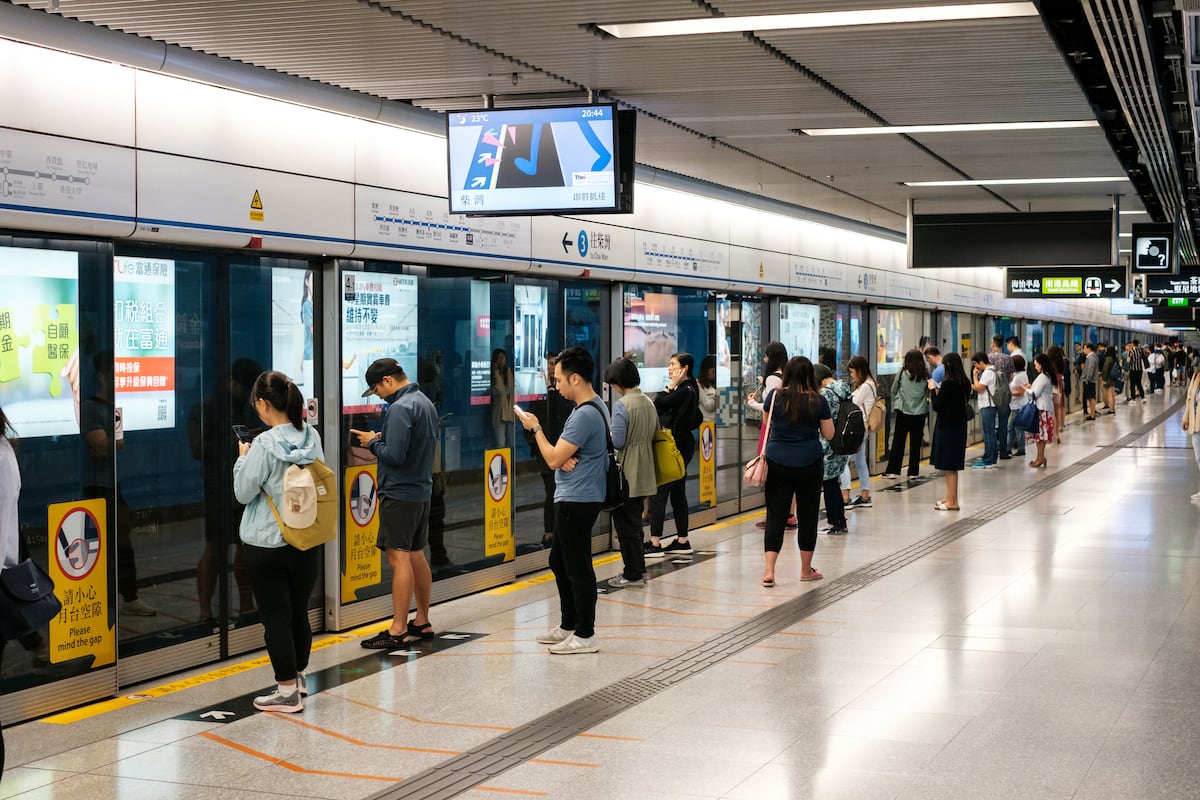
Le métro d’Hong Kong
Hong Kong, Chine
Ville connectée, Hong Kong teste depuis peu un service d’autobus électrifié à deux étages, marquant le virage d’une transition vers des transports alimentés à l’hydrogène. Son réseau de métro est par ailleurs considéré comme l’un des plus fiables au monde, avec un taux de ponctualité de 99,9 %, malgré un achalandage accru notamment en périodes de pointe. Il assure une desserte à moins de 1 km d’une station à 75 % de sa population.
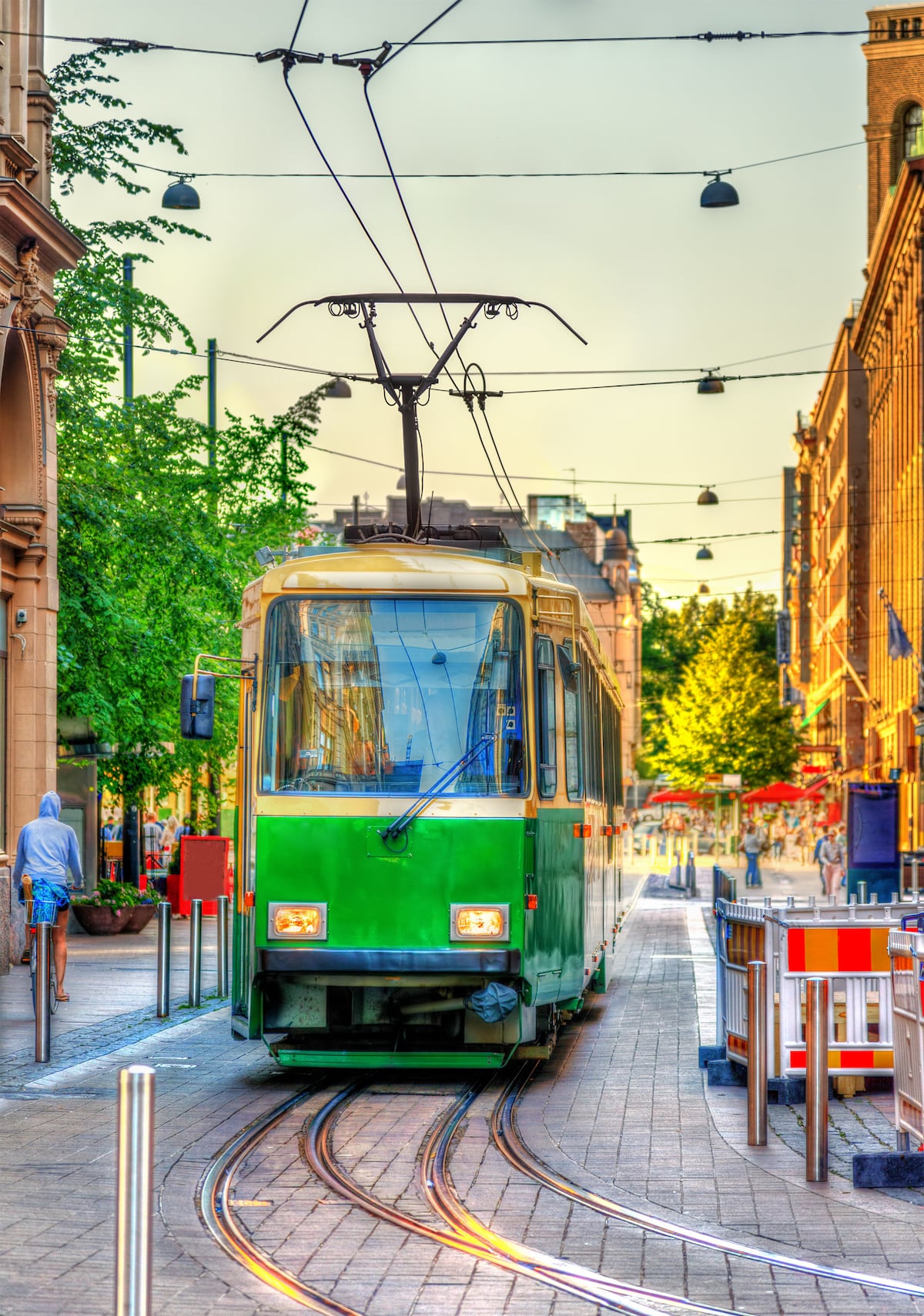
Le tramway traverse la ville d’Helsinki. (Leonid ANDRONOV)
Helsinki, Finlande
Forte de tramways, de trains légers et de pistes cyclables, Helsinki a dans sa mire d’atteindre la carboneutralité d’ici 2030. La capitale de la Finlande déteste d’ailleurs la voiture, laquelle ne s’accapare d’ailleurs que 20 % de tous les déplacements. La ville de 665 000 habitants a notamment des plans pour presque tripler la longueur de son réseau de tramway actuel de 52 kilomètres dans la région métropolitaine à l’horizon de 2040.
Ce texte fait partie du magazine Le Soleil Affaires*, aussi disponible en* version électronique intégrale.
4 « J'aime »
Texte de Taras Grescoe sur la « Guerre au vélo » de Doug Ford
At the end of the oughts, when I was working on my book Straphanger, everybody in the world of transportation and urbanism was horrified by, and obsessed with, Rob Ford, who was elected mayor of Toronto in 2010, with the promise that he would bring an end to an imagined “War on Cars.” In his campaign, he’d declared streetcars enemy number one, with bikes following a close second. “I can’t support bike lanes,” Ford was quoted as saying. “Streets are for cars, trucks, and buses.”
At the time, I wrote: “Central casting couldn’t have come up with a more perfect car-bound suburbanite: the brush-cut, rubicund Ford, on the obese side of overweight, hails from the suburb of Etobicoke and is egregiously Caucasian in a city where ‘visible minorities’ are within a couple of percentage points of becoming the majority.” (I probably wouldn’t write it exactly that way today, but never mind…) Rob Ford served for four years, four long years in which Canada’s largest city built nothing in the way of transit; he died, after generating many headlines about his drinking and drug use, in 2016. The expression “The War on Cars” became a rallying cry for motorists throughout North America, and also inspired the ironically-titled, and very listenable, podcast of the same name. (Hello Aaron, Doug, and Sarah, from this long-time listener to The War on Cars podcast in Montréal!) To my horror, Rob’s older brother Doug then went on to be elected premier of Ontario, a position he’s held since 2018.
2 « J'aime »
NEW: As first reported by Global News, the Ford government has begun the process of removing bike lanes from three Toronto streets: Yonge st., Bloor St., University Ave.
The regulations that would remove those bike lanes have been posted
Colin D’Mello / Global
What did they even ask the permission of the city?
I just updated my post with the legislation. They basically voted this in the legislature where Ford has a majority.
They voted it? Goddam they went so fast
It’s the second reading which might mean there’s a few steps left but a question of days here.
I really just hope that the thing reveal to be impossible to apply because of the staff needed so at some point they just scrap the law
2 « J'aime »

Ford government says it needs to “move quick” to remove bike lanes
All sections of bike lanes along Bloor Street, Yonge Street and University Avenue are “up for removal” by the province. Mayor Olivia Chow calls the move arbitrary and a waste of taxpayer dollars. Mark McAllister reports.
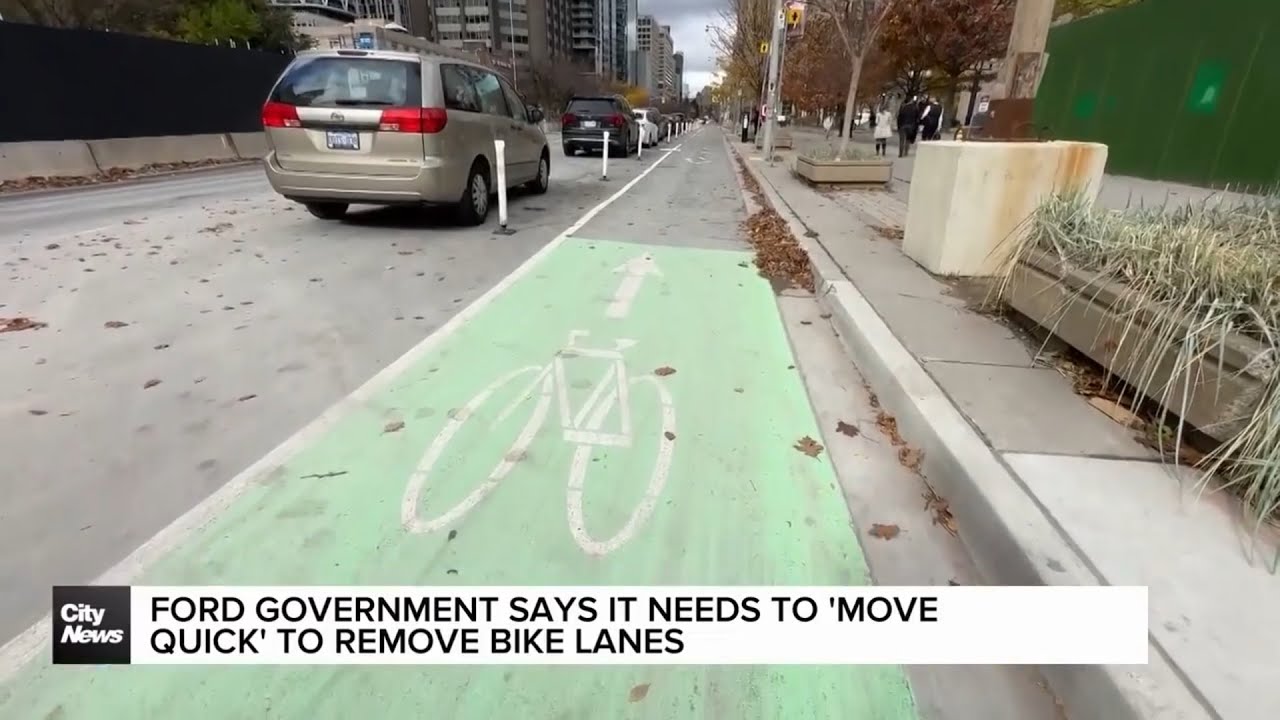
Mayor Olivia Chow says the Ford government’s rush to push through with its arbitrary decision to remove up to three bike lanes in downtown Toronto is not a good use of taxpayers’ money.
The mayor reacting to the news Friday that the provincial government is moving ahead with plans to remove bike lanes along University Avenue, Bloor and Young streets ahead of a November 20 deadline for public comments on Bill 212. That’s the legislation that would require municipalities to ask for permission to install bike lanes when they would remove a lane of vehicle traffic.
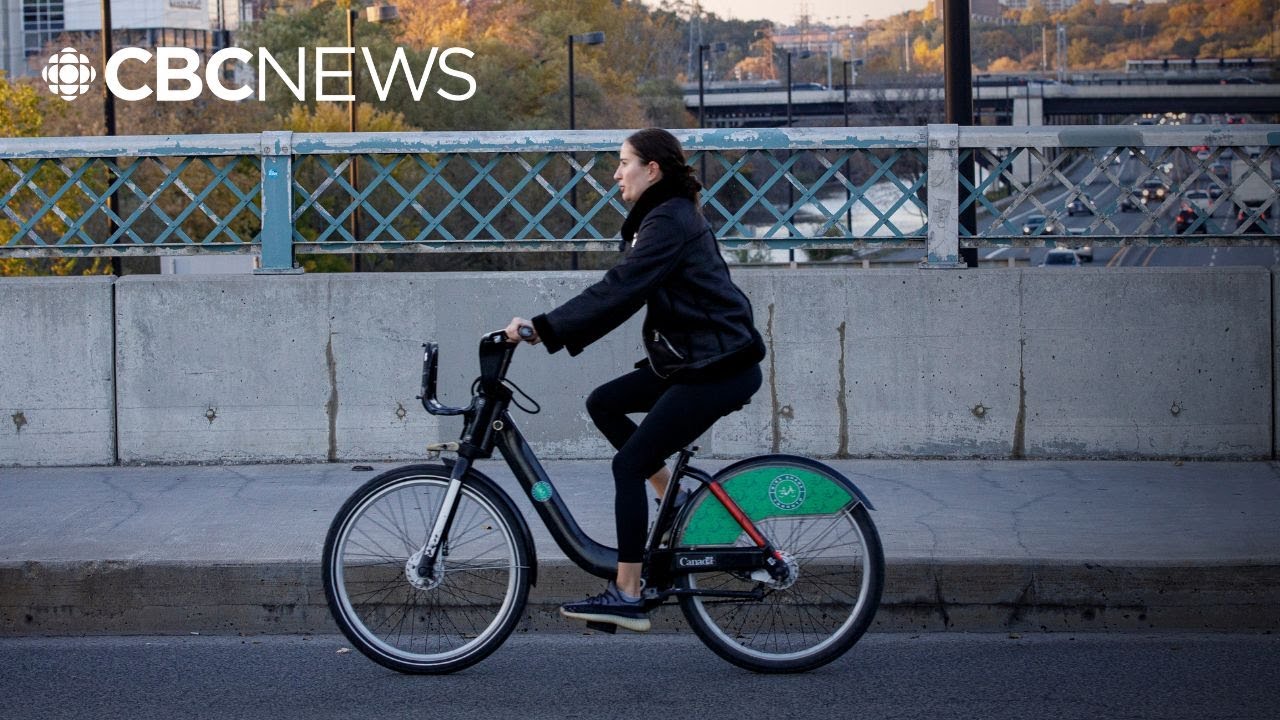
Ontario government plans to remove downtown Toronto bike lanes
Ontario’s transportation minister says bike lanes on three major Toronto streets could be removed entirely under a proposed regulation. The city’s mayor says decisions on bike lanes were made following years of study and consultation. CBC’s Lorenda Reddekopp has more.
1 « J'aime »
Oh the Urbanity! a publié une vidéo sur le projet de loi ontarien
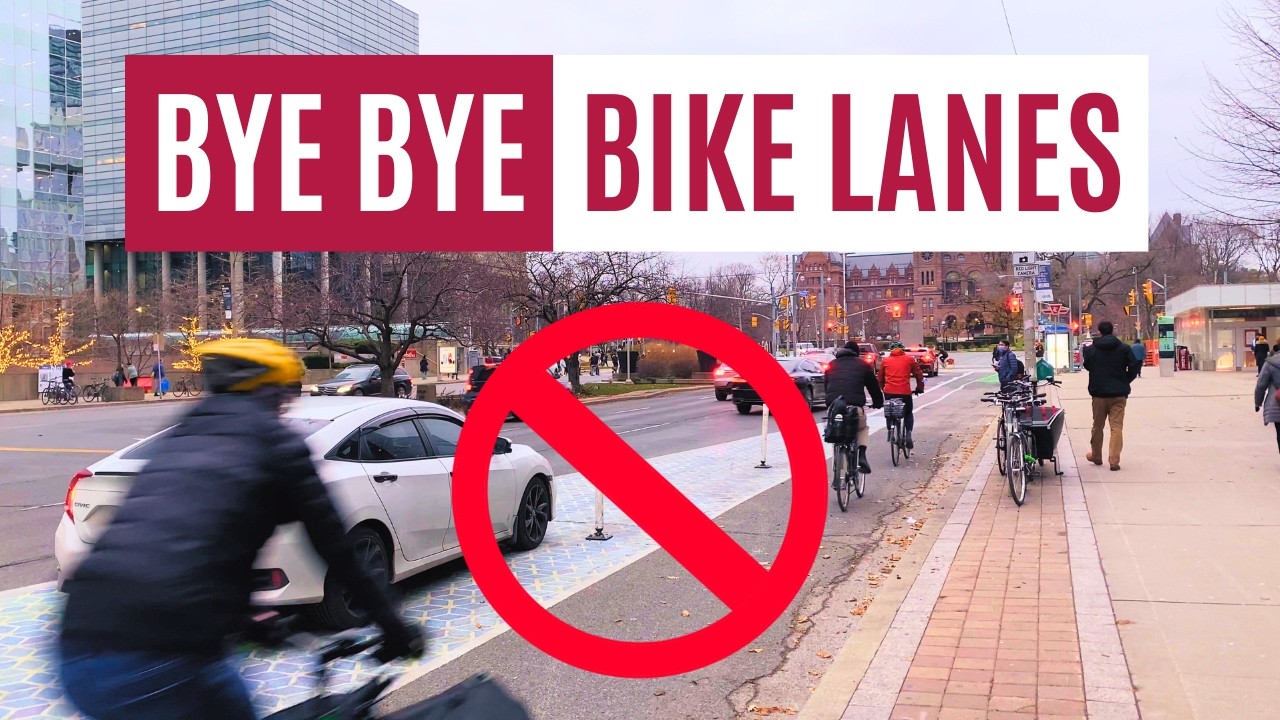
I Can’t Believe I Have to Make This Video
The premier of Canada’s most populous province has doubled down on his anti-cycling rhetoric, promising to remove existing bike lanes on primary roads. He singled out three important routes that had been major wins for cycling in Toronto: Bloor Street, Yonge Street, and University Avenue.
6 « J'aime »
Cyclists using a mobile phone while riding in Japan could face up to six months jail under strict new rules introduced Friday.
Those who breach the revised road traffic law can be punished with a maximum sentence of six months in prison, or a fine of 100,000 yen ($655; £508).
Besides cracking down on phone usage, the new rules also target cyclists riding under the influence of alcohol, with a penalty of up to three years in prison or a fine of 500,000 yen ($3,278; £2,541).
The total number of traffic accidents across Japan may be declining, but bicycle accidents are on the rise. More than 72,000 bicycle accidents were recorded in Japan in 2023, accounting for over 20% of all traffic accidents in the country, according to local media.
Last year, authorities made it compulsory for cyclists to wear helmets. In May, Japan’s parliament passed a bill allowing police to fine cyclists for traffic violations.
Unlike in many other countries, cycling on pavements is legal in Japan, and is a common practice.
1 « J'aime »
I’m glad I got to do this before this law was passed with my classmates in Kyoto. I don’t think such a harsh law against people that mainly would be harming themselves makes a lot of sense.
Some photos of my bike ride there! (I guess the first one of me on the bike would be illegal now)
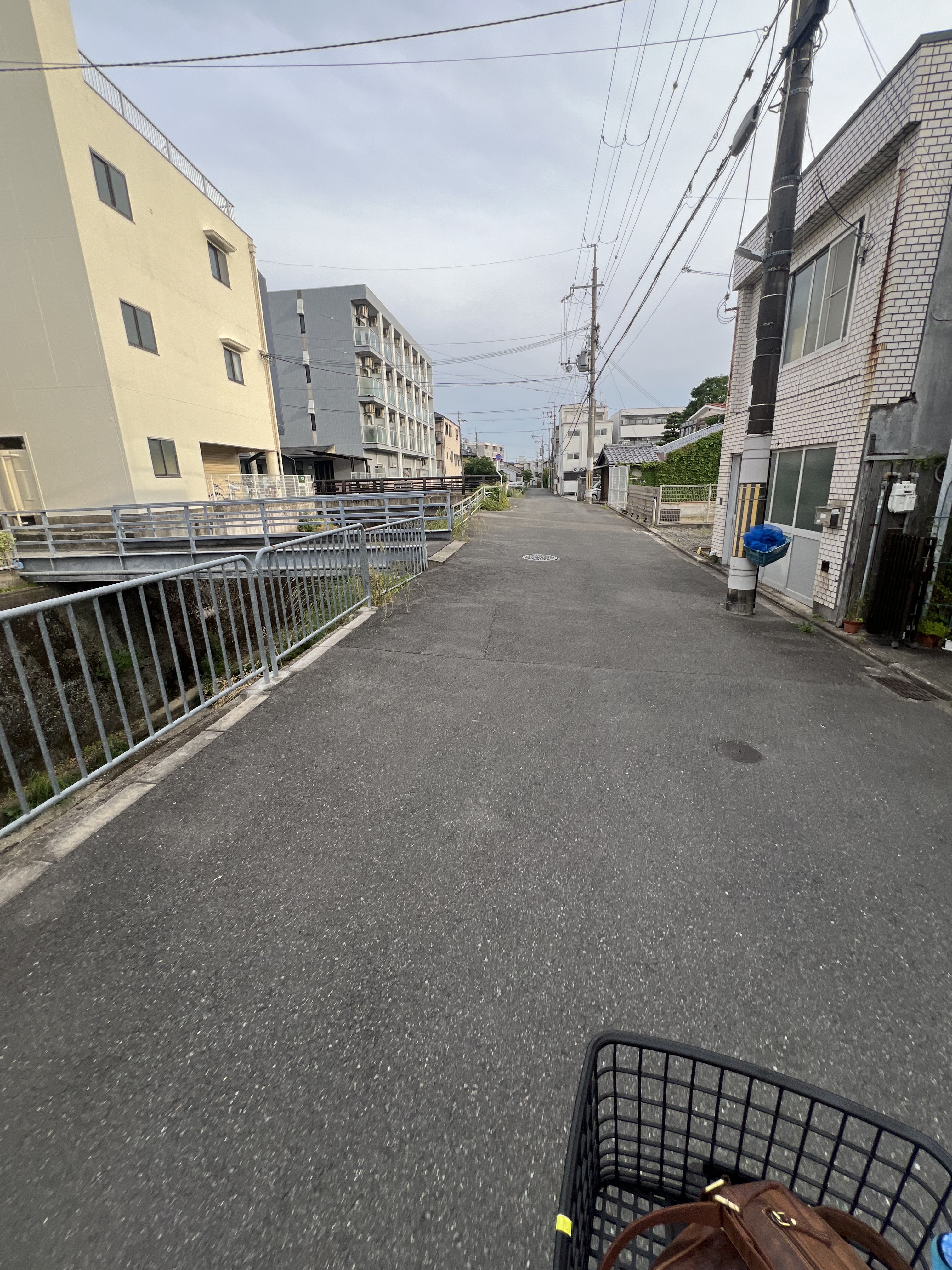
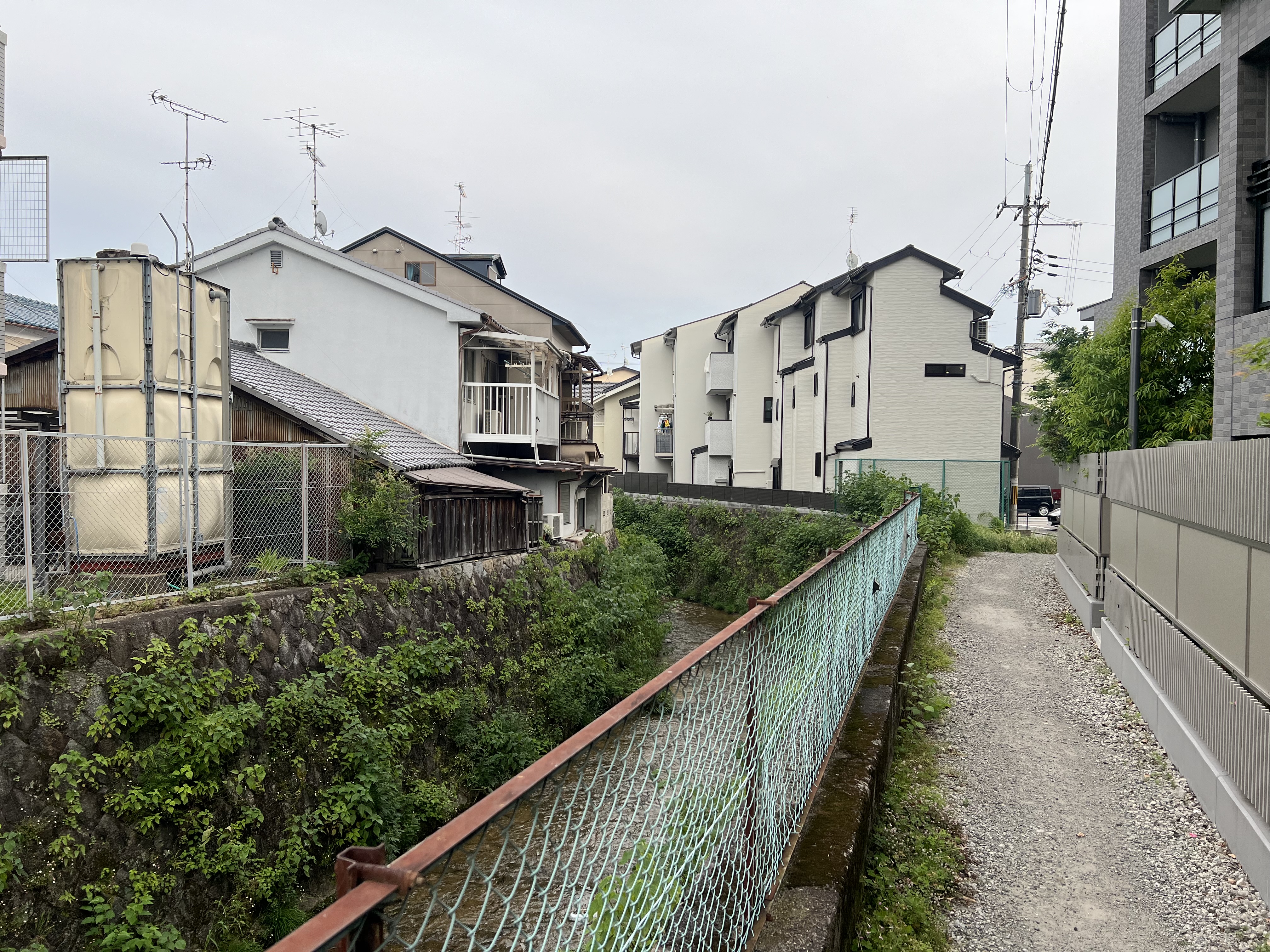
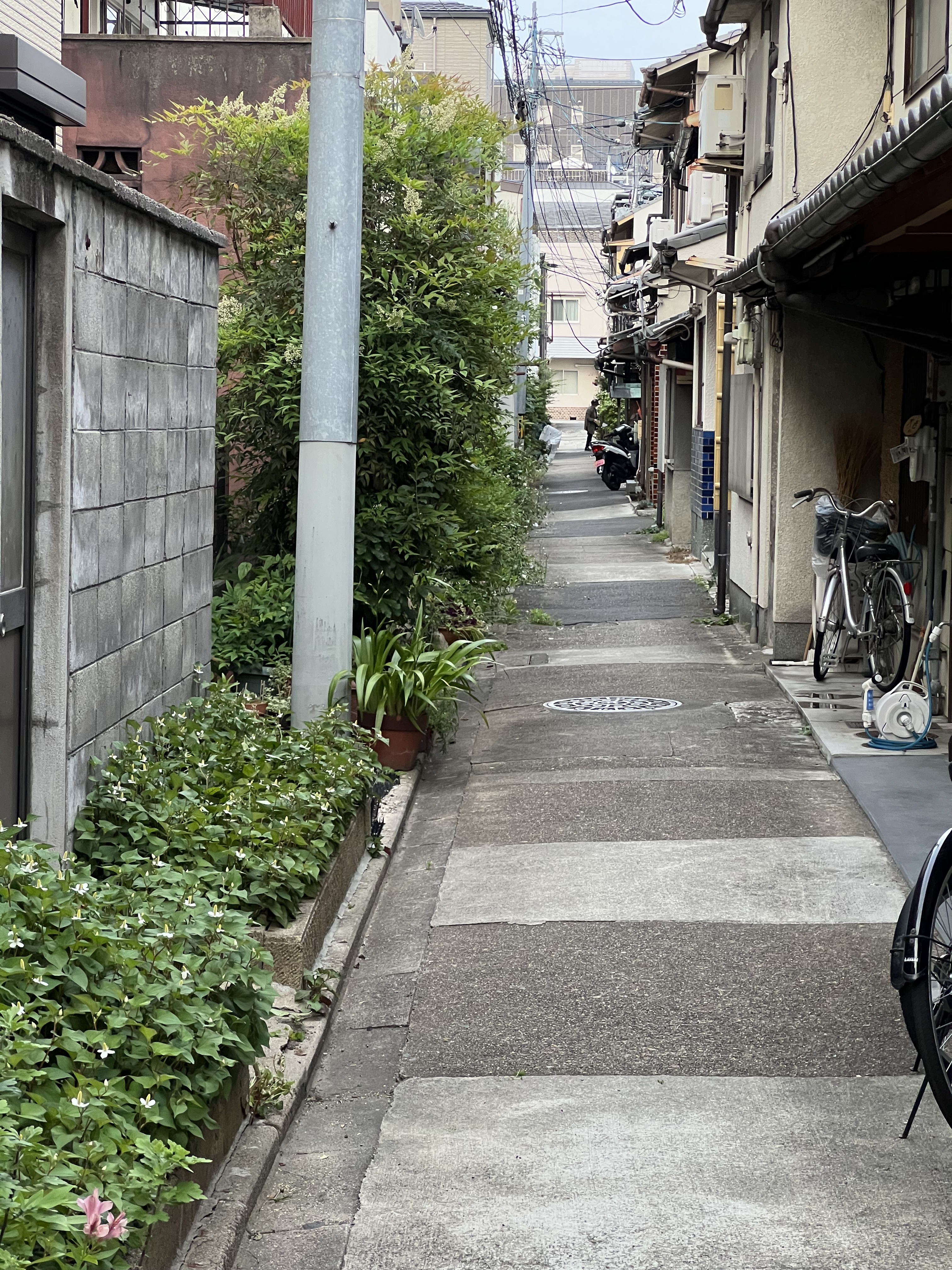
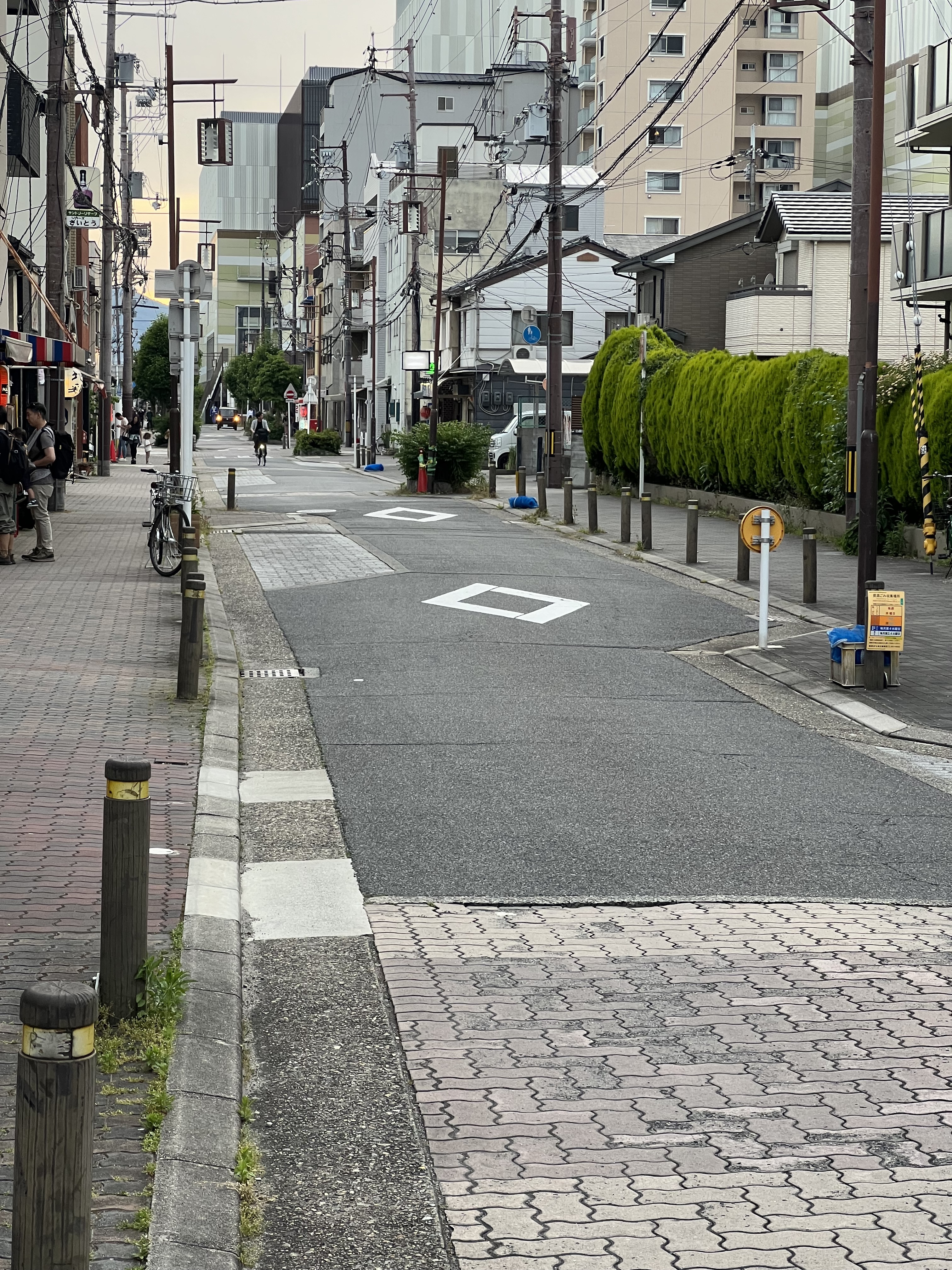
3 « J'aime »
It’s insane, I’ve been to Japan maybe 15 times over the past 13 years and I don’t think I’ve ever seen any urban cyclist wear a helmet.
Me neither. I’ve seen maybe one helmet. It just doesn’t make sense, especially that the helmet would basically have to be stored somewhere on a crowded train, then in the office and back again. For the salarymen (and women) there’s a reason helmets aren’t popular. Also they fuck up your hair, which many people keep tidy for the office…
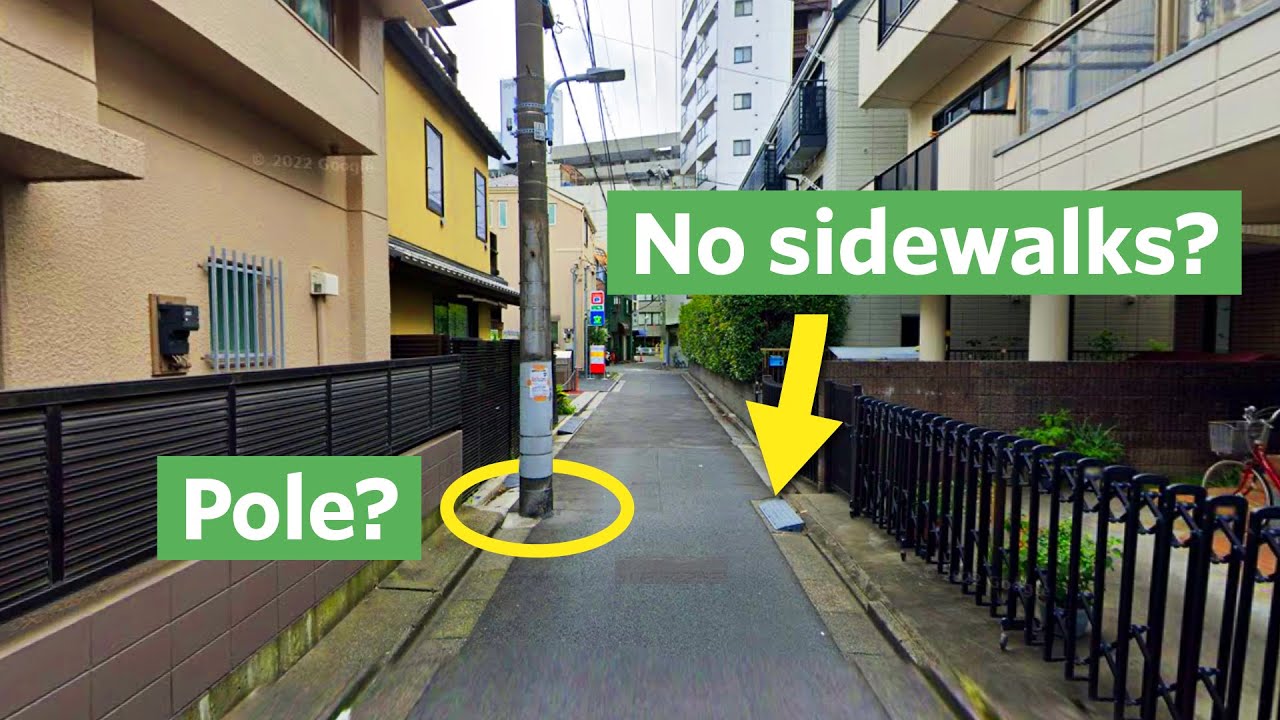
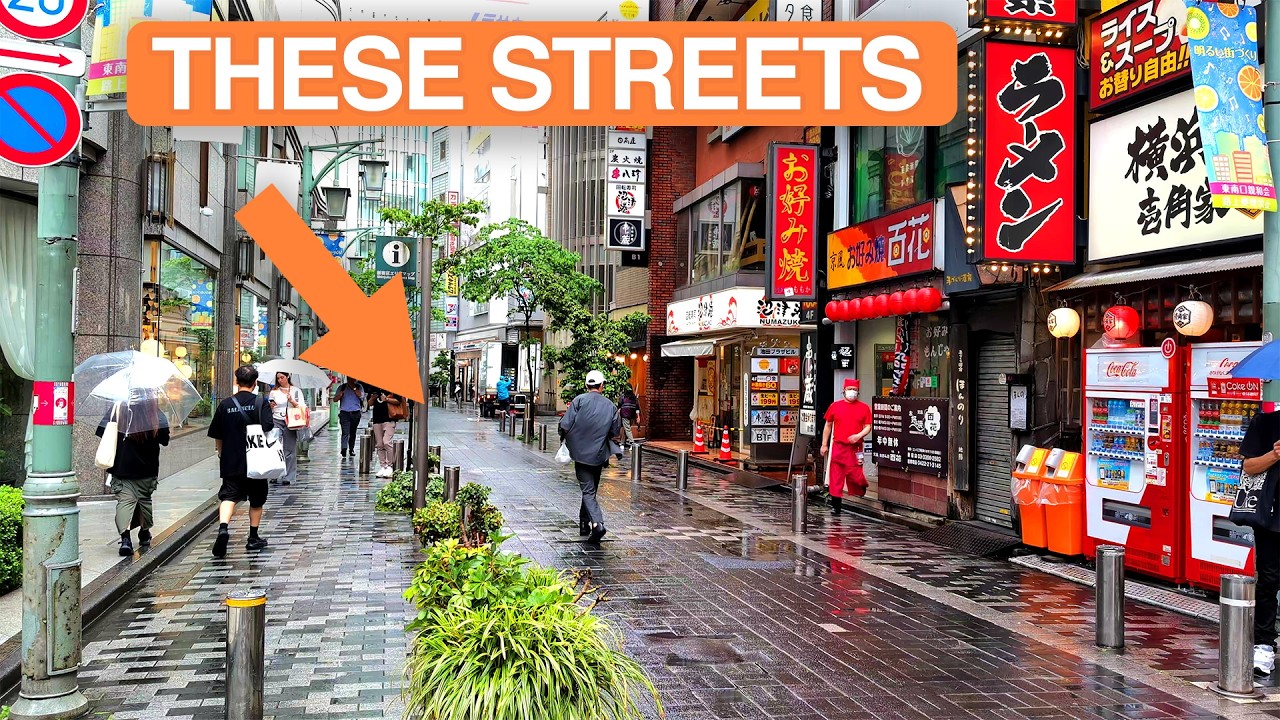
Plus the vast majority of cyclists in Japan are riding slowly along very narrow streets with almost no vehicular traffic. It’s really something that people do between the train station and home, they aren’t being road warriors on the major streets.
Exactly! Both City Beautiful and Not Just Bikes made videos recently about the small streets in Japan. Why would you need to wear a helmet there?
1 « J'aime »
Injonction? Négociations? Nous avons demandé à plusieurs observateurs comment Toronto pouvait tenter de bloquer le projet du gouvernement de Doug Ford de démolir trois pistes cyclables dans la Ville Reine. La province juge qu’elles sont sous-utilisées et qu’elles causent de la congestion à cause de l’élimination de voies pour les autos.
Le conseil municipal de Toronto doit débattre du projet de loi provincial 212 lors de sa réunion de mercredi à vendredi.
La mairesse Olivia Chow a demandé aux fonctionnaires municipaux de suggérer des « options » aux conseillers municipaux, pour protéger les pistes cyclables des artères Yonge, University et Bloor.
2 « J'aime »