Green Heaven in Tokyo Alive with Biodiversity
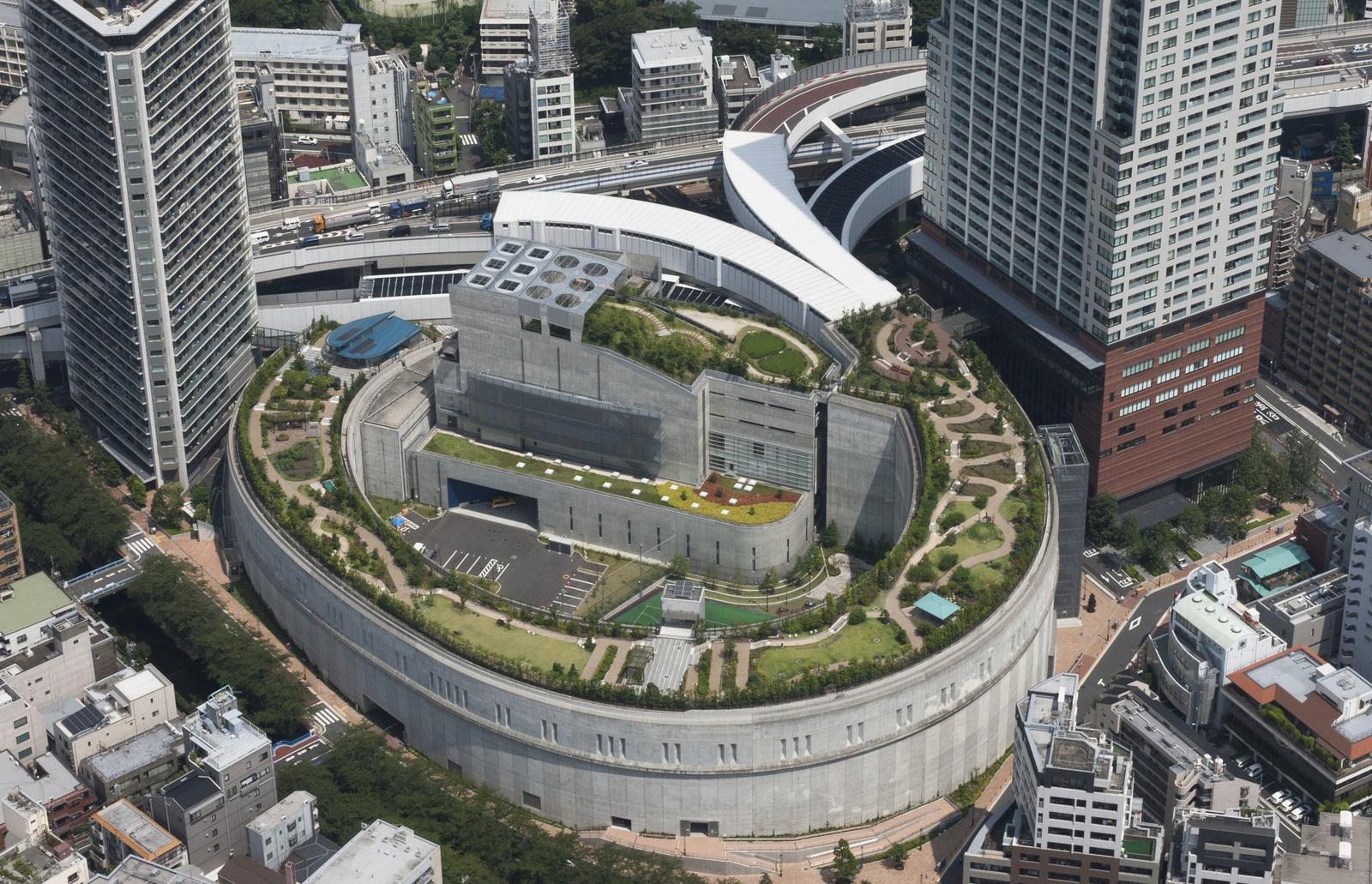
Ohashi Junction, a valuable green space. Photo: courtesy of Metropolitan Expressway Co., Ltd.
日本語で読む
In central Tokyo, an expressway junction is home to green spaces where nature thrives. Known as Ohashi Sato no Mori, it is managed by the Metropolitan Expressway Co., Ltd. (Shutoko). The rooftop of a tunnel ventilation facility has been utilized to restore former grasslands and woodlands, thereby creating a habitat for a diverse range of species.
At an Expressway Junction, Three Green Spaces Flourish
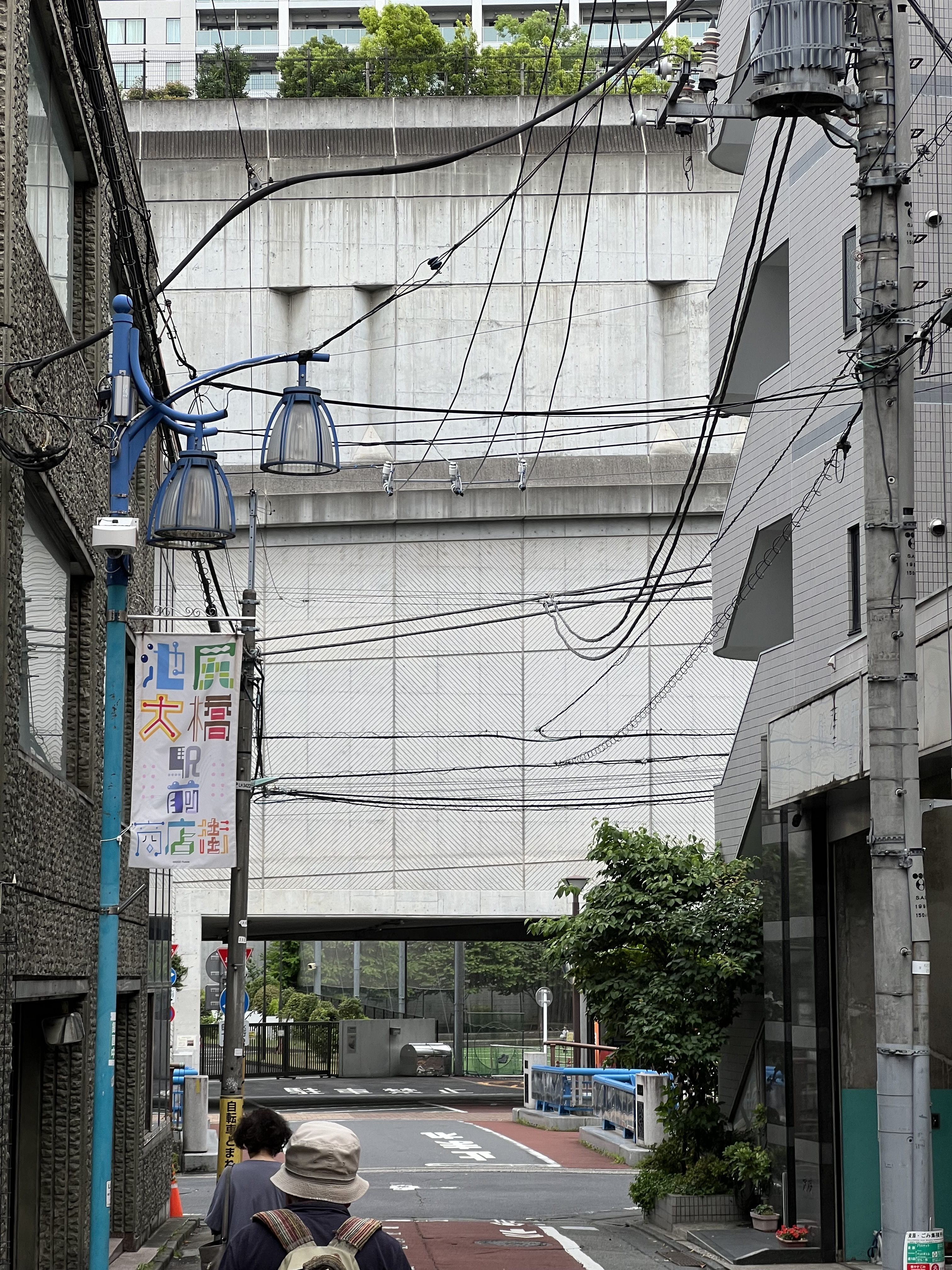
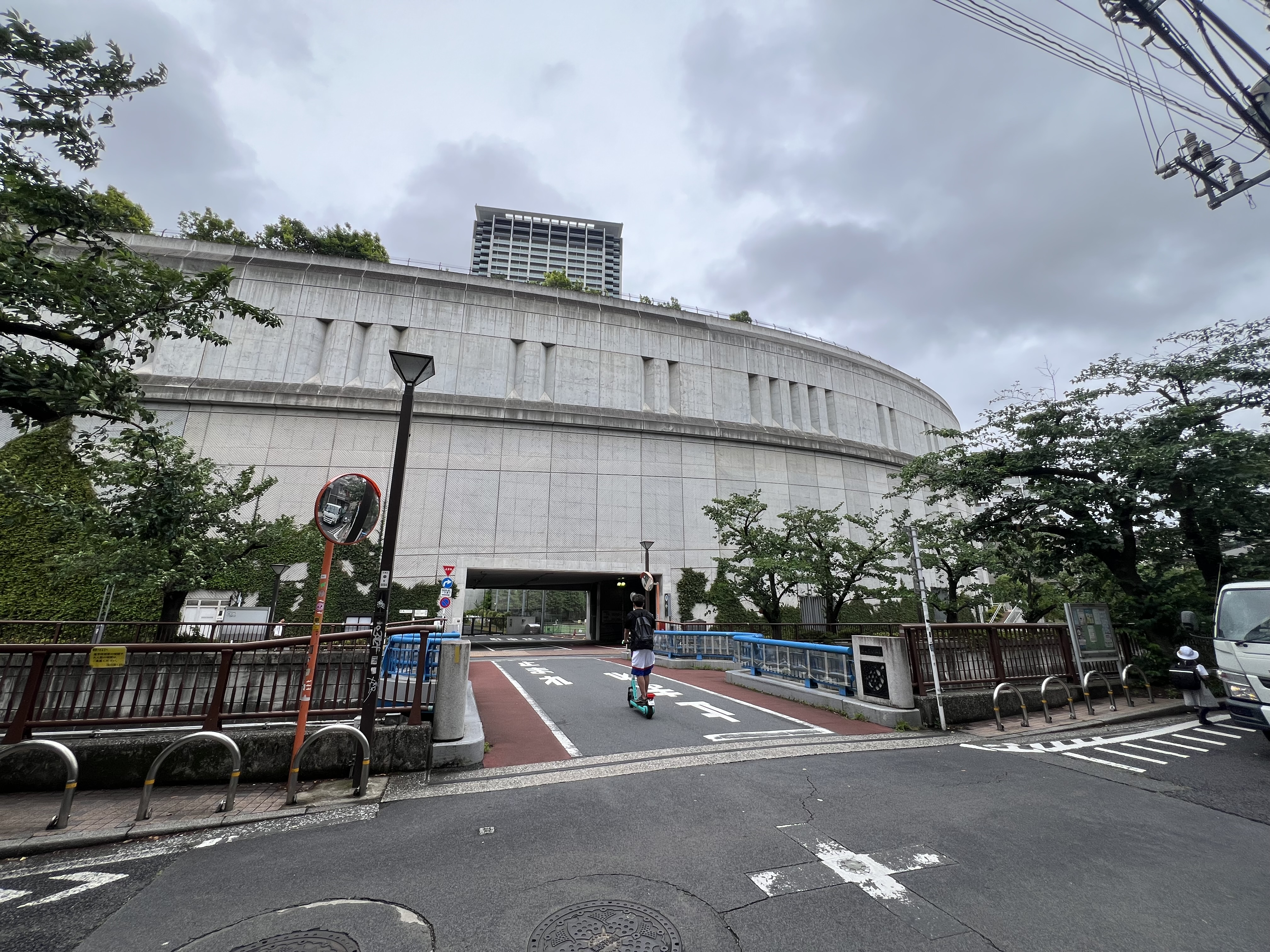
At Ohashi Junction, the Shuto Expressway Route 3 Shibuya Line links to the Central Circular Route through the Yamate Tunnel, forming a key hub in Tokyo’s road network. The site, known as the Ohashi Green Junction, enhances the city’s greenery and helps address local environmental issues.
To find out why this space was created, we spoke with Fushiya Kazuaki of Shutoko.
“When planning the construction of Ohashi Junction, we engaged in dialogue with local residents, Meguro City, the Tokyo Metropolitan Government, and other stakeholders. At the time, the main concerns we shared were protecting the environment and preventing the community from being divided. With these in mind, we created three types of green spaces at Ohashi Junction.”
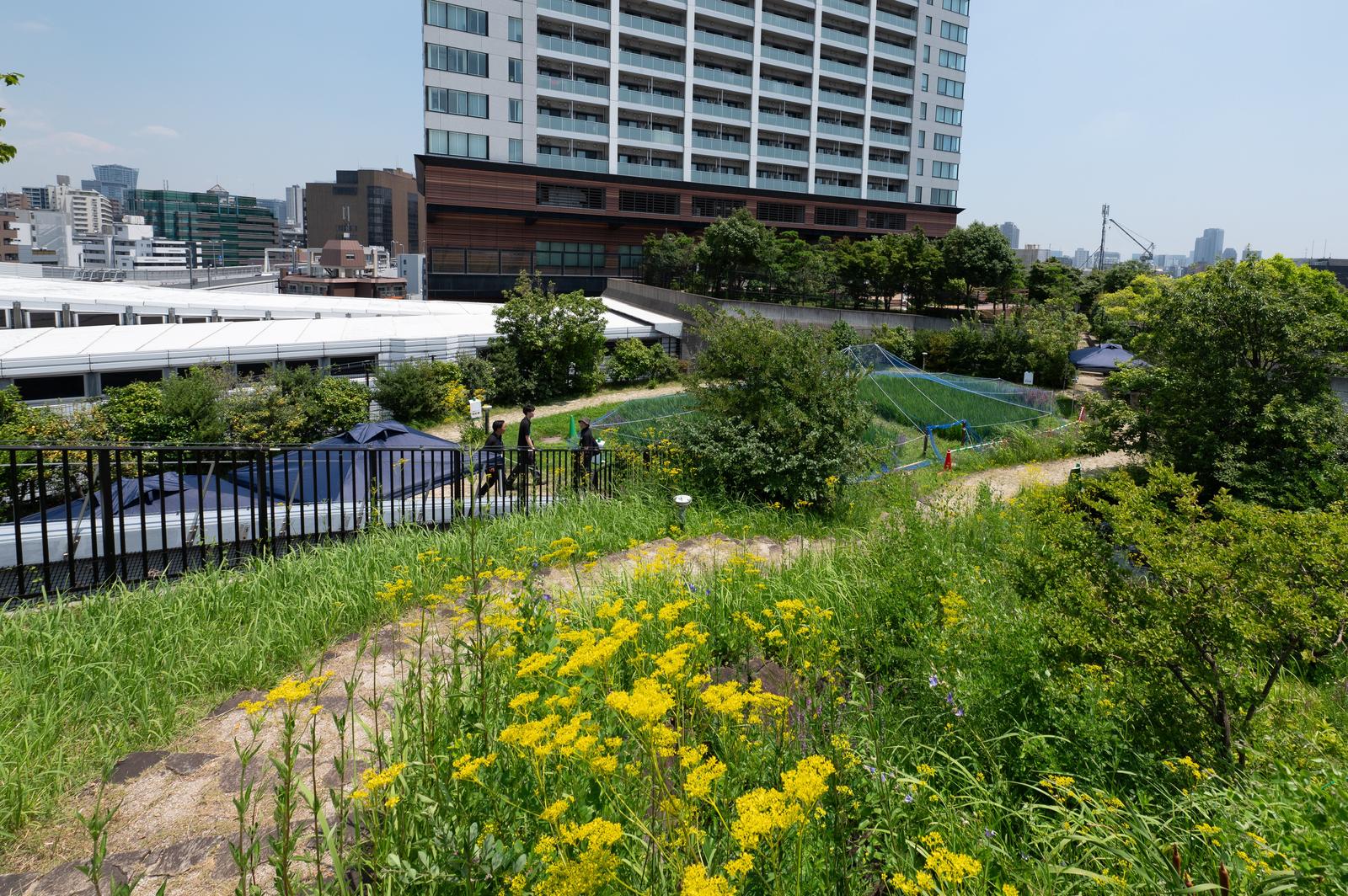
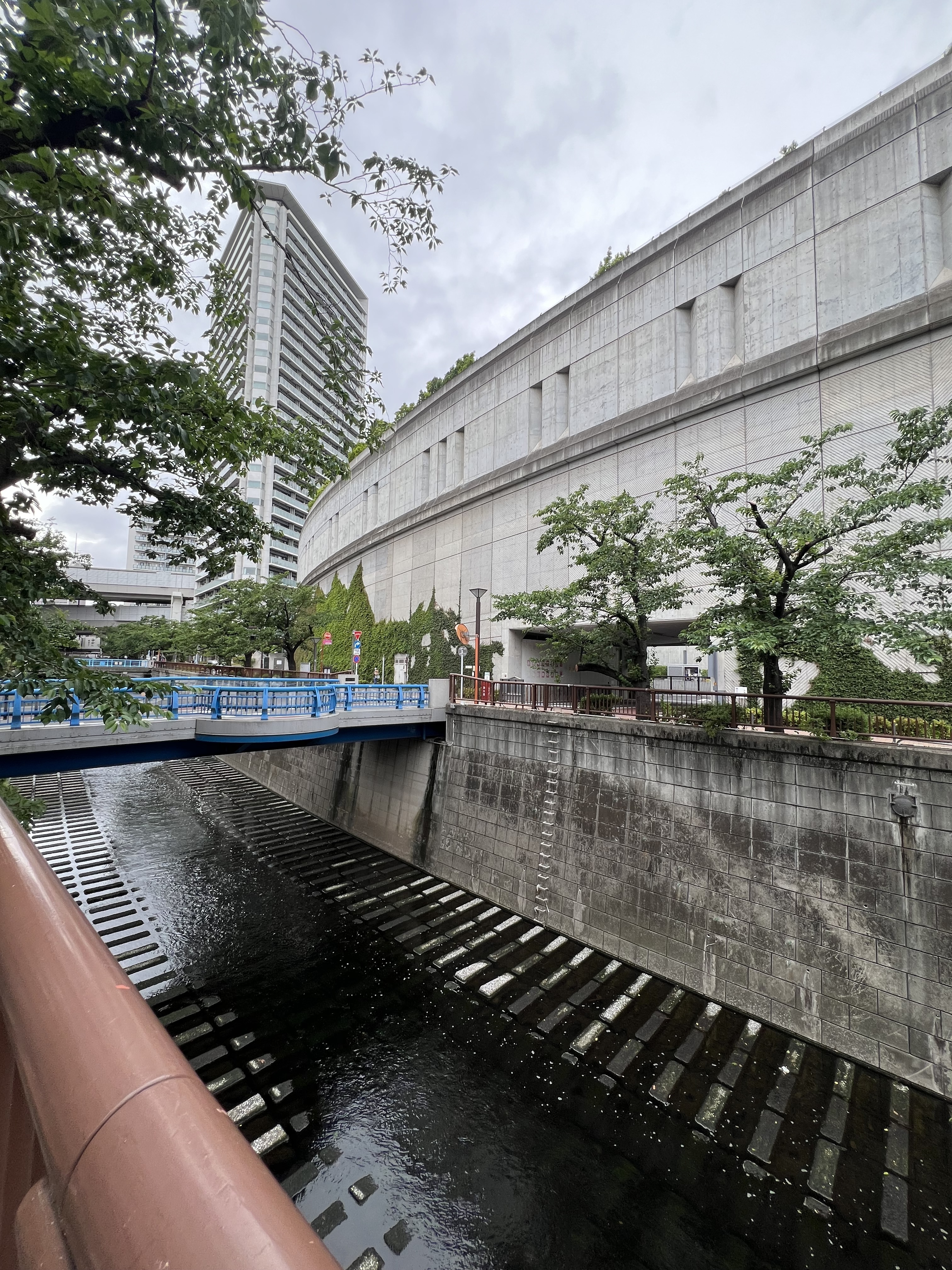
Ohashi Sato no Mori located right beside high-rise apartments and the expressway.
One of these is the Natural Regeneration Green Space at Ohashi Sato no Mori, designed to restore the rich natural environment that once existed in the area. It is located on the rooftop of the ventilation facility at the center of Ohashi Junction.
The other two are the Park Greenery of Meguro Sky Garden, a rooftop park that circles the top of Ohashi Junction, and Greens in the City, where climbing plants cover the walls. Meguro Sky Garden also serves as a daily retreat for local residents.
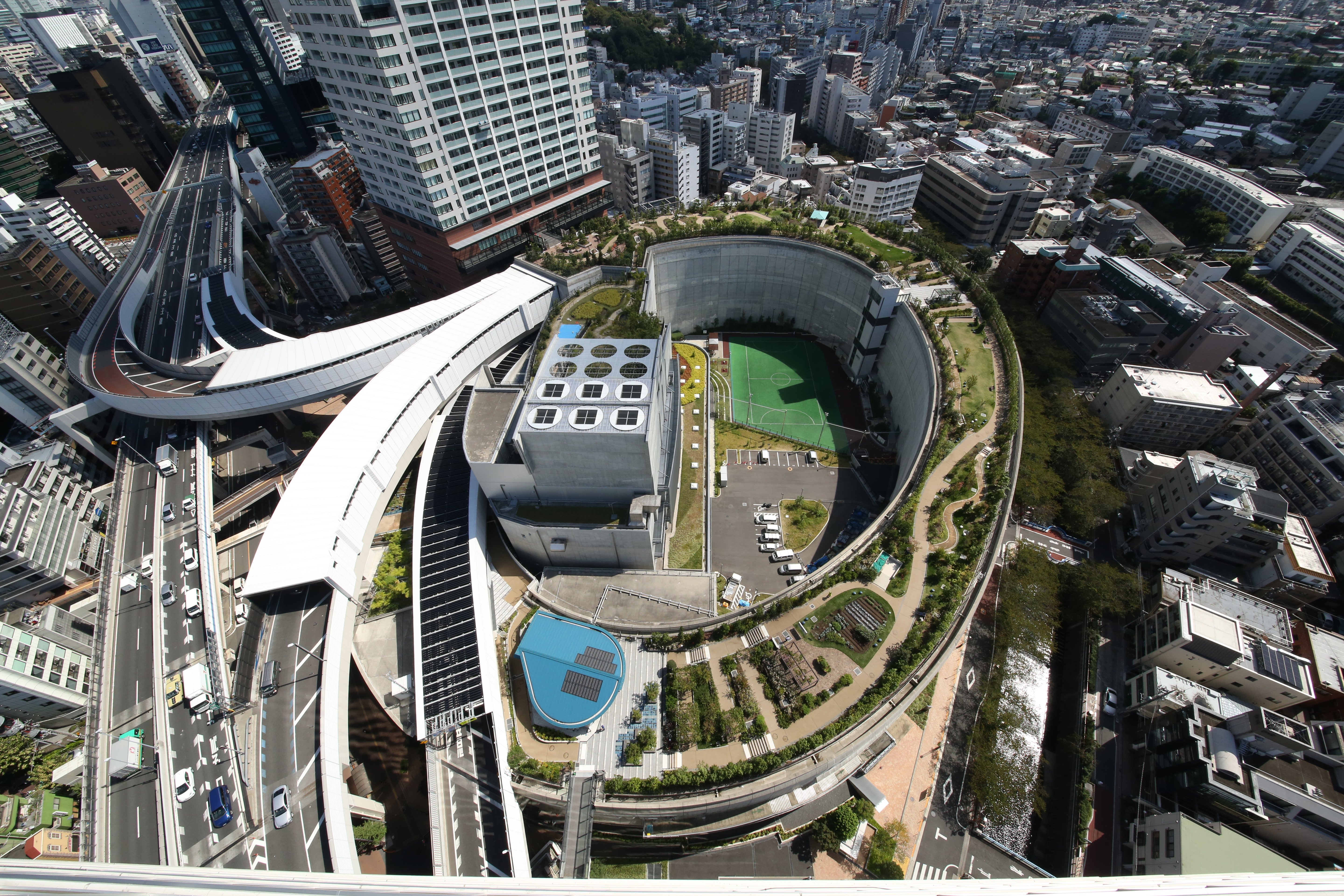
Aerial view of Ohashi Junction with Ohashi Sato no Mori and Meguro Sky Garden on the rooftop. Photo: courtesy of Metropolitan Expressway Co., Ltd.
1/14
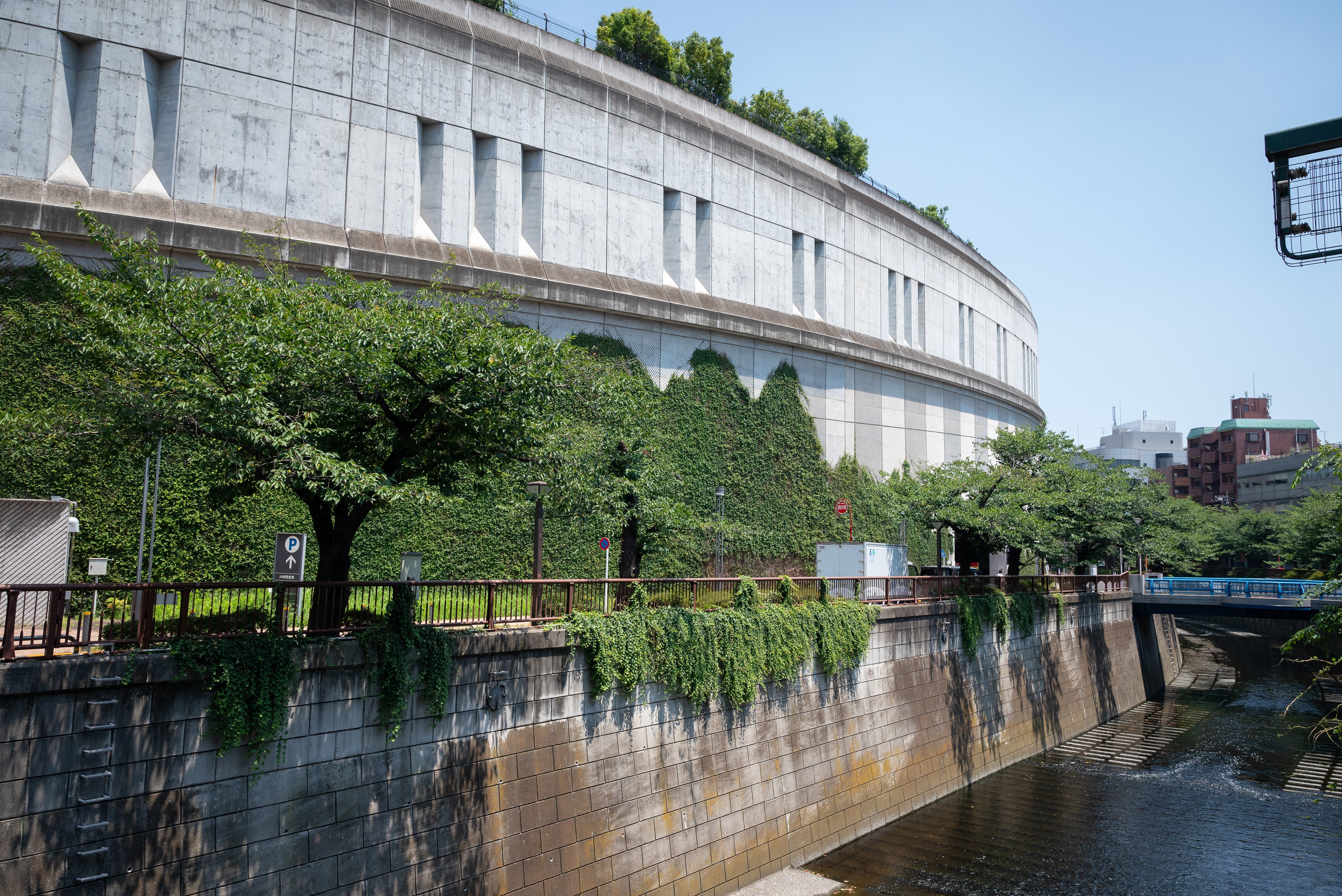
The wall of Ohashi Junction covered with creeping figs, blending with the Meguro River landscape.
2/14

Fuseya Kazuaki (left) and Kato Chihiro (right) of Shutoko.
3/14
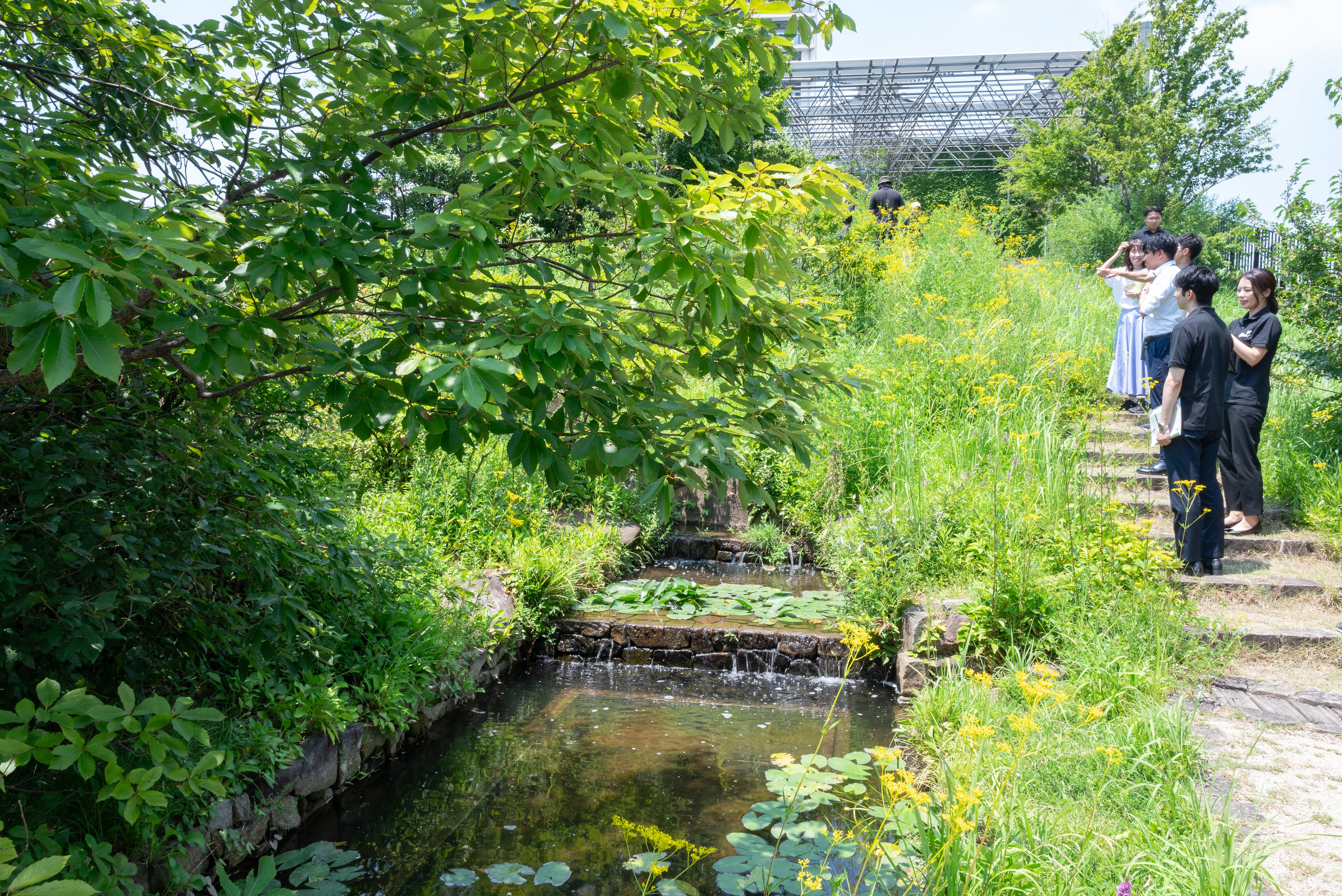
Stream in Ohashi Sato no Mori.
4/14
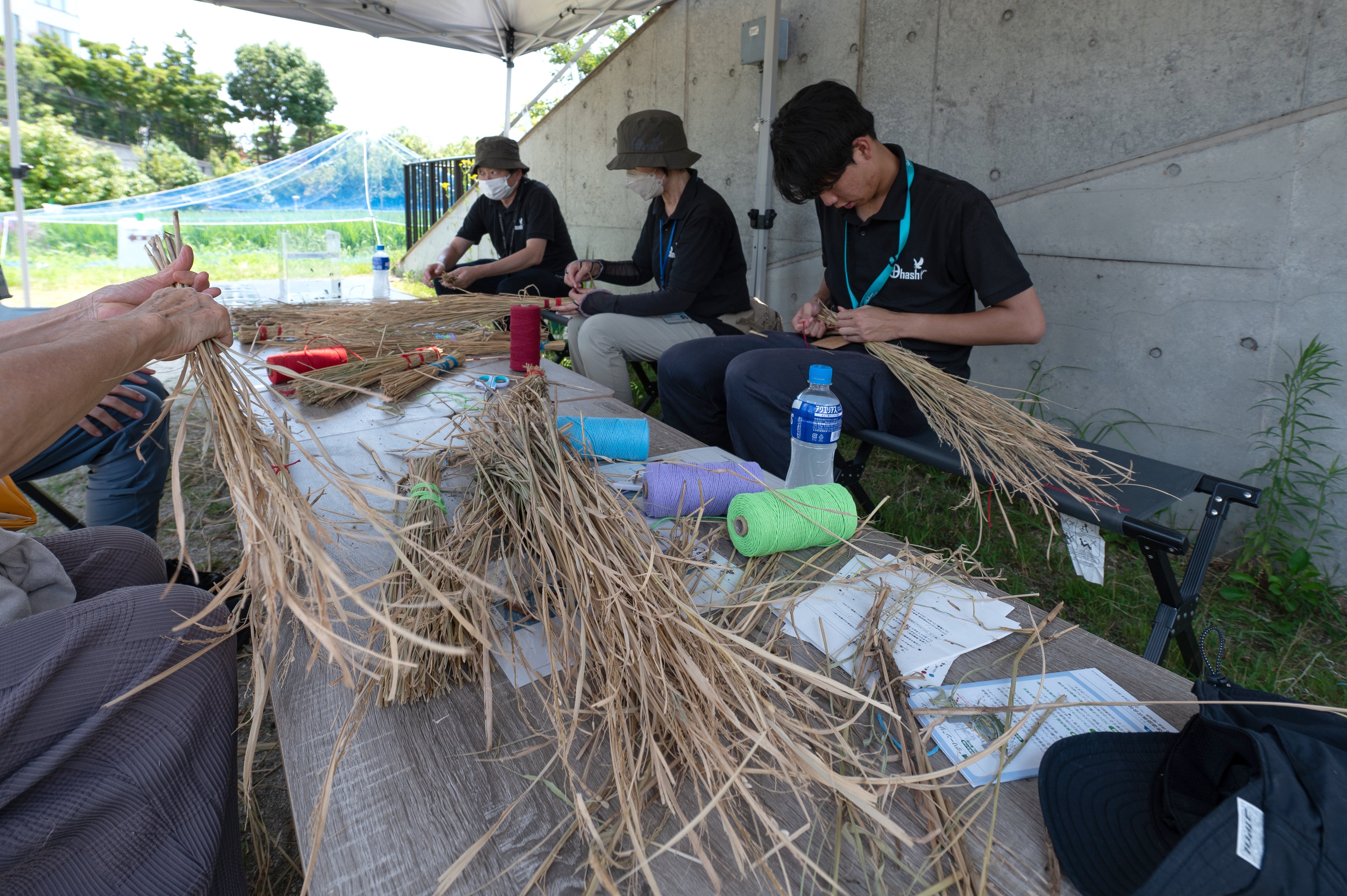
Making brooms from rice straw.
5/14
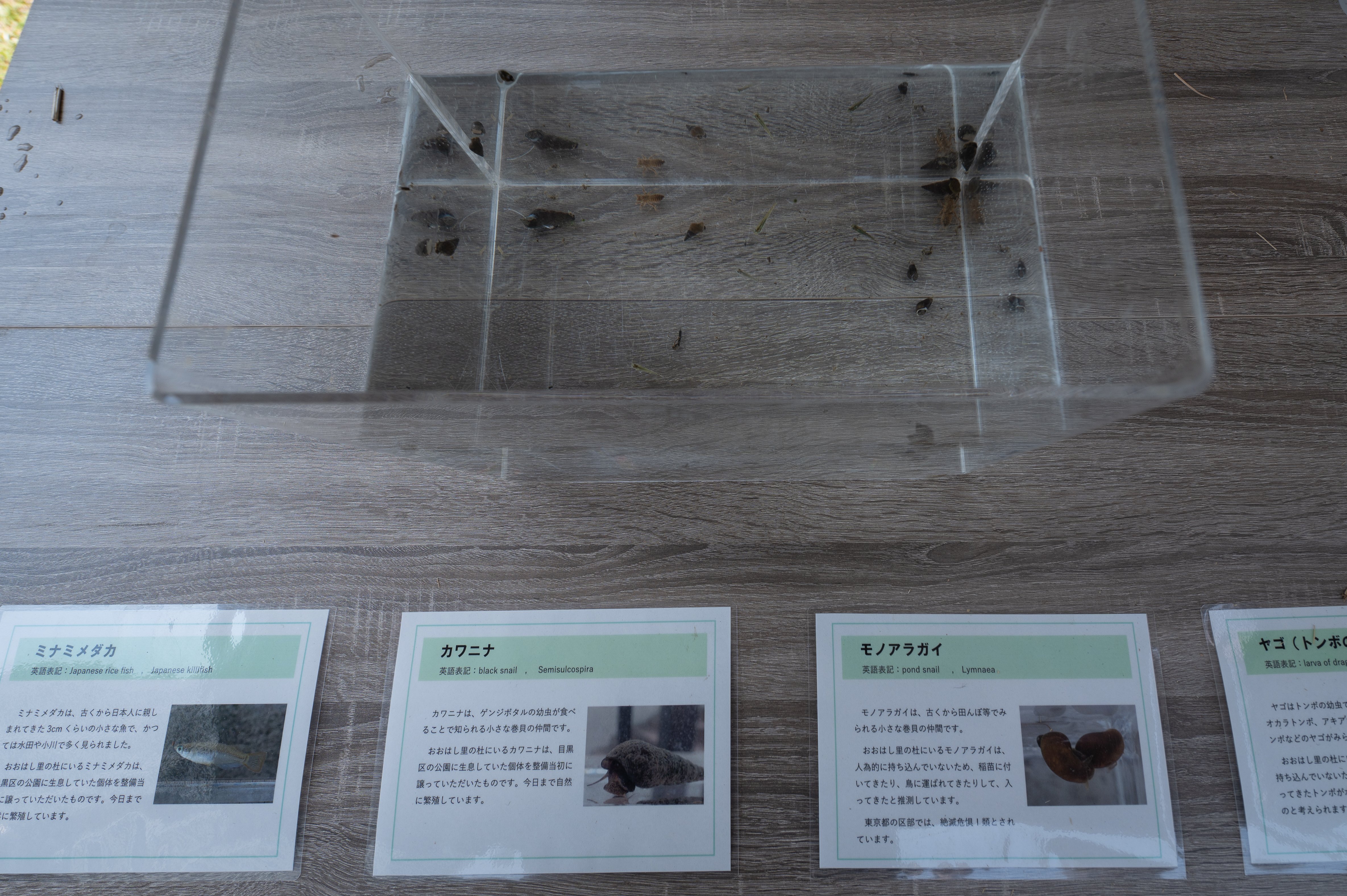
Dragonfly larvae and Japanese rice fish in the water.
6/14
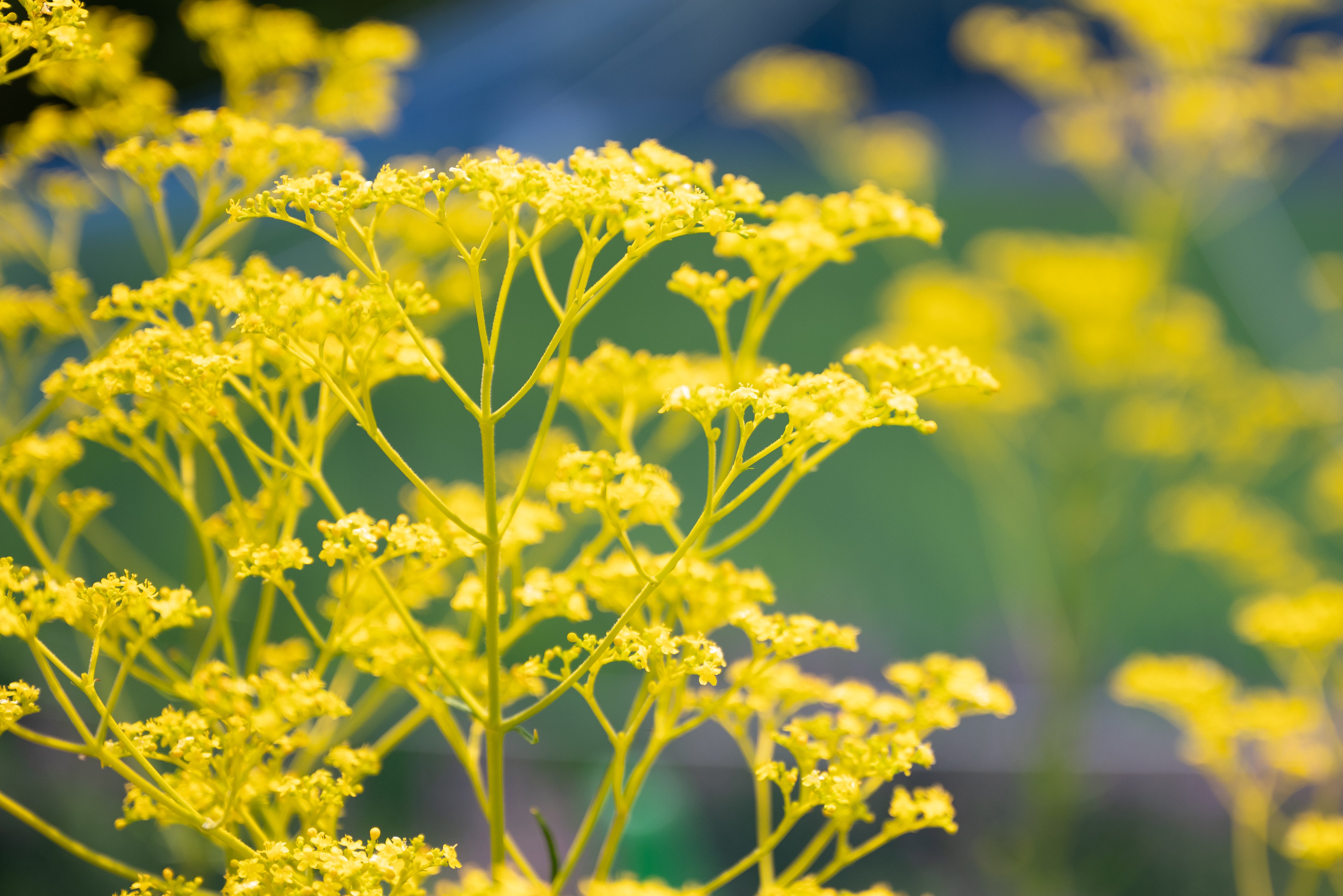
Eastern valerian, one of the seven flowers of autumn.
7/14
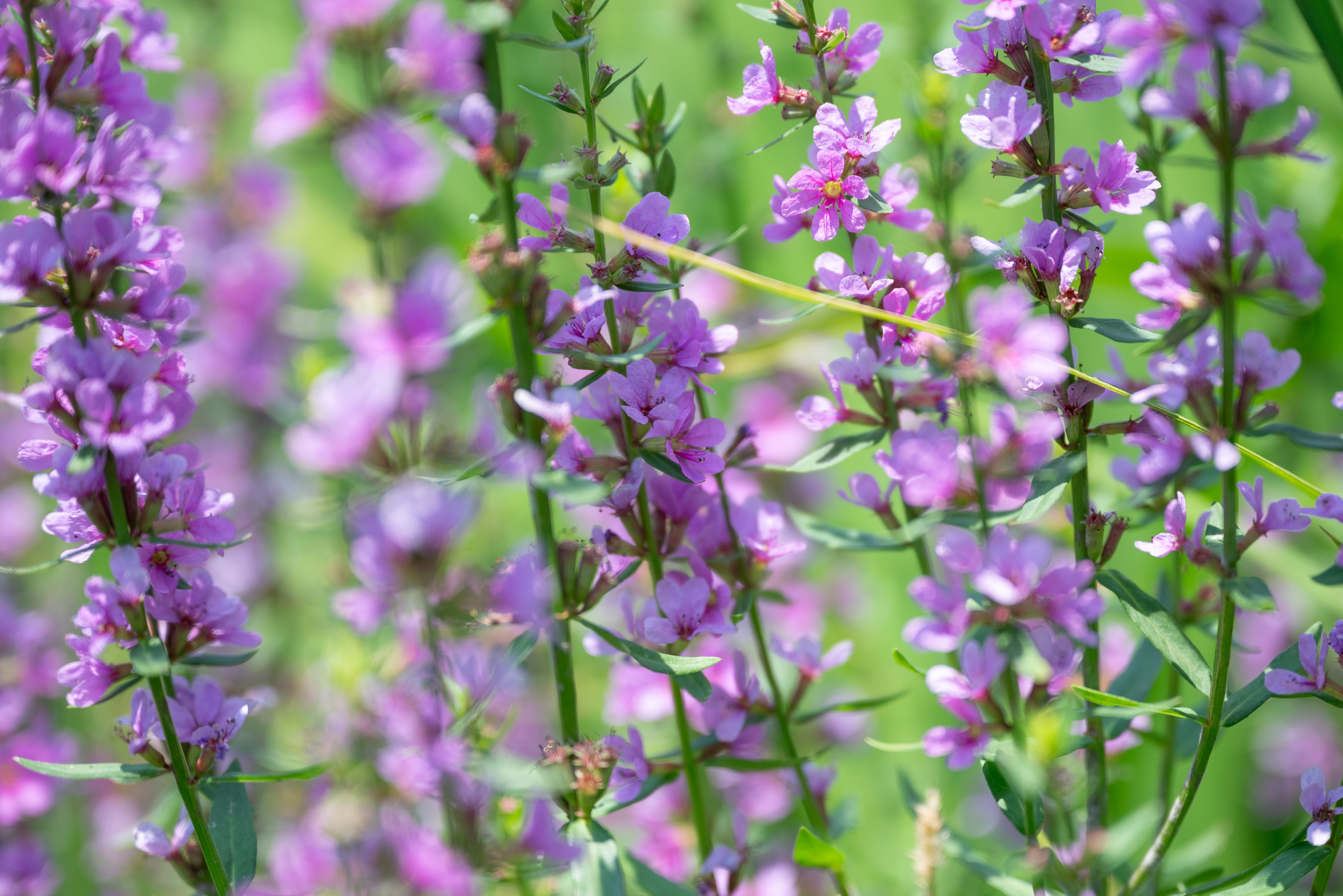
Misohagi, once native to the Meguro River area.
8/14
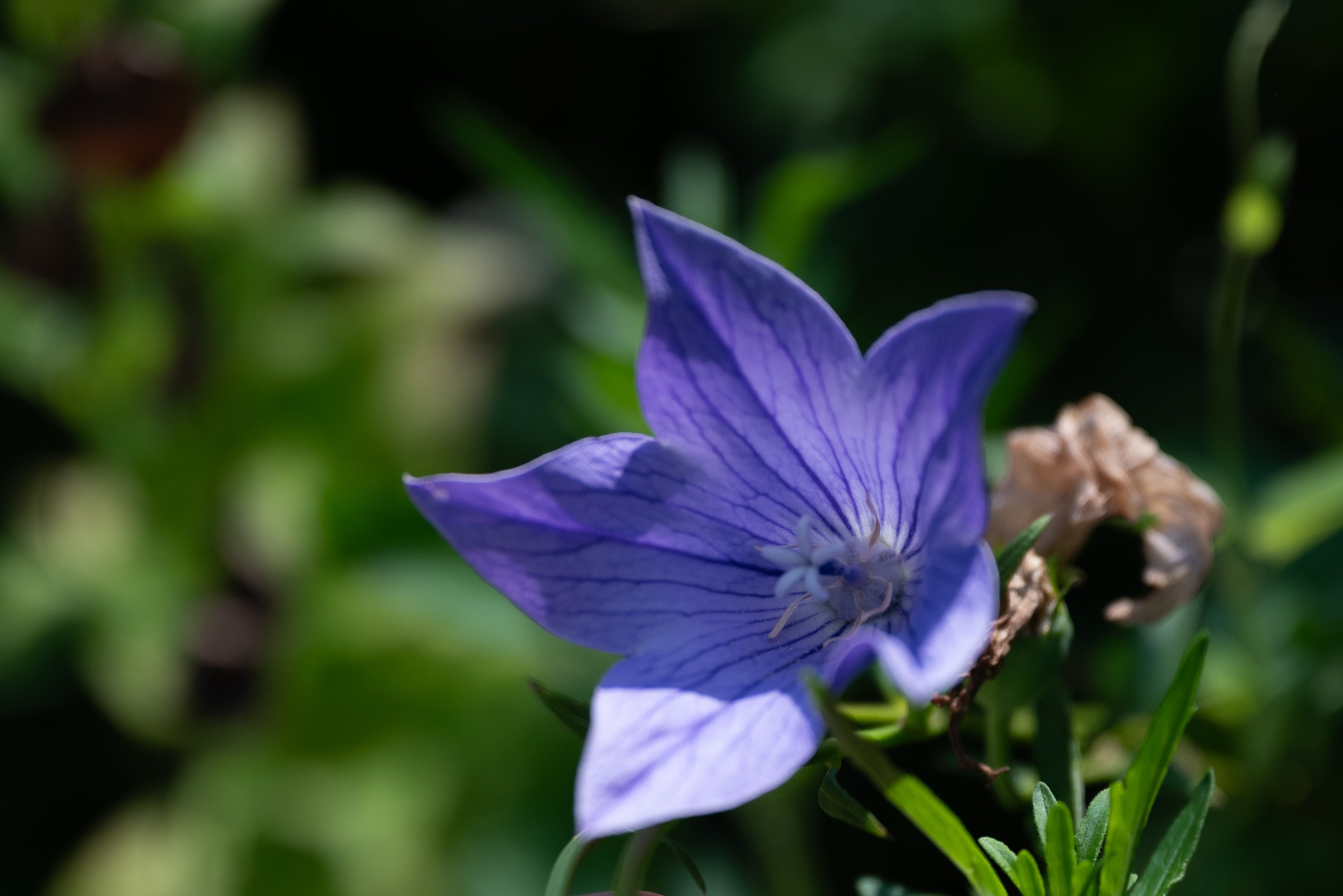
Balloon flower, in bloom from June to August.
9/14
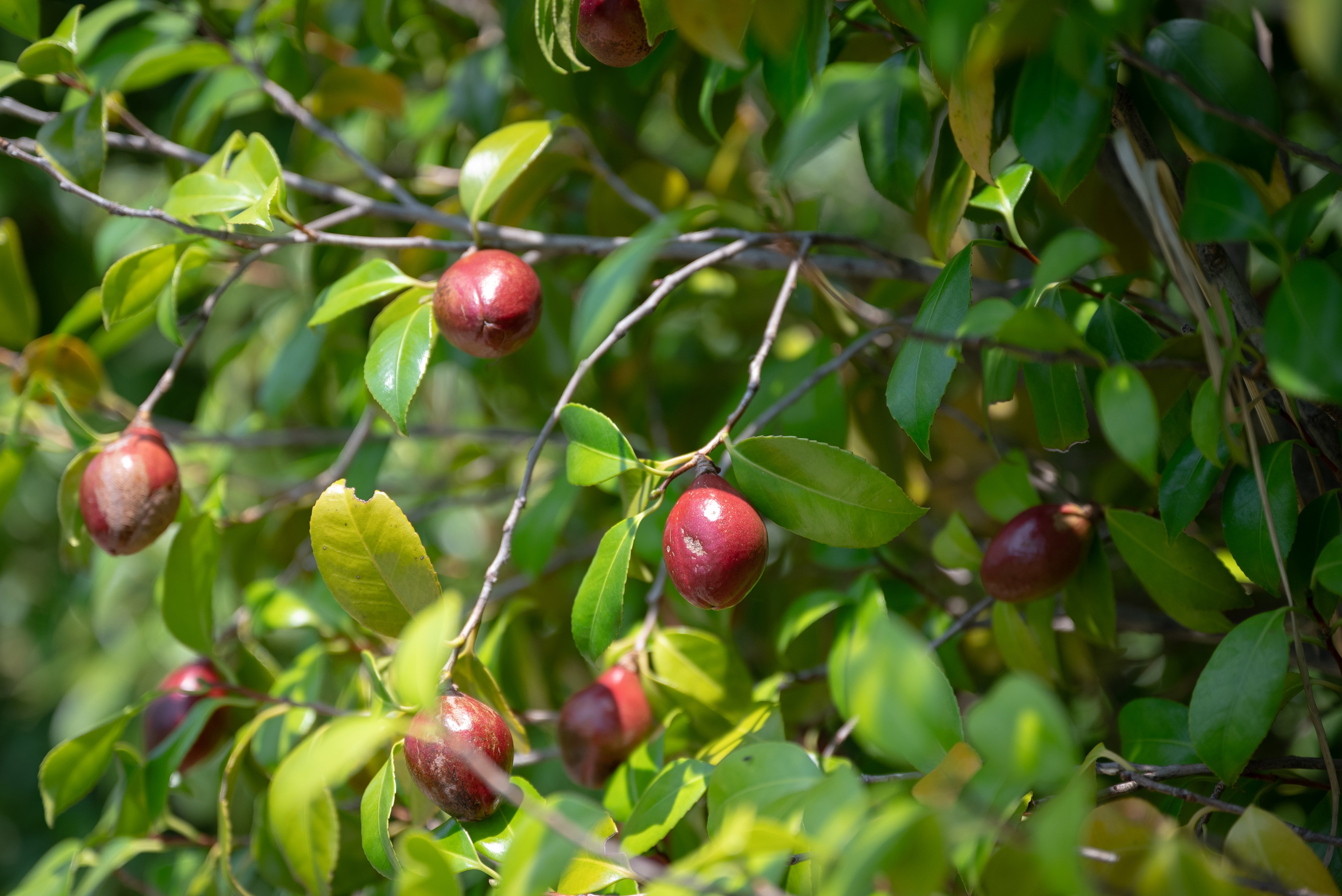
Japanese camellia bears red fruit in summer.
10/14
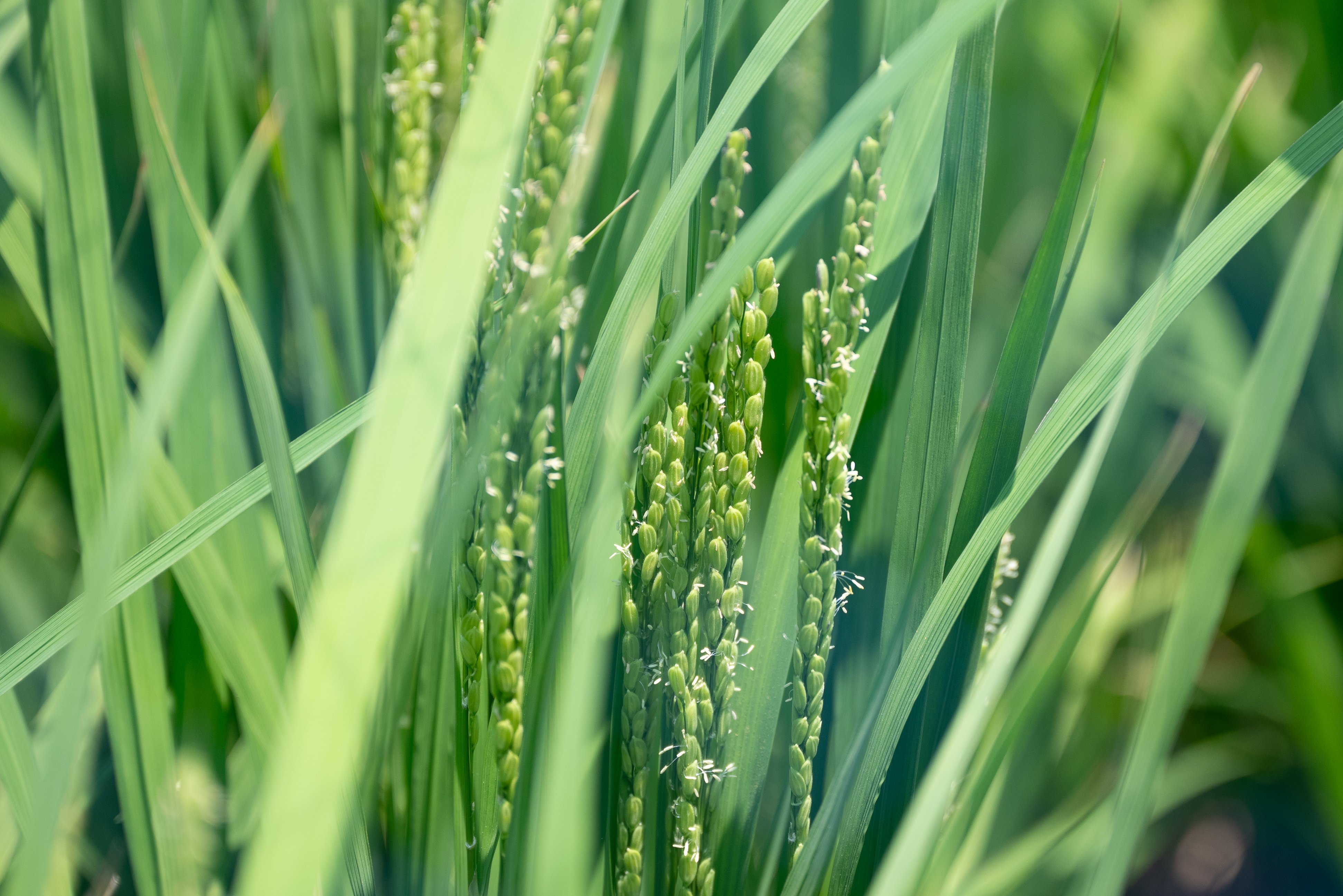
The rice variety grown here is Fusakogane.
11/14
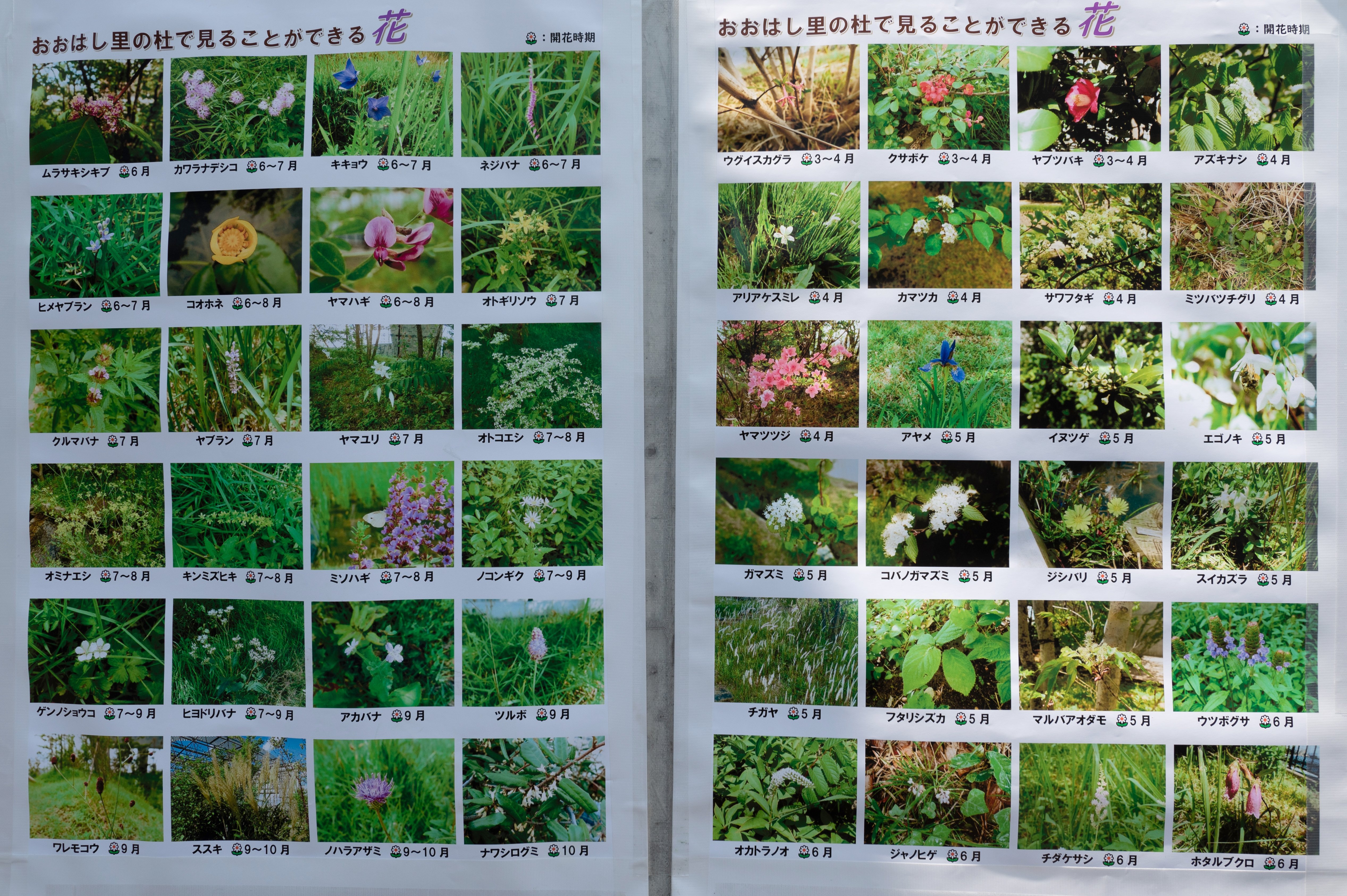
Various flowers can be seen at Ohashi Sato no Mori.
12/14
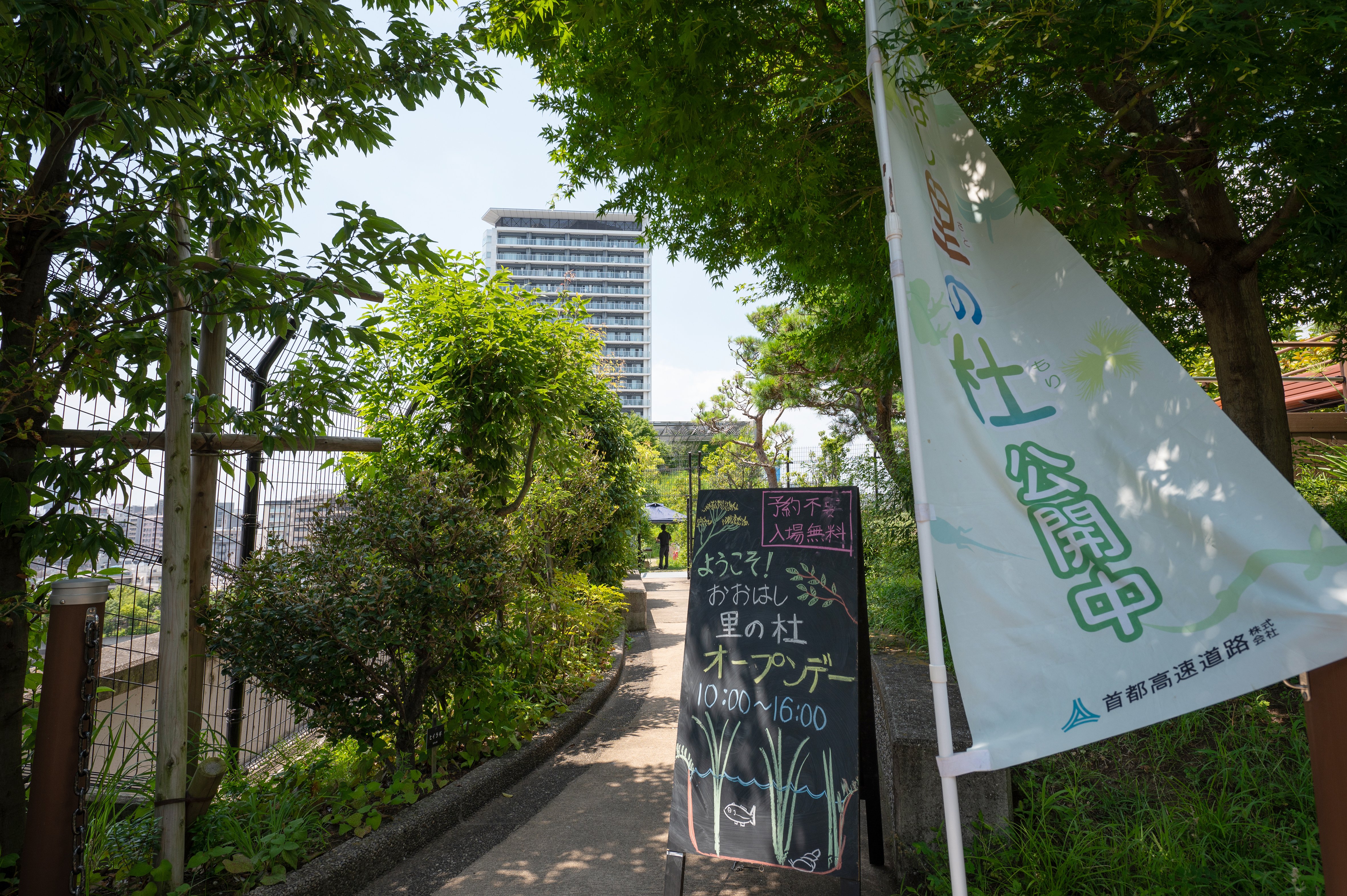
Welcome sign at Ohashi Sato no Mori on open days.
13/14

Staff uniform with northern goshawk and rice paddy motifs.
14/14
Aerial view of Ohashi Junction with Ohashi Sato no Mori and Meguro Sky Garden on the rooftop. Photo: courtesy of Metropolitan Expressway Co., Ltd.
Green Space Inspired by the Meguro River in the Early Showa Era (1926-1945)
Ohashi Sato no Mori was developed in 2011 to evoke the Meguro River basin of the early Showa era, a time when people lived in harmony with nature. A crane lifted soil to the rooftop, about 30 meters above ground, where it was specially processed to prevent it from being washed away by rain. Developing the site required a range of innovative measures.
The completed space, measuring approximately 900 square meters, features a grassland area and a rice paddy, along with sloped woodland and a stream that flows into a pond, all utilizing the ventilation facility’s roof gradient. Together, they provide a habitat for a wide range of species.
“It was designed to mirror the terrain around the Meguro River, with stepped terraces, wetlands, and paddy fields. Here you can find plants such as misohagi (Lythrum anceps) and eastern valerian, along with creatures like dragonfly larvae that were once common along the river.”
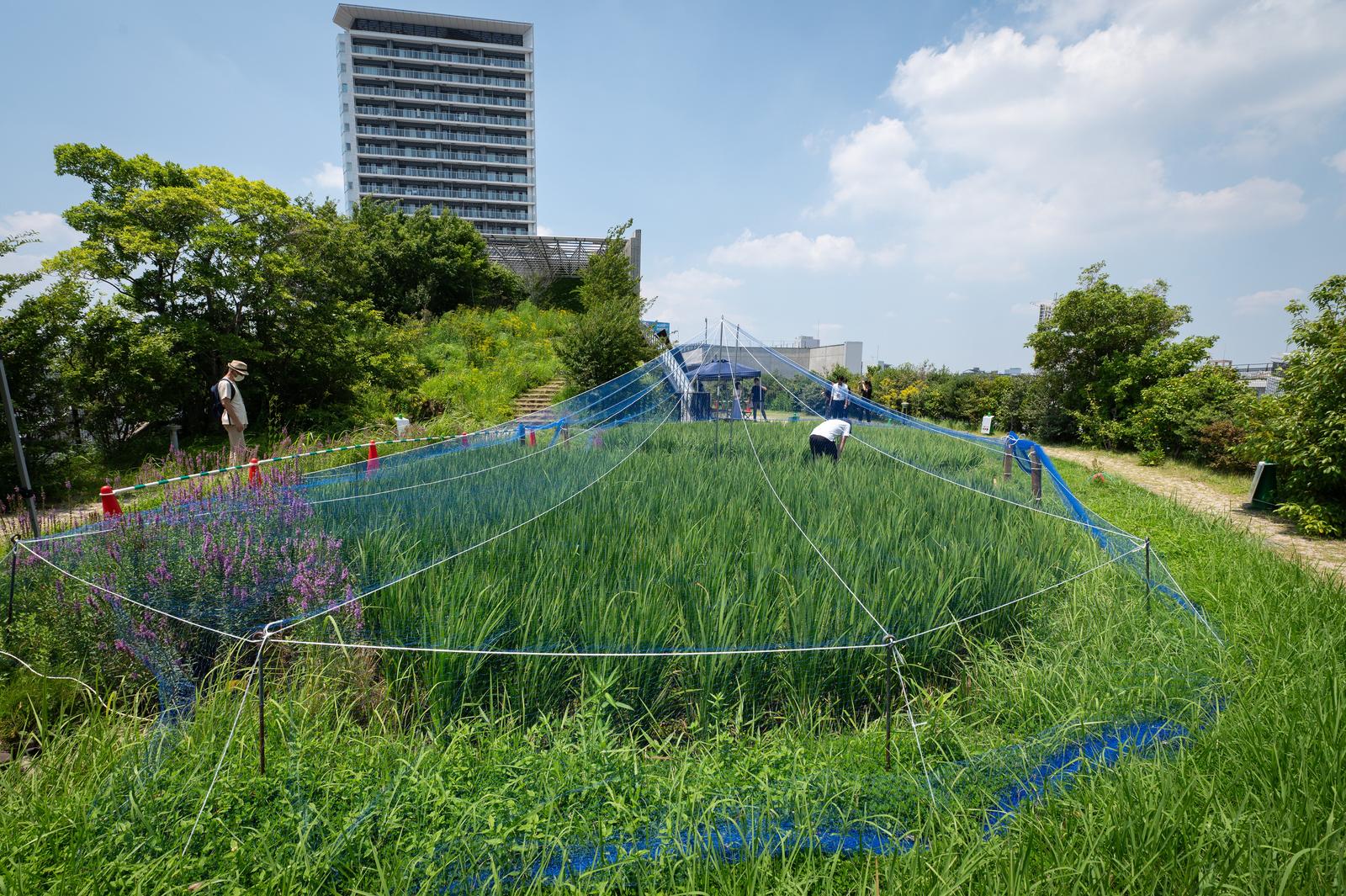
Paddy field and stream are supplied entirely with rainwater.
Home to Around 460 Species
The number of recorded animal species has increased year by year. From about 80 at the time of development, it rose to around 240 last year. Including plants, the total now stands at roughly 460 species—a remarkable increase.
“When plant species increase, the insects that feed on them also flourish. As the plants grow and provide more shade, animals that prefer those environments also gather there. This has led to greater biodiversity year after year. In 2019, a northern goshawk, a raptor, was spotted here for the first time, and it has been spotted annually ever since. Other rare birds and insects have also become more common. This isn’t something achieved by Ohashi Sato no Mori alone, but rather a sign of a wider ecological network connecting nearby green spaces such as the Meguro River, Meiji Jingu, and Yoyogi Park.”
Wildlife continues to thrive in central Tokyo by moving between scattered green spaces. Northern goshawks have been observed hunting at Ohashi Sato no Mori, although no nests have been found, suggesting they may be based elsewhere. New plant species also often appear when seeds are carried in from surrounding green areas.
This interconnected system for conserving biodiversity is called an ecological network. Ohashi Sato no Mori serves as one of the region’s key hubs.
Ohashi Sato no Mori opens to the public several times a year. It also welcomes local elementary school children for nature observation and rice-growing activities such as planting and harvesting, serving as a hands-on venue for environmental education.
Details of public open days are posted on the Shutoko’s environmental website shuto-E-co. Admission is free and no reservation is required, so anyone can join.
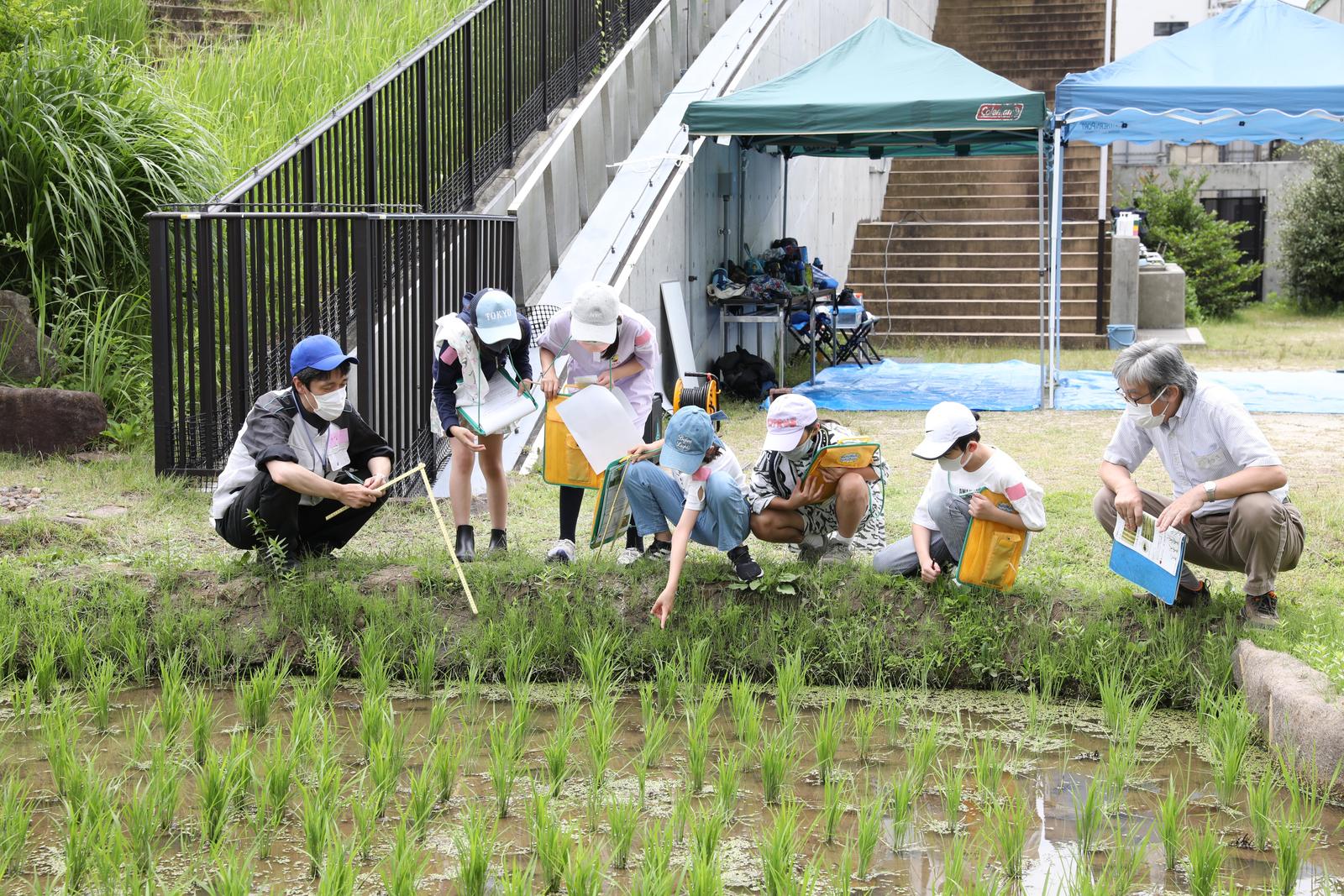
Nature observation event for elementary school children. Photo: courtesy of Metropolitan Expressway Co., Ltd.
Earning High Recognition Beyond the Community
The initiatives at Ohashi Sato no Mori have gained growing recognition. In FY2023, it was certified by the Ministry of the Environment as a Nationally Certified Sustainably Managed Natural Site. The following year, it received the 5th Green Infrastructure Grand Prize-Minister of Land, Infrastructure, Transport and Tourism Award. Such recognition has drawn increasing attention to the site.
“Just the other day, a student interested in ecosystems reached out to us. We’d like to put even more effort into getting the word out,” says Kato Chihiro, who handles public relations.
“Our official social media shares not only photos and videos of the Shuto Expressway but also updates on events,” says Kato.
Looking ahead, Fuseya said:
“Environmental efforts yield results gradually, so we’ll keep at them with patience and consistency.”
The green space created in the city offers a welcoming environment for both visitors and diverse wildlife. As a pioneering example of corporate engagement with environmental challenges, it will continue to achieve steady results in the years ahead.
Fushiya Kazuaki(left), Kato Chihiro(right).
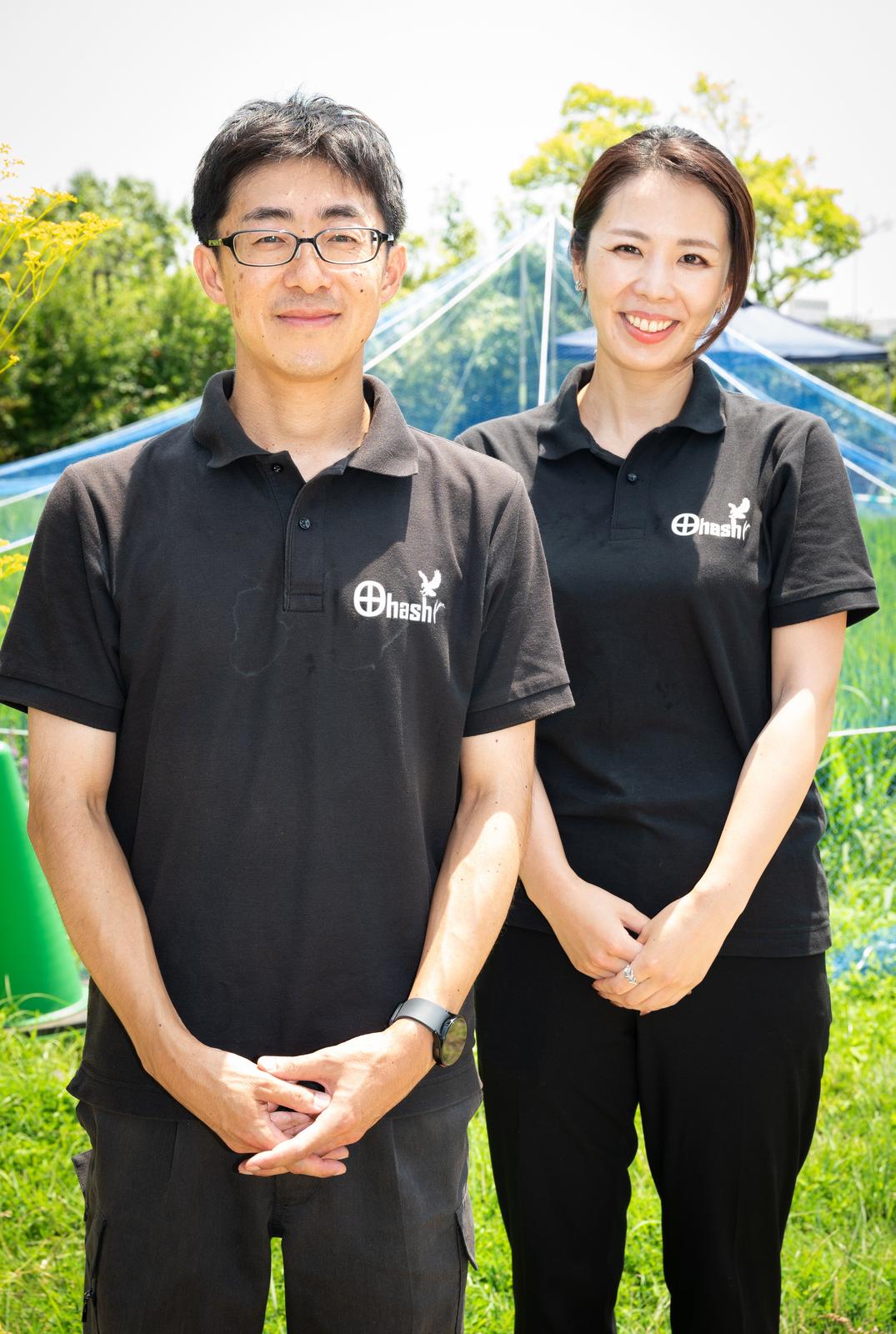
Fushiya Kazuaki
Assistant Manager, Planning and Environment Division, West Tokyo Bureau, Shutoko. Since 2023, has overseen the maintenance of Ohashi Sato no Mori, promoting biodiversity conservation and organizing events there to foster coexistence with the local community.
Kato Chihiro
Section Chief, Customer Satisfaction Sustainability Promotion Department,Sustainability Promotion Office,Carbon Neutral Promotion Division, Shutoko. Promotes the Shutoko Carbon Neutral Strategy, including planning and coordinating external communications on biodiversity conservation measures.

 )
) Would you consider getting on your bike when it’s freezing outside?