Could the federal government sue CN/CPKC for slower VIA Rail service?
Justice Department sues freight railroad to improve Amtrak service
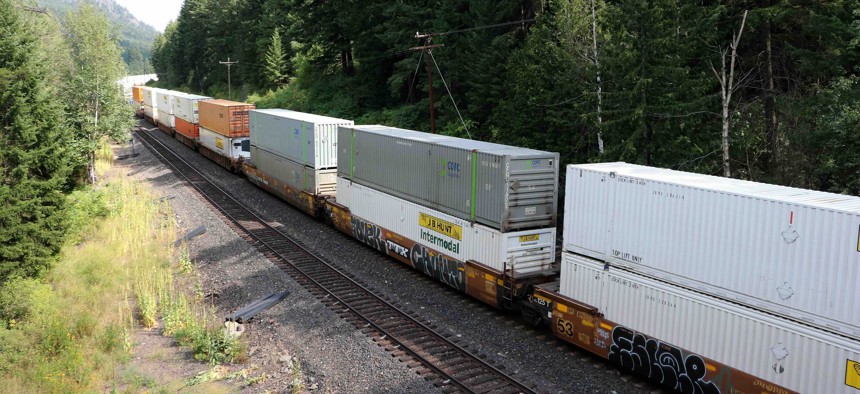
DON AND MELINDA CRAWFORD/UCG/UNIVERSAL IMAGES GROUP VIA GETTY IMAGES
| AUGUST 1, 2024 05:09 PM ET
Trains are late three-quarters of the time along one Amtrak route. The Justice Department blames Norfolk Southern for the chronic delays.
The U.S. Department of Justice sued Norfolk Southern railroad this week for causing frequent delays of Amtrak trains, in the latest example of the Biden administration pressing freight carriers to better accommodate passenger service.
The lawsuit is the first time since 1979 that the U.S. government has taken a freight railroad to court for flouting a federal law that gives Amtrak trains priority over freight trains. But it comes at a time when the passenger rail company expects to post its biggest ridership numbers ever this year, and is working to add routes to new cities using money from President Joe Biden’s 2021 infrastructure law.
Amtrak constantly butts heads with freight railroads, which own almost all of the track that the company uses outside of the Northeast Corridor. Before 1971, railroads were required to provide passenger service. Then Congress created Amtrak to allow the financially struggling companies to abandon that line of business, as long as they allowed Amtrak trains to use their tracks and gave them first priority.
The Justice Department said Norfolk Southern failed to follow that law on Amtrak’s Crescent route, which runs between New York City and New Orleans. Last year, southbound trains along the line only arrived at their destination within 15 minutes of the scheduled arrival 24% of the time.
That came even after Amtrak and the freight railroad agreed to add 90 minutes to the scheduled length of the route in 2021, even though no extra stops or extra distance were added to the route.
Norfolk Southern owns or controls 1,140 miles of the 1,377-mile route, including the dispatchers who decide which trains should go first when two trains need to use the same section of track.
The company’s dispatchers have forced Amtrak trains to pull onto sidings to allow freight trains to pass, required them to follow slower freight trains, blocked Amtrak stations with freight trains, and switched crews on their own trains while Amtrak trains were waiting behind them. The railroad industry’s move to longer trains—some of which now stretch two or three miles—also appears to be a factor, as the Justice Department said that Norfolk Southern is running trains that are too long to fit into sidings, where they could pull over to allow faster trains to go by. That forces Amtrak trains to follow slower freight trains.
“Americans should not experience travel delays because rail carriers break the law. Our action today alleges that Norfolk Southern violates federal law by failing to give the legally required preference to Amtrak passenger trains over freight trains,” said Attorney General Merrick Garland in a statement. “The Justice Department will continue to protect travelers by ensuring that rail carriers fulfill their legal obligations.”
 Est-ce que ce serait possible de faire Montréal-Miami en transport collectif seulement?