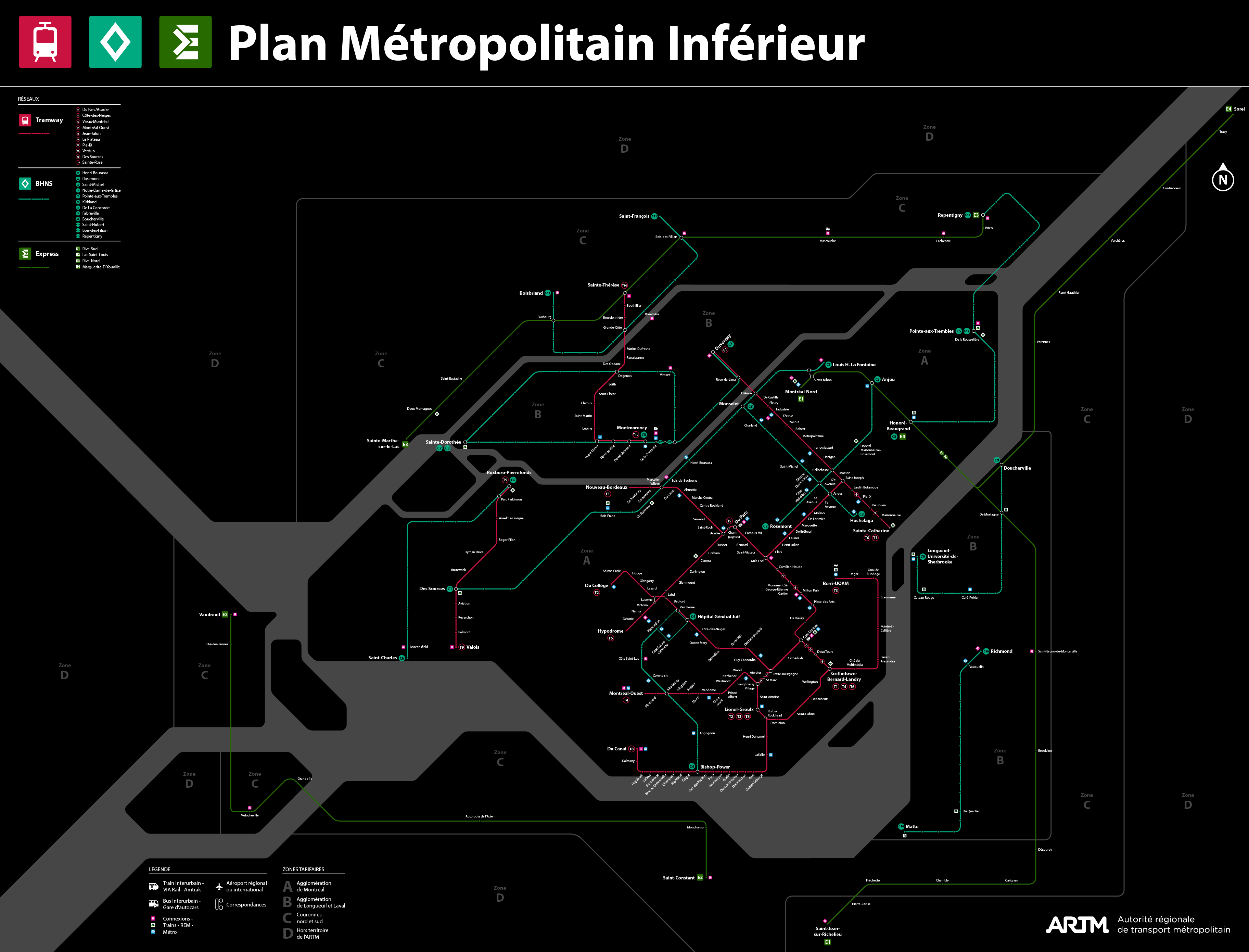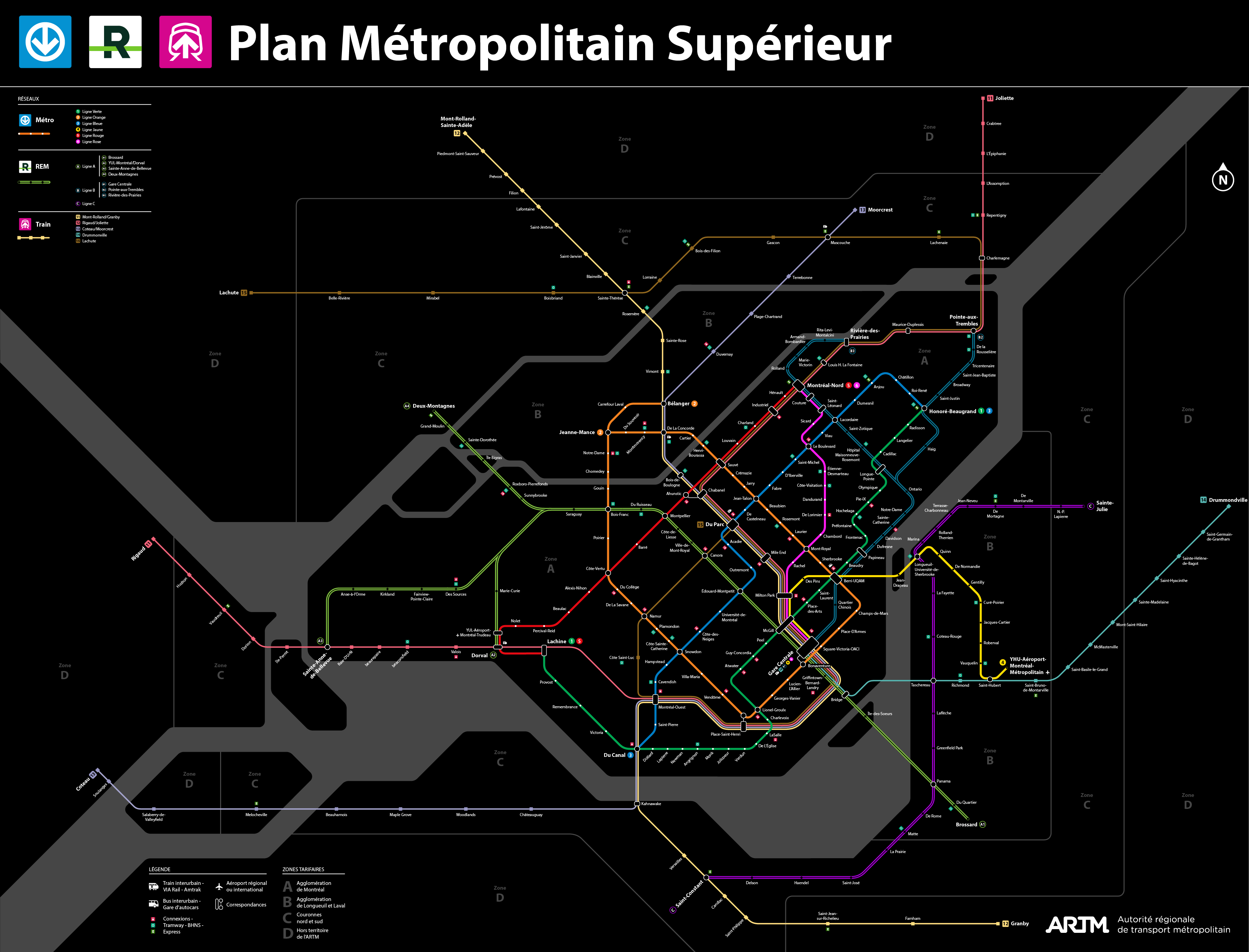
Merci beaucoup!
Qu’est-ce que tu emprunterais le plus si on avait ce réseau sur la Rive-Sud? Prends en considération que les trains je les upgrade en quelque chose comme un s-bahn donc des fréquences max de vingt minutes.
Whoa, I totally misunderstood. I thought we were saying that there was a tunnel independent of the train station, like predating Central Station. Oops.
Dans ce cas je prendrais la station Jacques-Cartier de la ligne jaune, pour aller prendre le train à St-Hubert pour ensuite sortir à la Gare Centrale, les vendredis.
Les jeudis ce serait similaire mais je prendrais l’une des lignes de trains pour remonter vers la station Parc.
Mon fils Edouard lui pourrait prendre la ligne Taschereau pour aller à son école à Brossard sur le boulevard Rome.
Dans le cas où tu veux aller à Gare Centrale directement, tu peux prendre la ligne jaune uniquement et ça te mène directement si tu regardes bien le plan tu as pas besoin de faire de correspondances. Même chose pour aller rejoindre Parc tu pourrais changer à Milton Park pour n’importe quel ligne de train vers la station.
I have a question for you people! Would you think it make sense to keep my pink line even with the presence of my REM B and tram network or it’s too much in term of capacity?
I would really like a feedback so don’t hesitate to comment!
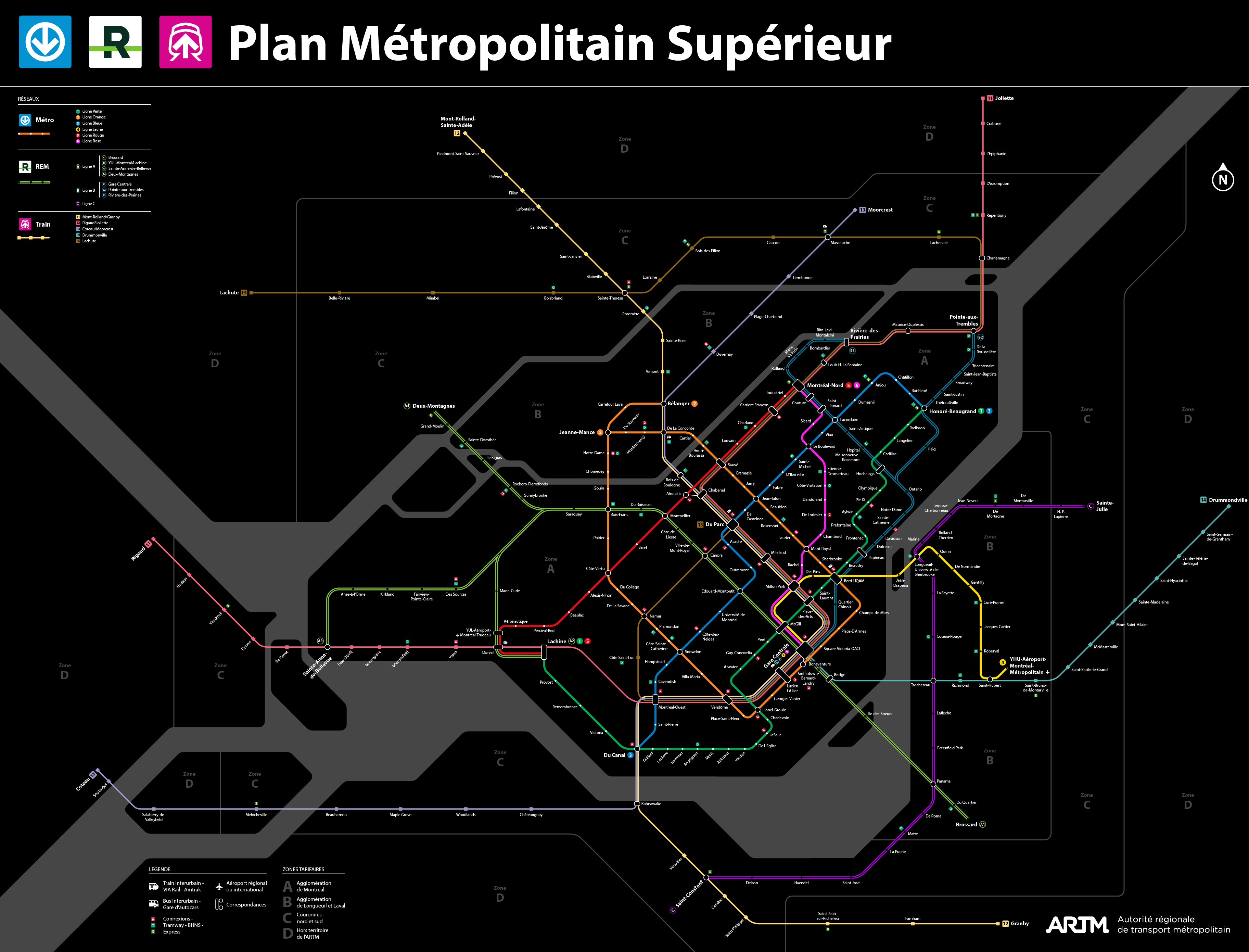
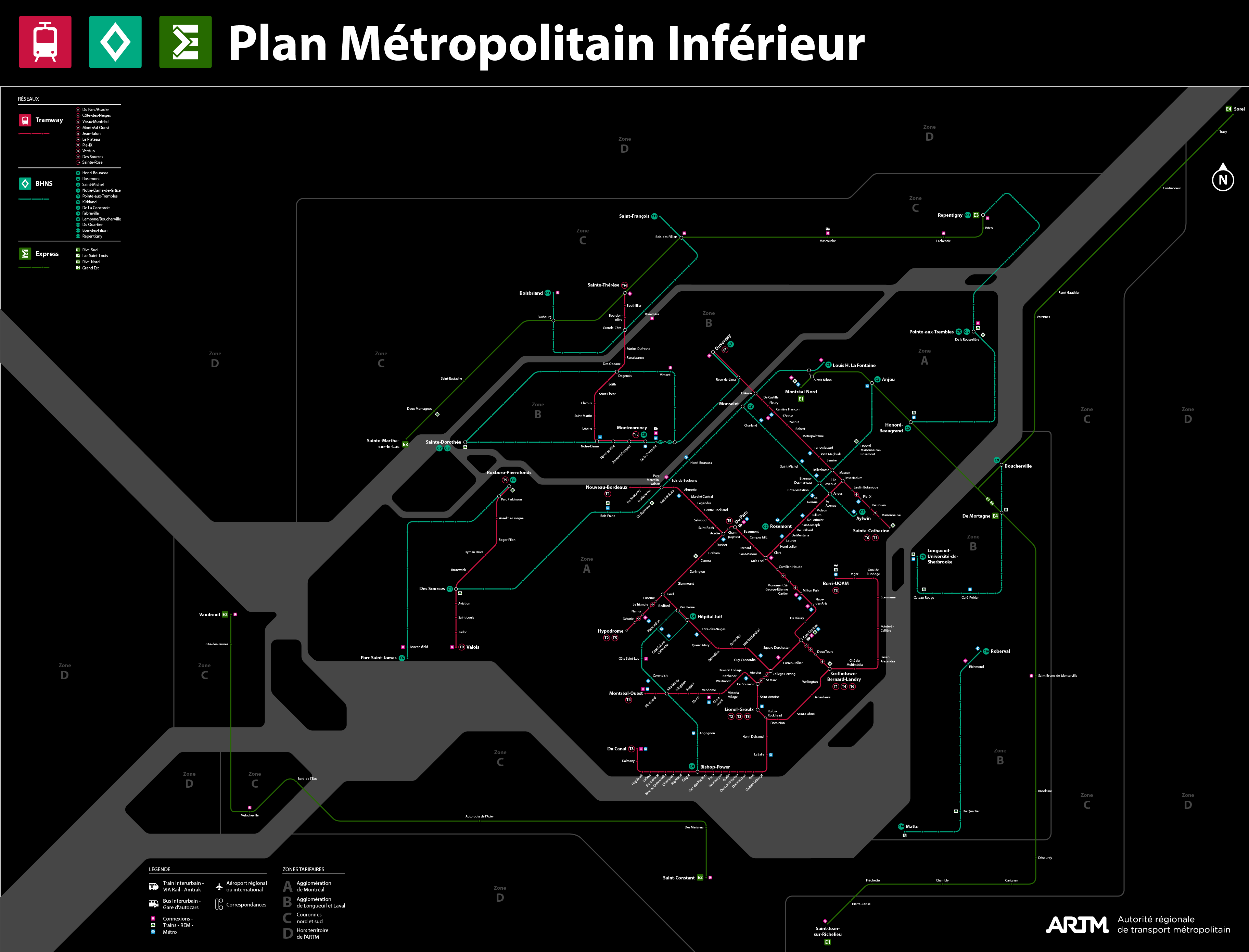
The question to that lies in part in how much densification the city is willing to allow along the corridor. Higher density can justify duplication of service along some segments.
The other big factor is station spacing. The tram stops naturally have shorter spacing between them. If you have a metro line and a tram line following the same right of way, what you can do is to have your metro line have a stop at every 3-4 station. This turns your metro line into essentially an express service while the tramway can handle local trips and last mile.
Imagine the same density with a bit more, like at the level of density that the city plan in the near futur and beyond. Do you think it would be justify?
I have three lines that go into downtown from the East with the green, orange and B REM + one tram so I don’t know if the pink is really necessary. In addition, the alignment is pretty close to the orange, green and blue lines so this line would only be for PMR people that already have access pretty easily to downtown. With the tram on Saint-Joseph, it would be pretty easy to reach a heavier mode to do downtown connections. More generally the lighter mode make a good gride from the heavier mode to serve the center of RPP and PMR, with some improvements to the bus network and the good development of the bike network, I don’t know if a metro is really necessary.
Oui, définitivement. Une ligne diagonale (par rapport à la grille des rues) permettra d’avoir un temps de parcours toujours plus court que l’automobile, même s’il n’y a pas de circulation. Avec la densité de population des quartiers desservis, il n’est pas impossible qu’une telle ligne ait un chalandage aussi grand ou même plus grand que la ligne REM B.
The real problem with your pink and yellow line is that they both seem to be going down Robert-Bourassa. We probably can’t get away with slotting both of them in there. I think that you have to choose one of them to go there, and the other one needs to go somewhere else.
There’s a few good options depending on what your priority is. Peel is another good straight shot with easy access in the park for construction. Place d’Armes could be justified with the traffic generated by the convention center.
Or just NYC them and share the platforms
Not going to work. The existing metro uses tires for traction. The going assumption is that future lines will use steel wheels.
The Yellow line would be under Robert-Bourassa boulevard while the pink line is under Mansfield. The two line would be single track beyound the green line to don’t take too much space. The train would go back at the station directly.
They have to be double tracked. With single track, you probably can achieve 1 train every 10 minutes at best. I could be wrong, but I’m almost certain that the yellow line is closer to 1 train every 5 minute during the morning peak period. It does need to be said that the tunnels of the Montreal metro are narrower than most metros that exist elsewhere. That was a conscious choice that was made in order to reduce construction costs back in the 70s. You can definitely fit a double track tunnel for an extension of the yellow line under a 2 lane road.
Pas de critique pertinente mais je voulais juste te dire que cette vision est l’une de mes préférées!
Merci beaucoup! Quelle partie aimes-tu le plus?
Je dirais le traitement sur la Rive-Sud 
Ça fait genre deux personnes de la Rive-Sud qui me dise à quel point ils aiment la vision.
Great work! I especially love the Pink Line, feel like its necessary. The Red Line idea is underrated aswell, would be very useful for East-West traffic.
Bonjour toute le monde!
Nouveau chapitre dans la saga de mon plan de transport en commun pour la région métropolitaine qui, je l’espère est maintenant bel et bien dans sa forme finale. Suite à de nombreux commentaires, j’ai finalement décidé de faire un tunnel du Mont-Royal Nord-Sud au lieu d’utiliser la subdivision Westmont pour des raisons de contraintes techniques. En revanche, j’ai décidé de faire une solution hybride pour l’ouest de cette section puisqu’il était pour moi essentiel de rejoindre la gare actuelle Montréal-Ouest pour des fins de connectivités, notamment de connecter avec le prolongement de la ligne bleue. Ma solution à été de faire un autre court tunnel peu après Turcot pour rejoindre la subdivision Westmont en localisant un portail près des terrains inutilisés de la falaise. Cela à plusieurs avantages:
- Permettre de faire la station Montréal-Ouest en tranchée limitant les conflits et finalement totalement grade separated les voies, même si les passages à niveaux auraient déjà été enlevés dans mes autres phases, cela augmenterait encore plus la fiabilité.
- Avoir plus d’espaces pour la jonction avec les différentes lignes et éviterait ainsi des expropriations, contrairement à si on continuait sur la subdivision du CN.
- Une localisation plus centrale avec une plus grande connectivité, notamment avec aussi plus de générateur de déplacements, comme une partie du campus de l’université McGill.
Bref, je vous montre les cartes, n’hésitez pas à me donner votre avis je suis très curieux de l’entendre. @Enalung j’aimerais bien avoir ton avis puisque c’est principalement suite à ta dernière intervention que j’ai changé mes plans pour faire un tunnel nord-sud.