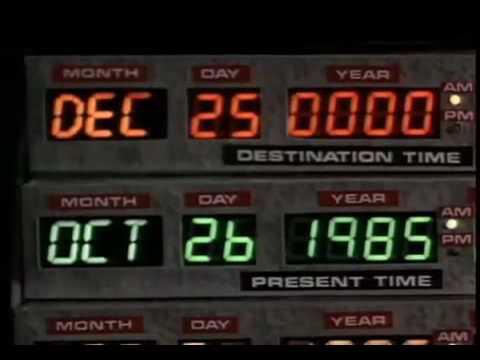
ma première reaction c’était d’aller sur LinkedIn et lui demander si on pourrait maintenant amener nos vélos à bord, mais un certain “Jacques Nacouzi” m’a battu
SameGuy is actually correct. We celebrated the new millenium one year ahead off schedule. Year 0 does not exist on the calendar. That means that year 2000 is the last year of the 20th century.
Because we love going off topic here: there was no year zero, so 2000 was the 2000th year, the next thousand years – or new millennium – began with 2001. It’s not math, it’s semantics.
Credit where credit is due, yesterday I took a two leg via trip and only arrived 10 minutes late from the CN speed restrictions. It was the closest to “on time” train trip I’ve had since moving to Montreal 2 years ago.
Jesus was probably born on year 5 or 7 before himself ! And died on year 30 or 33, so he was about 35-40 years old in fact ! The whole year numbering was wrong in its attempt to fix the year 1, since it was calculated in the 6th century !
Final intervention because we’re talking past each other: You’re proving my point: there is no year 0, therefore there is no 0 in the Gregorian calendar. It’s 1-indexed.
The same way that if there were no train “0” in VIA (still wondering why, is it a standard in the industry to start at 0?), it would be 1-indexed.
Final intervention because we’re talking past each other: it’s not math, it’s semantics. By definition a millennium has 1000 years. If the calendar is “1-indexed,” the year 1000 is the 1000th year, and part of the first millennium; the year 2000 is the second “1000th year,” and part of the second millennium. 2001 is the first year of the third millennium.
ETA: I get what you’re saying, but there is nothing to prove. I was pointing out that we know how to count. Whether an object is zero-indexed or one-indexed is moot.
Mais bien sûr ! En plus, il n’a même pas tenu compte du passage du calendrier julien au grégorien ! Le 25 décembre julien correspond au 7 janvier grégorien ! Quoiqu’à l’an 1 ou -1 (parce qu’il n’y a pas d’an 0 dans aucun des 2 calendriers), l’écart serait moins important.
Mais peu importe, c’est Denys le Petit, au début du 6e siècle, qui a fixé la naissance de Jésus : le 25 décembre de l’an 1 !
If only it was anywhere near that simple. There are multiple inaccuracies in both Calendars until we get to modern time where time keeping became much more of a science. If you spend even 10 minutes digging into the subject, you’ll find out that this is one of those subject that requires a lot of time to understand, pardon the pun.
Just ask any programmer who’s ever implemented a datetime library. If there’s one field where you should never reinvent the wheel, it’s time and date calculations.