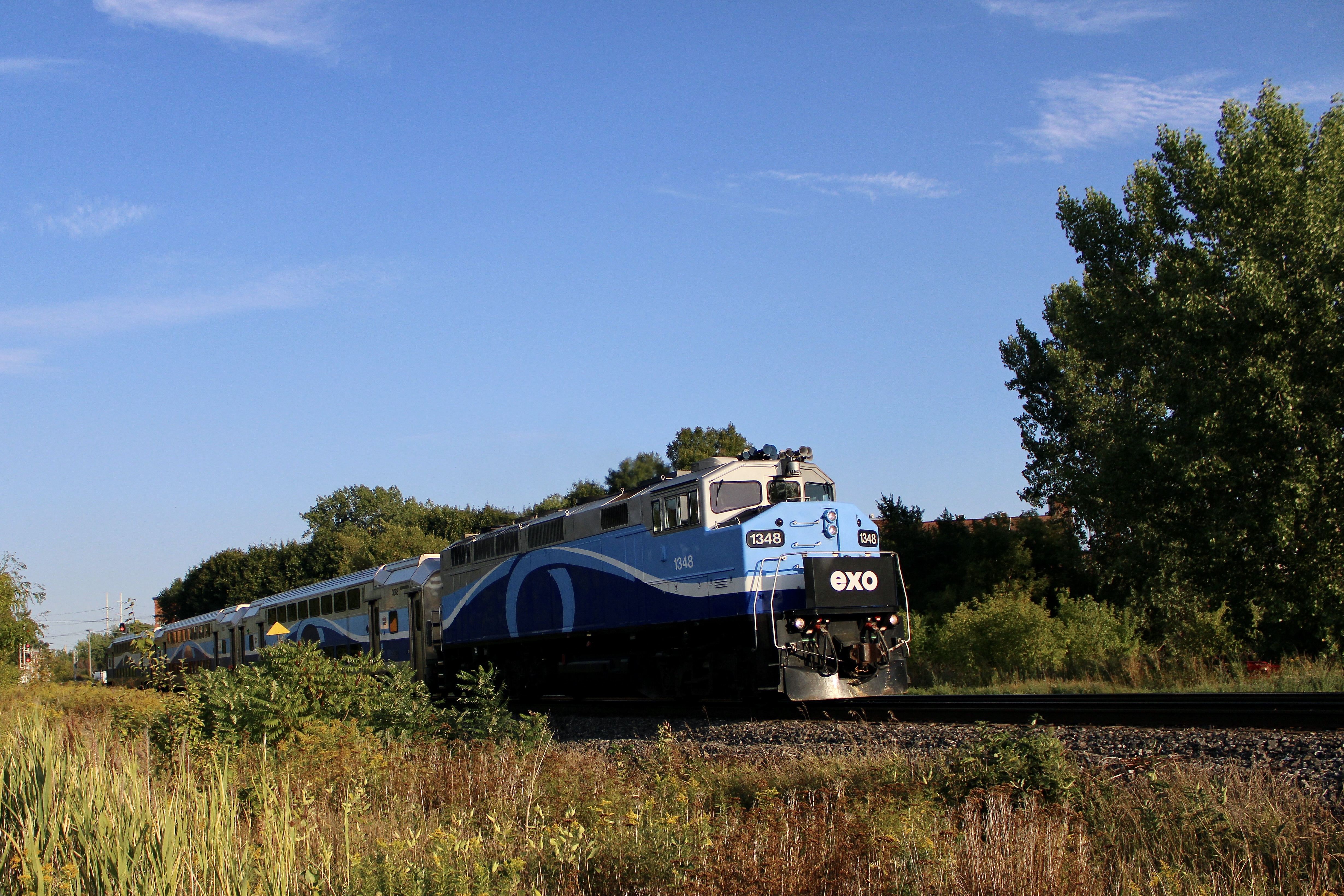
Quelqu’un ici a des données sur les projections d’achalandage de la ligne Vaudreuil post-ouverture complète du REM?
En date de l’automne 2024.
The head of Montreal’s commuter train operator, Exo, says once the REM begins running in the West Island, the Vaudreuil-Hudson train line will see a 15-20 per cent decrease in ridership.
2 « J'aime »
I’m no expert, but I don’t see that happening without a vastly improved bus network feeding the West Island stations, or the provision of ample parking adjacent to the stations. Pfds-Rox and Sunnybrooke still have their large park-&-ride lots. If you don’t give those commuters and students who regularly take the VH line an easy way to get to the new stations, by bus or by car, they likely won’t switch over.
4 « J'aime »
I wouldn’t be so sure. If the persons final destination is around Lucien, I’d tend to agree with you. However, if that person went to any destination on the green or blue line, the additional connectivity may offset the parking or bus concerns. Not to mention the REM is a solid 10-15 mins faster to get to downtown for those at AAO, and the concern about missing your train is functionally gone.
I’d say the those who will have the incentive to keep with VH are those who: A) Take the bus and live so close to the VH that the REM despite its advantages is still slower, or B) Will under no circumstances take the bus (which, by comparing ridership vs parking spots even with carpooling is probably a small subset).
Other than that, it’s some sort of values calculation between time, money and comfort. I suspect that could very well get to 20% as anyone within 30mins by walk and bus to the station, has the incentive to take the REM.
2 « J'aime »
Anecdotally: my wife used to work at Autodesk in old Montreal, and would drive from western Pierrefonds to Beaconsfield Station and take the company shuttle bus from LL to work, or she’d walk it on nice spring and fall days. But she said in no uncertain terms there is no way she would walk to Kirkland Station (about 3 km) or walk 500 m to the nearest bus stop and wait for a bus that then takes 20 minutes to get to Kirkland Station (and do the reverse on the way home). That’s just the nature of the West Island suburbs: if residents own a car, they would rather go somewhere by car than struggle with the single-digit Walkscores.
So again, without major changes to the local bus network feeding the new stations, I don’t see many people abandoning the VH line in favour of REM.
4 « J'aime »
Yup People underestimate to what degree people prefer their cars over walking, especially if it means walking alongside a busy street or highway when they have a car waiting for them in their driveway at all times
3 « J'aime »
I don’t think we’ll ever know if I’m honest.
Network effects are as such that a trip that ends near the central segment may be created to compensate for whatever might be gobbled by the REM.
Consider all the people who today alter their daily plans or schedule to catch a train that only runs in the morning that now have the option of going at any time during the day. Ex any students, people who start work late, people who end work early, etc
Also Vaudreuil is getting a big overhaul with express buses running straight to the rem. Expect that ridership from Vaudreuil, Dorion and Hudson to drop more than on island stops.
2 « J'aime »
Oh I’m not discounting any of that. I’m all for transit, and the REM. I’m just accepting of the reality of life in the West Island. There’s no way around the fact that it is car-centric and pedestrian- and transit-unfriendly, notwithstanding that many of the long-established trunk bus lines are very well used.
3 « J'aime »
I think I’ve mentioned at least a dozen times in these forums how I would gladly take public transit to get to work if it made any sense at all. Alas, it does not.
When I leave for work at 4 AM, it takes me roughly 19 minutes from my driveway to just outside the entrance door of my workplace, in the comfort of my zero emission electric vehicle. By contrast, assuming I could make use of the overnight bus schedule, it would take an hour and 40 minutes, and the quickest way would have me walk 1.2 km on mostly dark streets with no sidewalks to the 376, change to the 356, and arrive approximately 100 m from where I park my car, then rush to get to my workplace on time.
Heck, even when the West Island branch of the REM will be operational – and assuming I could change my shift to normal human working hours – it won’t be any quicker because the Kirkland station is 3 km from my house on the same dark streets, most without sidewalks, and then I’d have to go all the way to BF and change for the next airport-bound train, and then walk almost a kilometre from the station to my actual workplace. Even with an electric scooter for first/last mile during the nine better months of the year, it would take me almost an hour.
Yes, anecdotal, but not unrepresentative of the situation for many West Island residents.
6 « J'aime »
Parlant de Bois-de-Boulogne, c’est moi où c’est complètement illogique qu’il y ait juste un point d’accès du côté ouest et que les gens qui veulent accéder à la gare depuis l’est (où il y a la SAAQ) doivent soit grimper la clôture ou passer sous le viaduc et rentrer par l’ouest (un bon 3-4 minutes de marche).
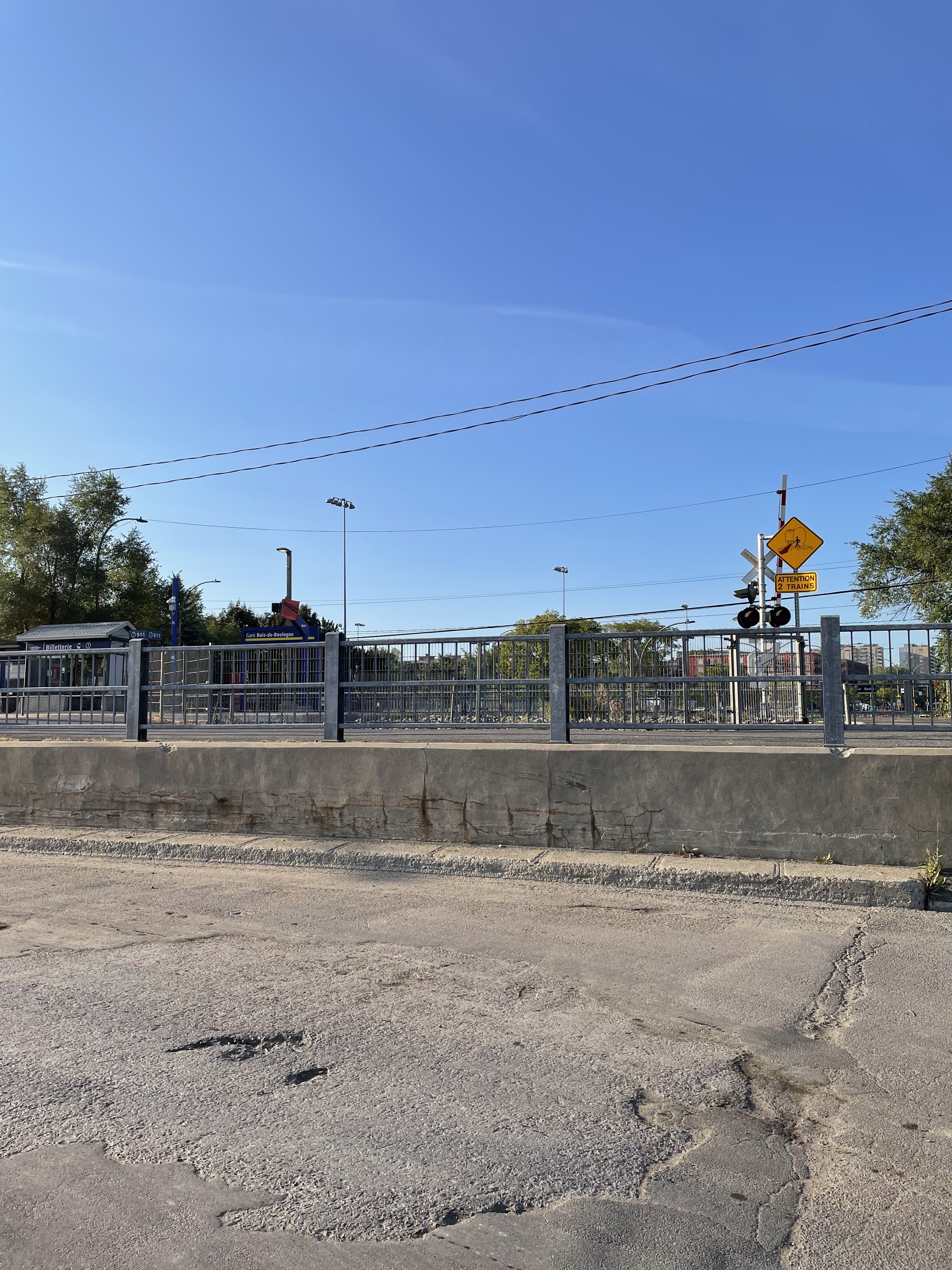
Pas comme si construire des escaliers ou une rampe était un projet bien ambitieux.
3 « J'aime »
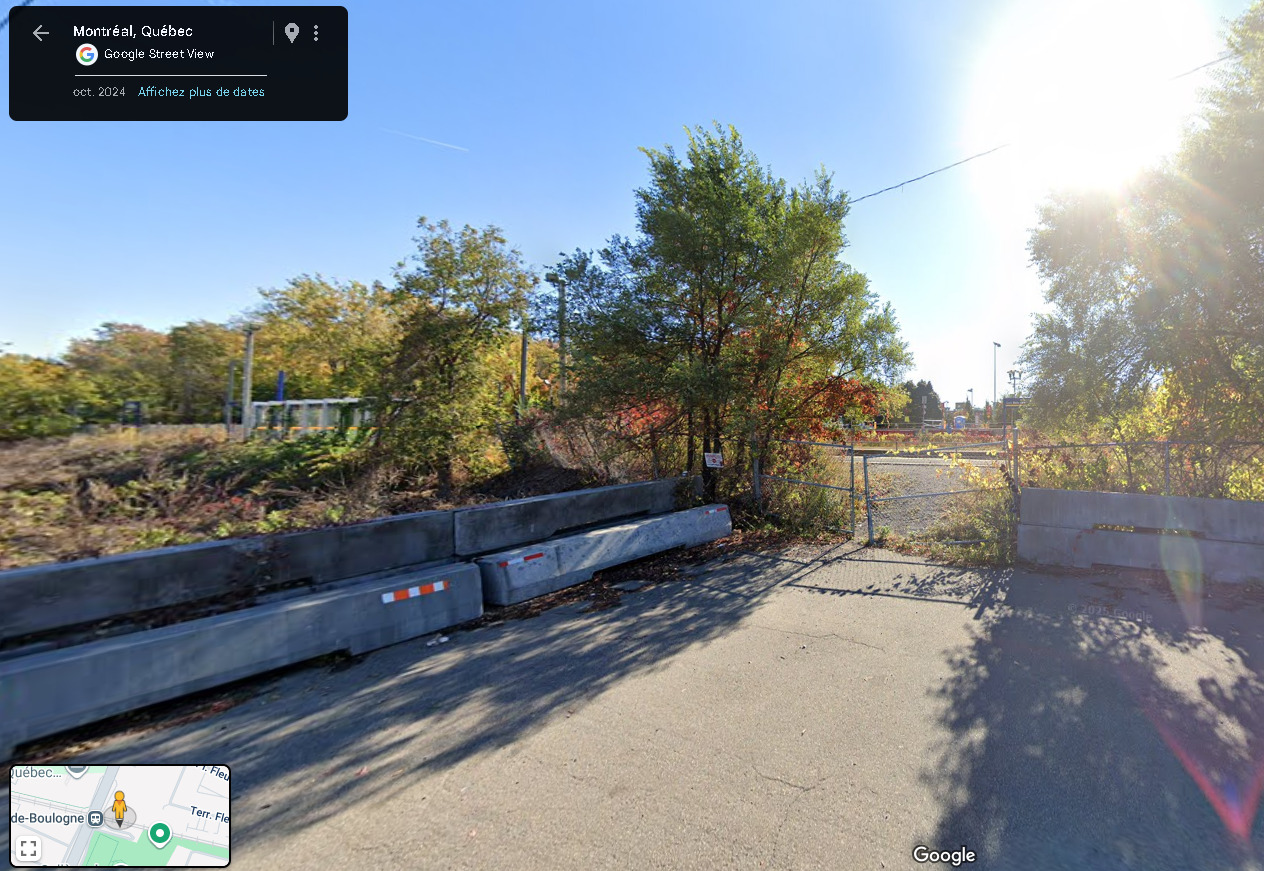
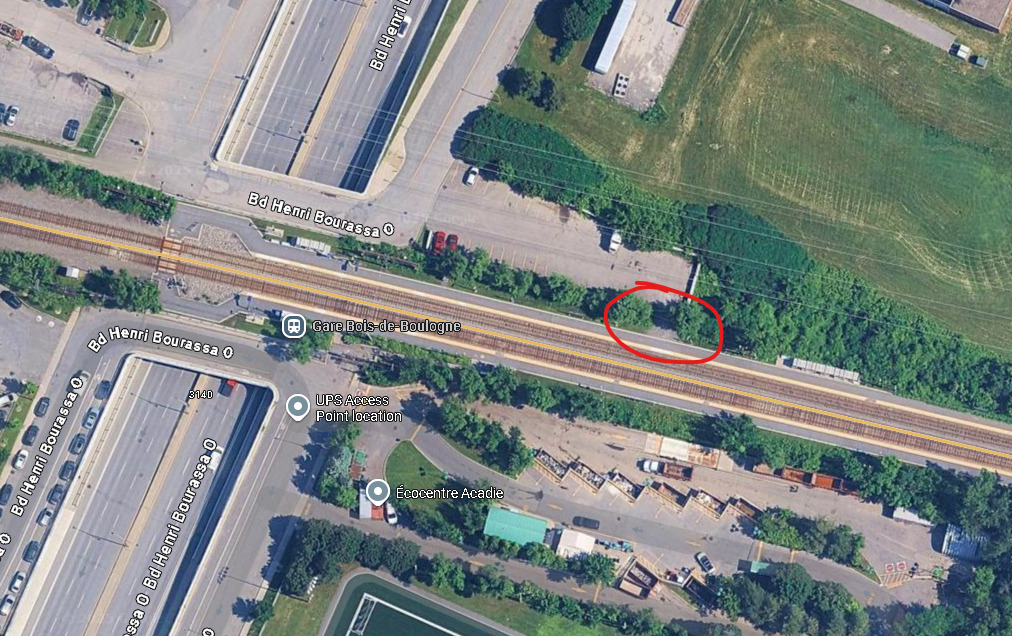
Voyant l’état de la clôture du côté de l’ancien Loblaws  le besoin d’un passage de ce côté est bien réel.
Le pire c’est que ce portail est probablement utilisé par les équipes de déneigement des quais l’hiver
1 « J'aime »
De mémoire la ville a obtenue « récemment » le droit de construire cet accès dans la même décision de transport Canada qui concernait le passage de l’Epee actuellement en construction et celui de la gare Parc qui a été fait il y a quelques années.
Le développement immobilier sur l’ancien Loblaws va venir mettre de la pression pour que ca se fasse.
2 « J'aime »
Le gros défaut de cet accès c’est qu’il est à l’opposé du passage à niveau qui permet de passer d’un quai à l’autre.
Parlant de ce passage à niveau, les trains doivent l’occuper en direction nord en s’arrêtant en heure de pointe PM pour éviter que des malins n’aient le goût de le contourner. D’ailleurs, la dernière fois que j’y étais, le train s’est arrêté ~5m passé le passage à niveau pour éviter que des gens ne passent quand même devant.
Ça me semble quand même dommage de condamner les 2 premières portes pour décourager les gens de traverser, mais j’imagine que c’est mieux de bloquer complètement que si quelqu’un traverse devant le train en n’en voyant pas un deuxième sur l’autre voie.
J’ai entendu d’un conducteur sur la ligne que c’est pire de bloquer les barrières sans bloquer l’autre côté (vu qu’un piéton peut quand même faire le tour sur le ballast sans voir l’autre voie) que de ne pas le bloquer du tout.
C’est tellement un changement d’attitude en quelques années. Il me semble que certaines stations de la ligne Deux-Montagnes avaient des passages à niveau en station qui pouvaient être empruntés suite au débarquement, avec le train en station
2 « J'aime »
C’est encore possible à Sainte-Thérèse (un passage non protégé à chaque extrémité du quai), mais les passages sont plus loin de l’extrémité du train, c’est en voie simple et il y a une restriction de 15 mph avec les passages non protégés de toute façon.
2 « J'aime »
Pour avoir utilisé le train quand j’étais étudiant à Bois-de-Boulogne, j’ai été tellement souvent témoin de gens qui manquaient de se faire frapper par le train en courrant pour ne pas le manquer. Le jugement des cégepiens n’est pas toujours arrivé à maturité 
2 « J'aime »