Vision - Alternatives à ALTO (TGV Québec-Toronto)

There’s no point in doing that yellow line in the middle of nowhere to save 6km (504 km vs 510 = 238 + 272).

I’d keep all the red routes and add the green segment from OTT to MTL. Going To to Ott from the red route is shorter than the green one. The green segment only serves to serve Peterborough.

1 « J'aime »

My point is that bypassing Ottawa doesn’t bring all that much value, even skipping Peterborough is not particularly interesting (serving it is another issue) unless the goal is to serve another urban centre more interesting than Peterborough such as Kingston (which make sense). However, if the main goal is the Toronto connection and local service needs to be improved on the lakeshore line anyway, just run HSR on the Peterborough route.

1 « J'aime »

No.
No.

1 « J'aime »

I didn’t really look at the distance to be honest, it’s more that the yellow line let’s you stay at top speed for a much longer time compared to a stop in Ottawa, and that really gives value.

My reasoning is also that the Montréal-Ottawa segment doesn’t need to be HSR. Any train running at an average speed above 100km/h will take you to Ottawa in under 2 hours and be competitive with both cars and planes.

The section between Smith Falls and Ottawa already has trains running at 150km/h. What if we kept that section and connected it with our HSR? That way you keep a fast Toronto-Ottawa connection.

Through all this, the express Montréal-Toronto would keep a high speed throughout and would reach Toronto much quicker.

3 « J'aime »

Indeed, I didn’t take HSR track-speed-optimization into account.

2 « J'aime »

It could be interesting to build the HSR closer to the lakeshore, just north of the 401 corridor, with a spur to Ottawa. This would enable quicker direct non stop trips between Montreal and Toronto, and open the door to local and semi-express services along the lakeshore serving Kingston, Cornwall, Belleville.

The spur would be around 65 km long but the mainline would be 41km shorter avoiding the detour by Peterborough and Ottawa, meaning this is only 23 km of tracks over the current scenario.

I don’t understand what problem you’re solving here.

Increased expropriation costs, more overpasses to build, half the frequency, all for negligible distance savings and only for 1 route (TO-MTL)?

As the crow flies

Toronto - MTL via Peterborough is 507 km

Toronto - MTL via Peterborough and Ottawa is 516 km

Toronto - MTL via Kingston is 510 km

If you want to get HSR to connect Canada’s 3 largest eastern cities and consider cost, frequency, simplicity and connectivity

TO - PTBO - OTT - MTL wins out every time (hence why it has been the consensus for 10 years - idk how we even got on this topic)

Yes ottawa could be bypassed even if the tracks go via peterborough but going via the lakeshore just makes everything more complicated, longer and more expensive. Not worth it.

4 « J'aime »

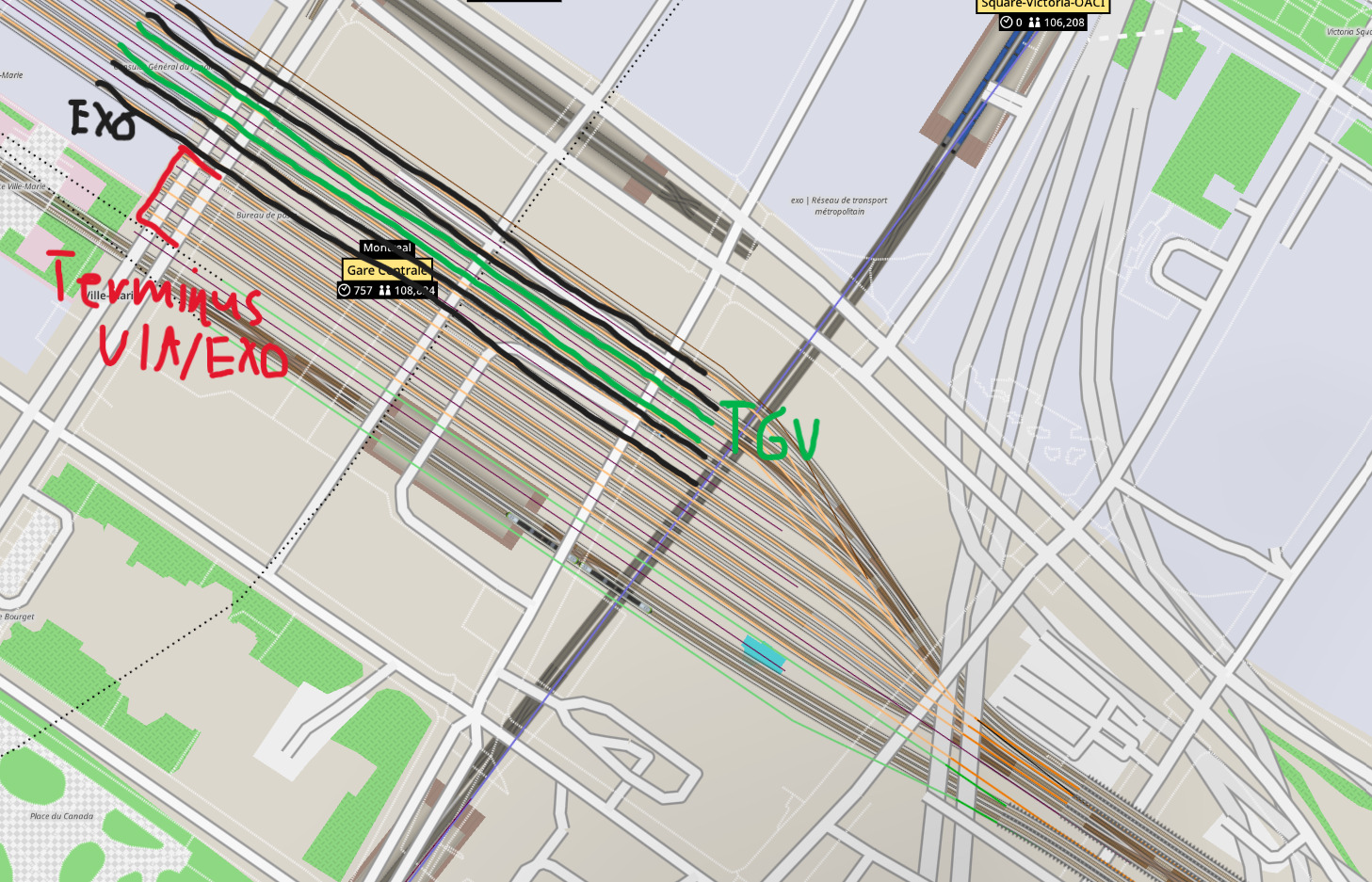
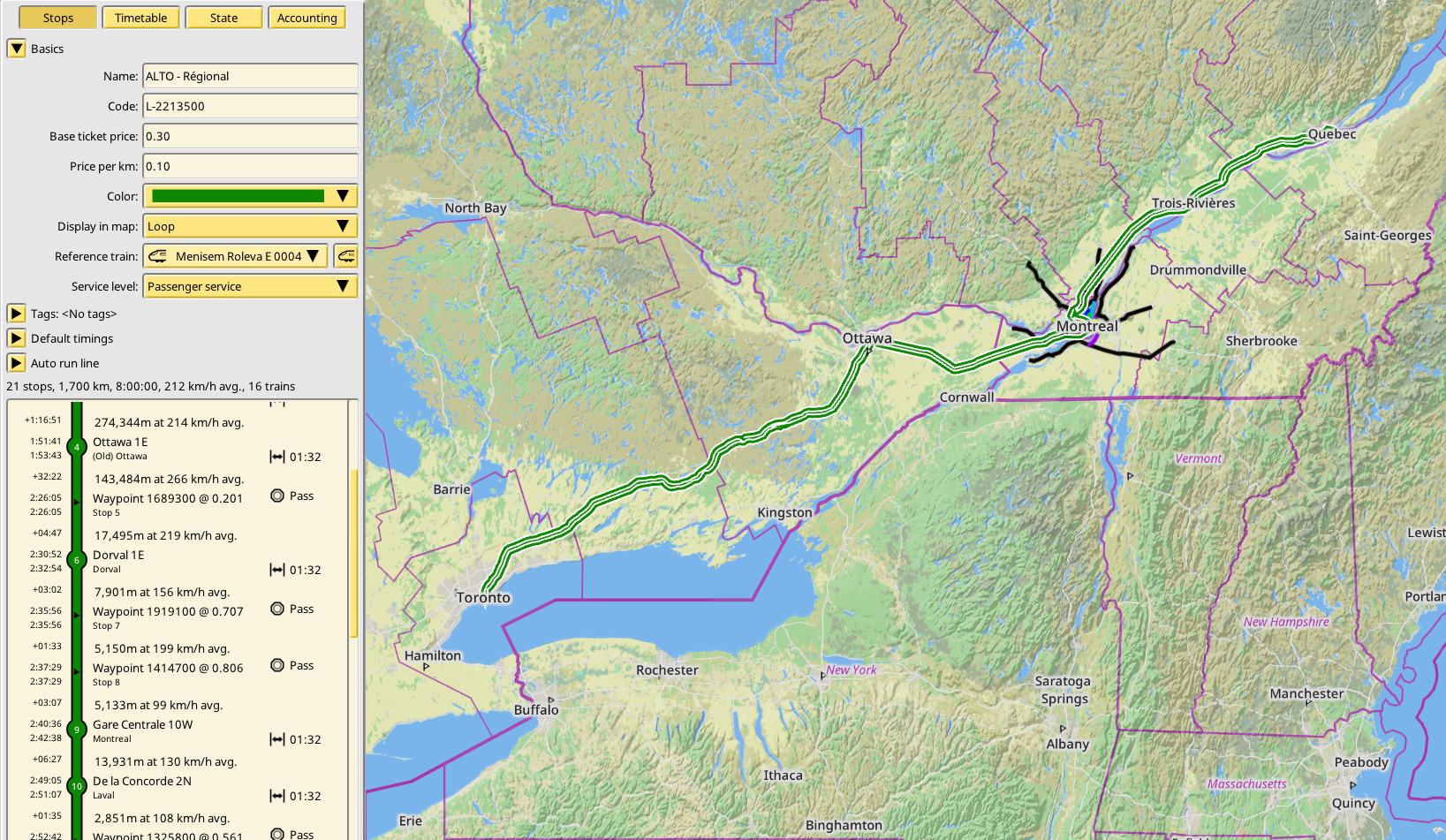
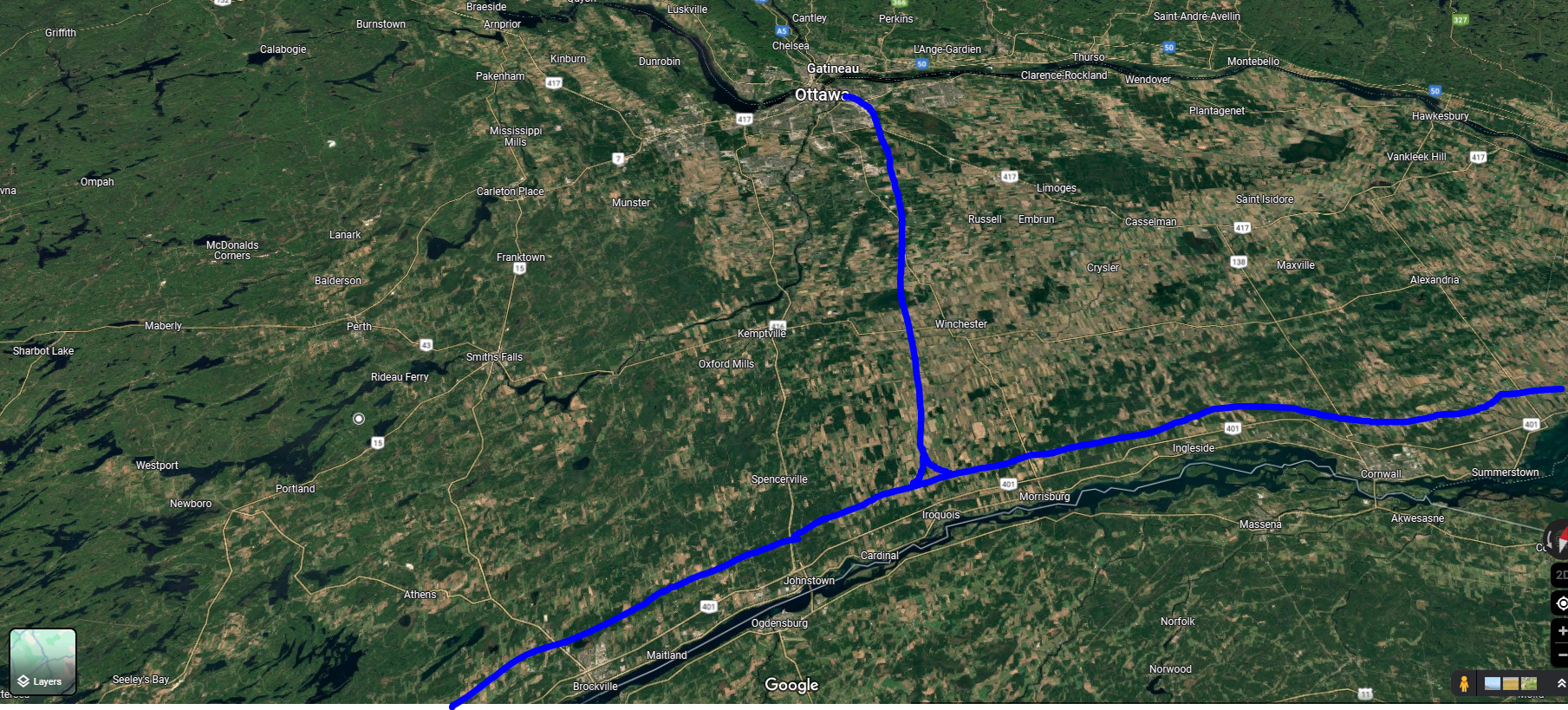
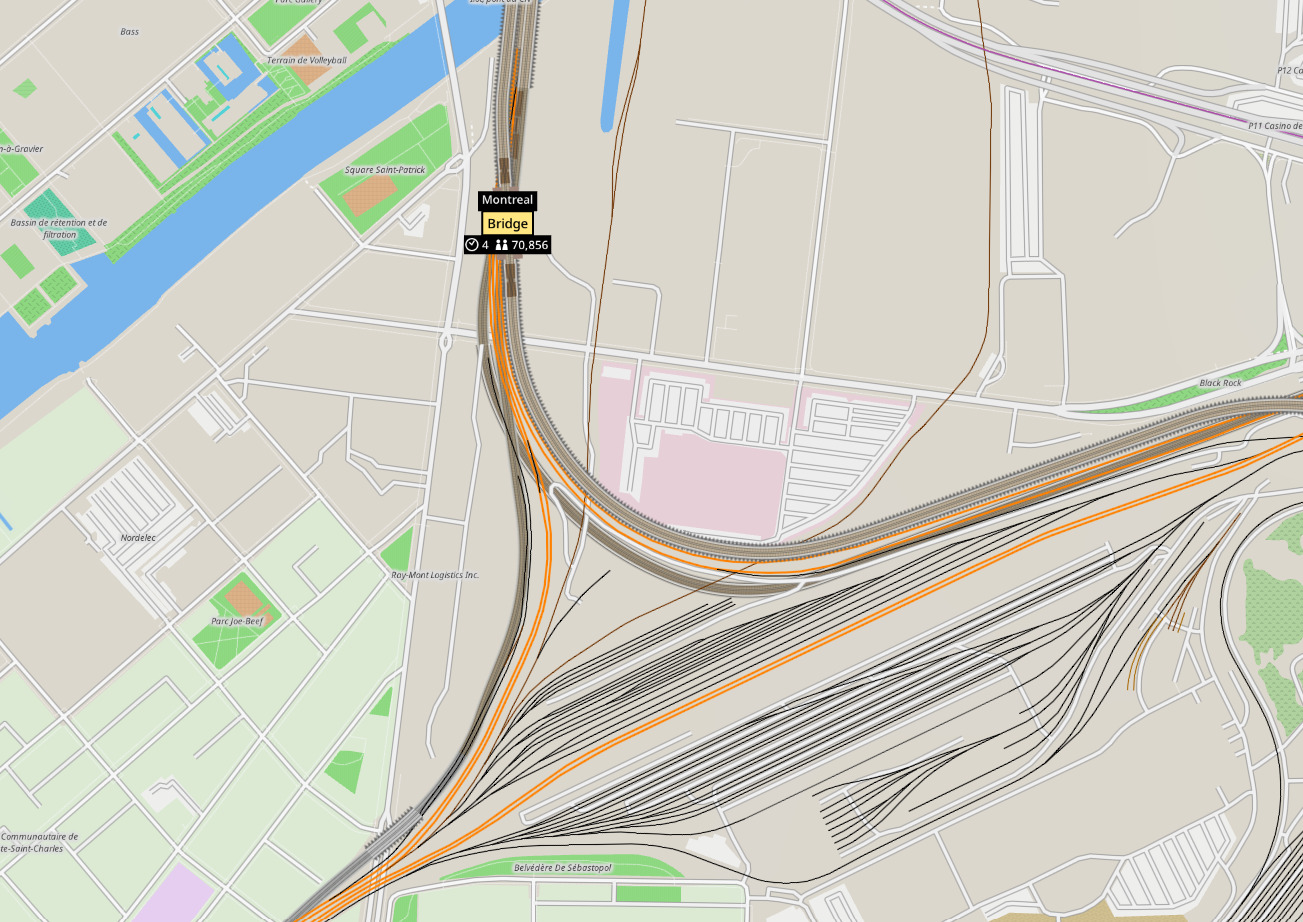
Bon alors pour voir ce qui était possible en termes de temps, j’ai joué un peu avec Nimby rail et du même coups je voulais présenter ce que je pensais le plus souhaitable pour le TGV. Prenez en compte que tout est au à peu près même si ça donne une bonne idée de ce qui serait réalistiquement faisable.


Pour ce qui est de la Gare Centrale, sans ERTMS, c’est quasiment impossible de faire un niveau de service décent avec EXO/VIA en mixant la fonction terminus et continue sur deux voies. Juste sans l’ERTMS avec deux voies pour les trains prenant le tunnel ça mène à des ralentissement, alors j’imagine même pas si on mélange les deux. De ce fait, j’ai fait deux voies qui arrive de l’ouest en les faisant passer au-dessus de celle venant d’un nouveau tunnel ferroviaire sous le fleuve à partir de Saint-Lambert que je propose. Comme ça, on évite la majorité des conflits et double la capacité pour le tunnel tout en respectant les emprises existantes.

Comme vous pouvez voir, j’ai séparé la gare pour éviter au maximum les conflits encore une fois, il faudrait mettre en place des aiguillages de retournement sur les voies du centre réservés aux TGV avant qu’ils ne joigne aux trains EXO pour éviter tout problème. Comme ça, vu que les TGV vont avoir beaucoup moins de trains par heure, cela devrait causer moins de problèmes ce qui serait plus problématique s’ils l’avaient fait au milieu du trafic EXO qui pourrait être beaucoup plus important dans le futur.


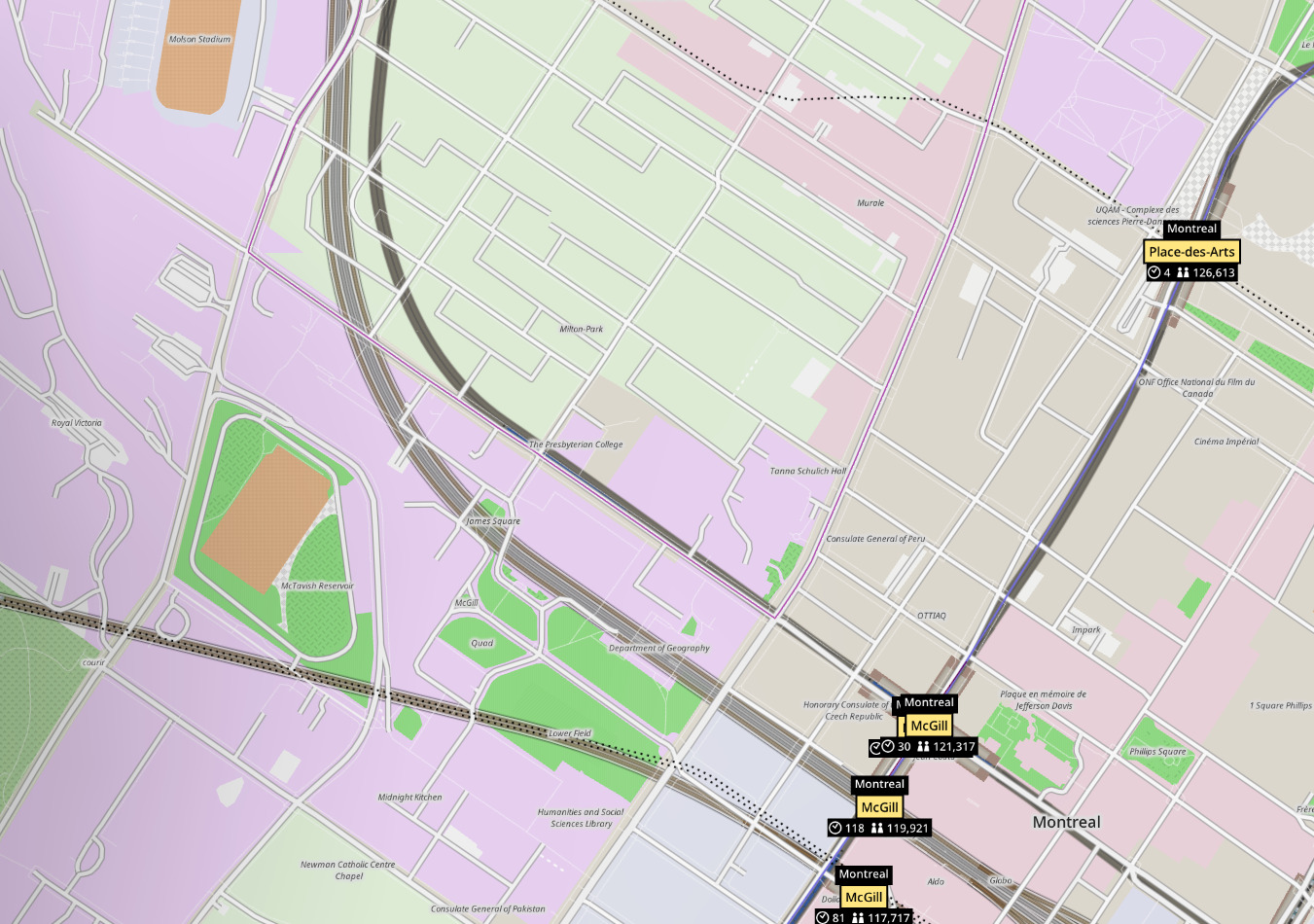
J’ai aussi mis une gare à McGill pour les trains EXO pour assurer une meilleure connectivité, puisqu’on est très poche de la gare centrale et qu’il y a une autre gare plus loin, terminer les voies d’évitement juste après McGill créerait inutilement des conflits j’ai décidé de prolonger les quatre voies jusqu’à Milton Park. Le reste du tunnel est double voie avec une autre gare EXO au Mile End.


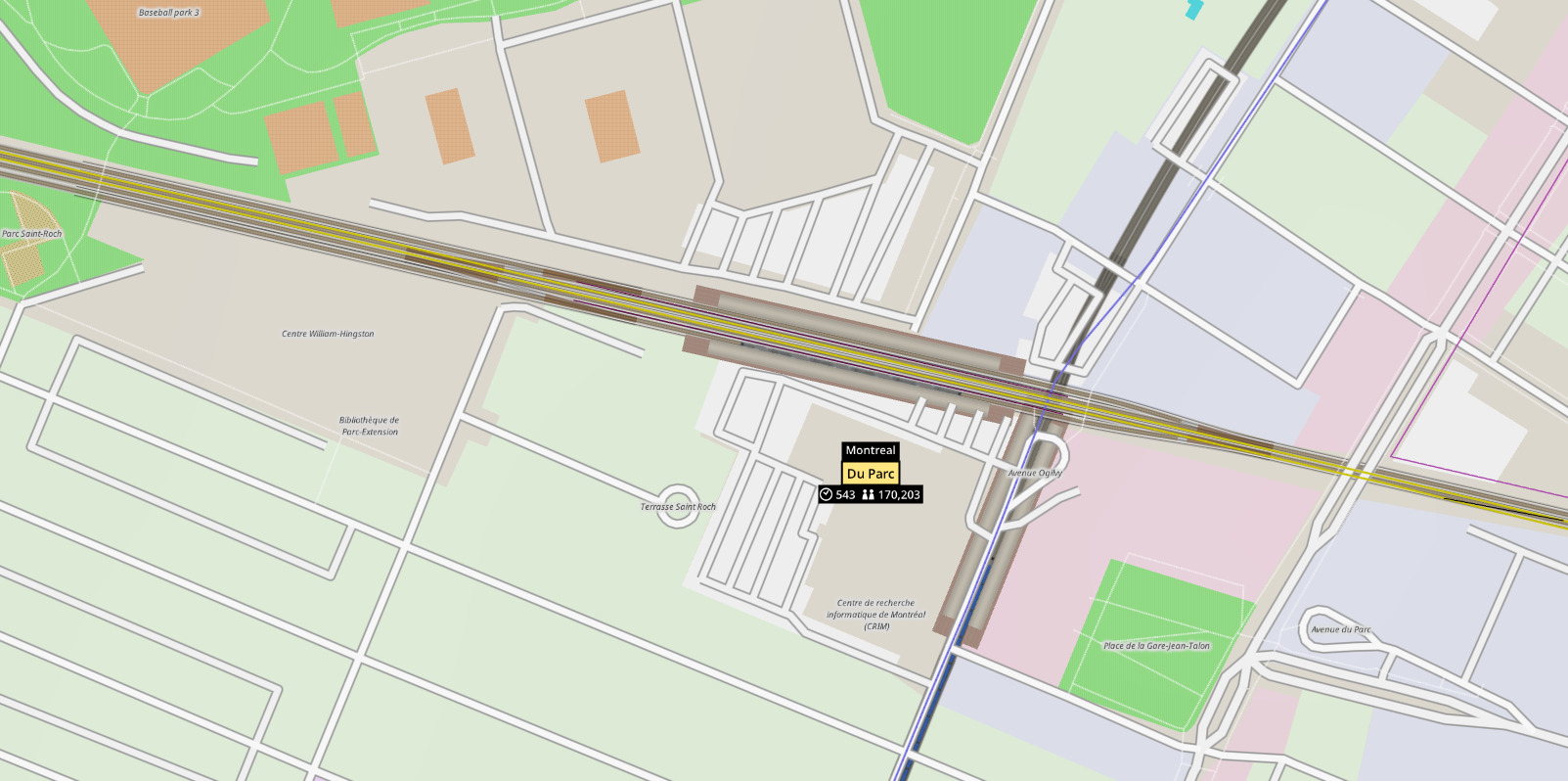
Pour ce qui est de la gare Parc, je la ferai en cut and cover en transformant Jean-Talon en viaduc, puis je sortirais de terre au milieu du Parc Jarry tout en gardant les quatre voies jusqu’à Chabanel puisqu’il y a de la place avec quelques expropriations.


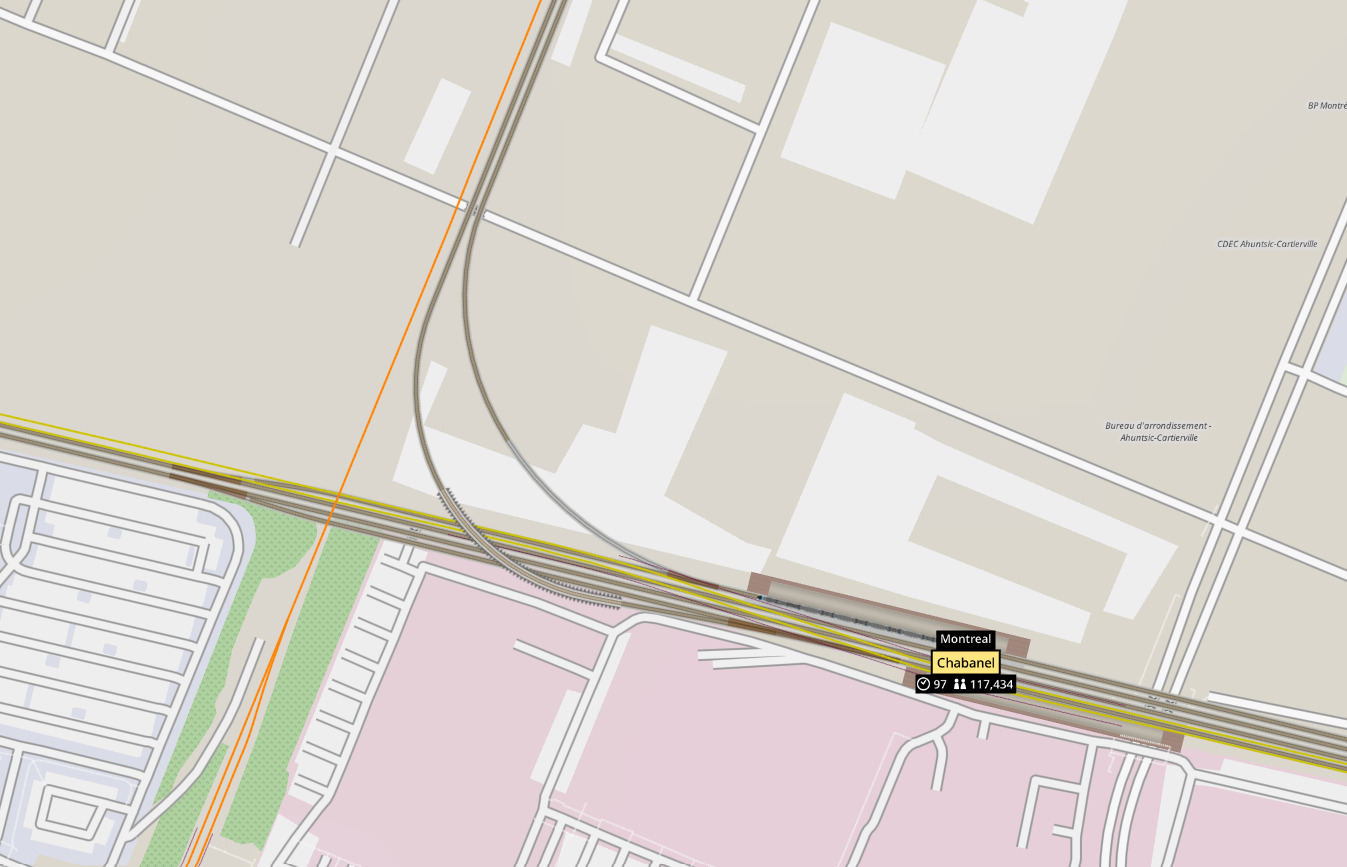
Voici la jonction Chabanel, il y aurait quelques démolitions à faire et de la relocalisation d’utilités électriques, mais c’est moins pire de ce à quoi je m’attendais. Je retournerais à deux voies à la suite du viaduc du CN puisqu’on serait passé de deux à quatre lignes d’EXO dans mon plan.


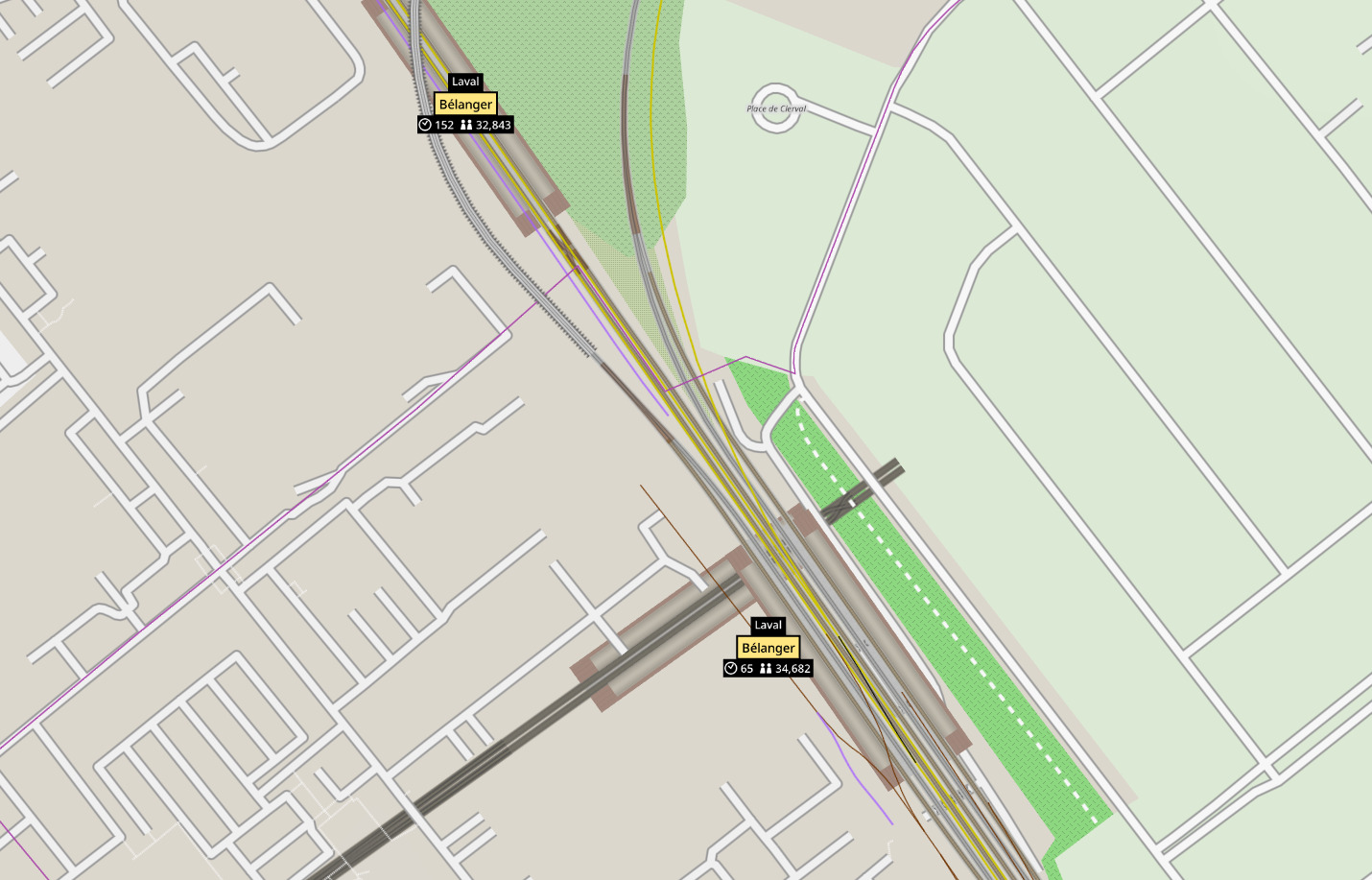
Finalement, la jonction à Bélanger où j’ai prévu une voies d’évitement pour les TGV à une nouvelle gare d’une possible ligne de trains de banlieue sur les voies du TGV. À partie de là, on aurait que deux voies avec des gares possédant des voies d’évitements jusqu’à Mascouche où la ligne de train de banlieue terminerait grâce à une troisième voie qui serait rejoint par la direction est avec un flyover.


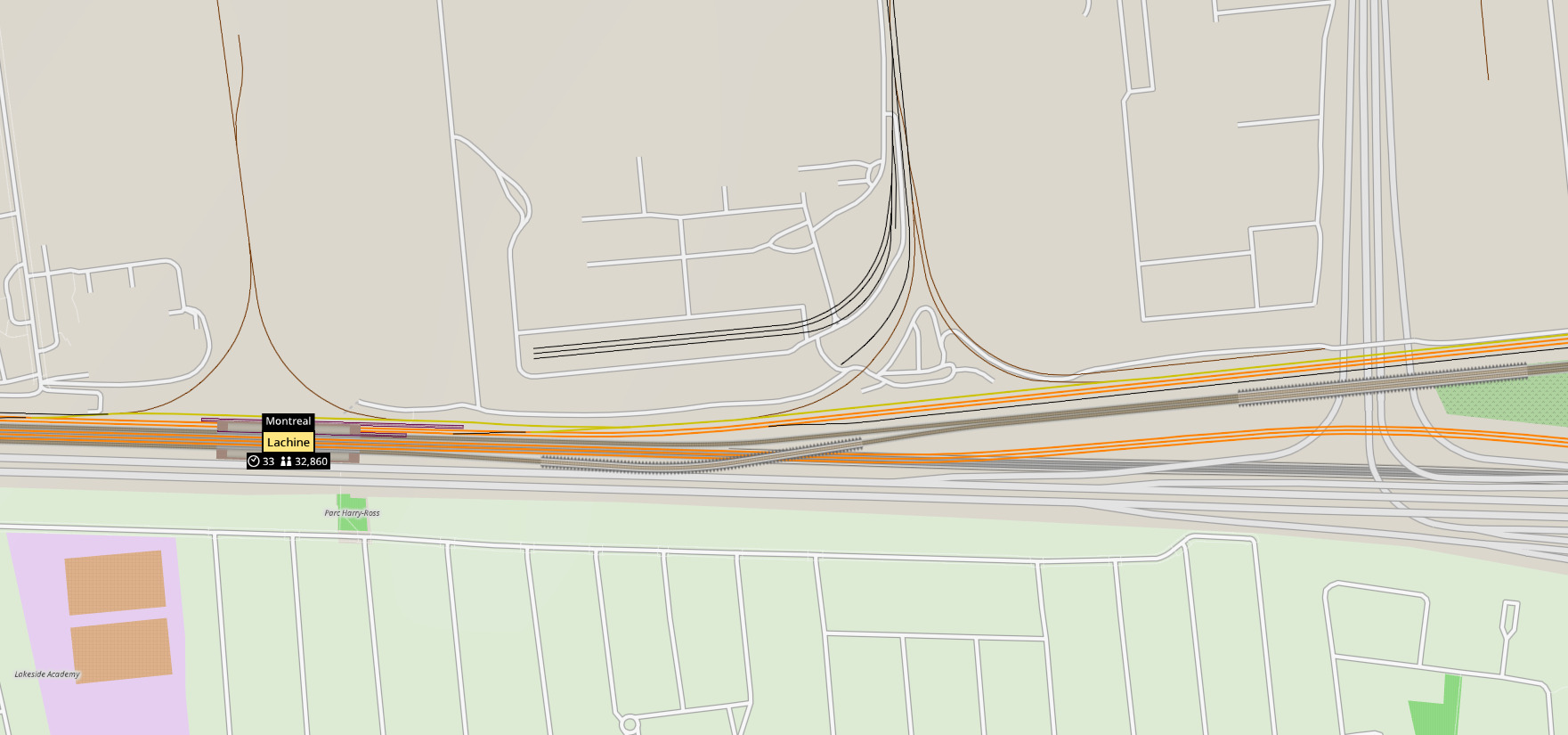
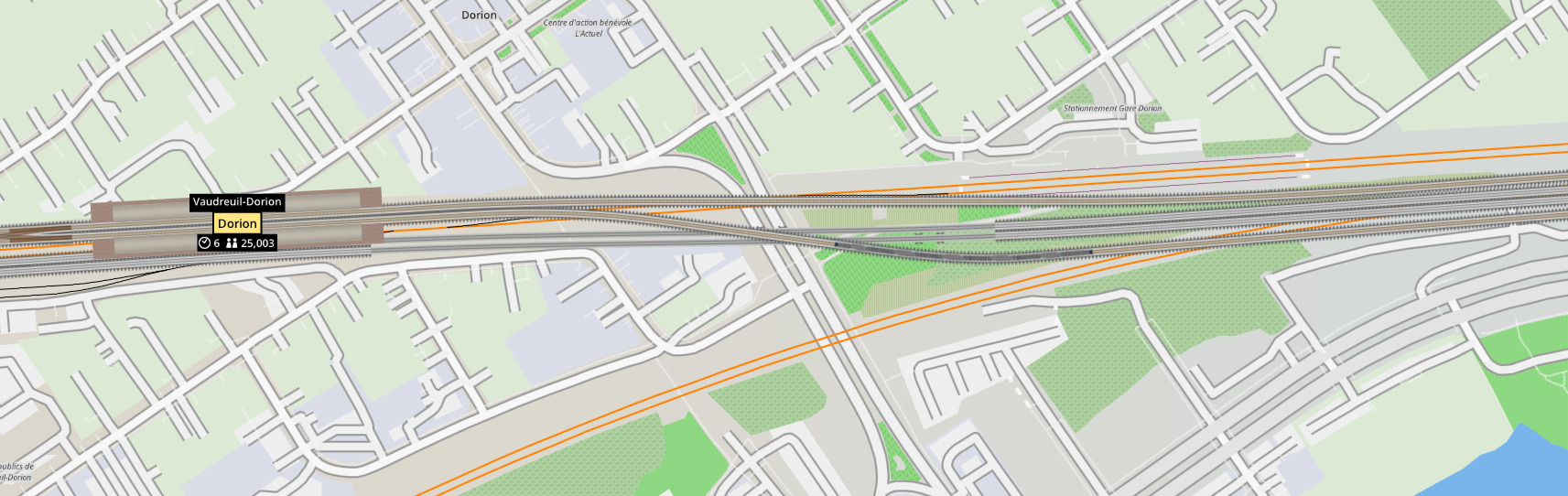
Pour ce qui est de l’emprise sur le bord de la 20, avec cette taille il était possible de mettre quatre voies, pour être future proof, augmenter les vitesses d’ALTO et permettre d’autre trajets express intercité vers Kingston par exemple, j’ai décidé de quadtrack avec EXO sur les abords et ALTO au milieu. Le fret pourrait être combiné sur deux voies que je n’ai même pas touché tellement il y avait de la place, voilà la jonction des services du côté de Lachine et de Dorion. Dans les deux cas, j’ai prévu des zones en viaduc pour permettre au fret de passer sous le TGV et avoir une jonction avec les voies frets.

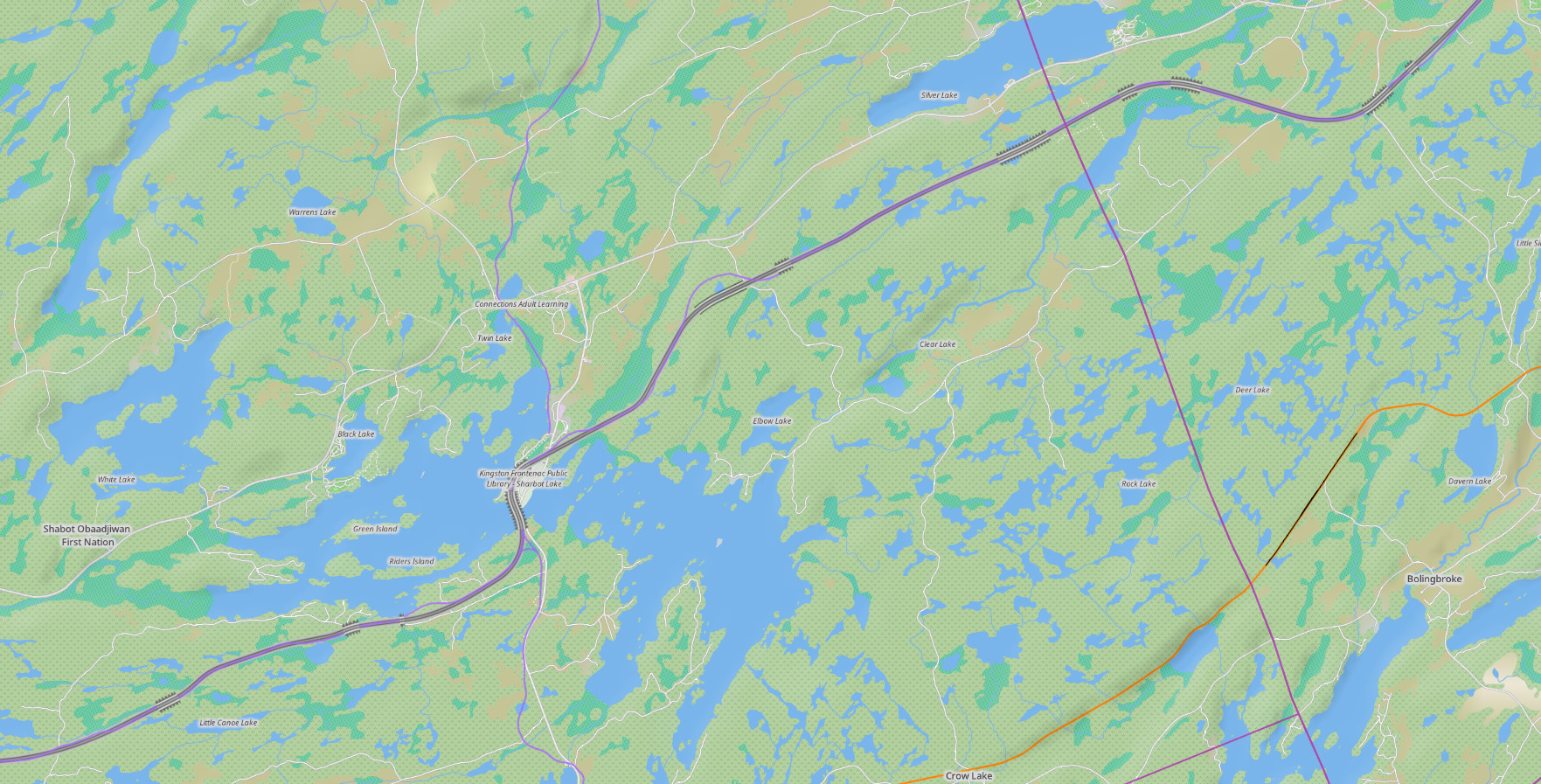
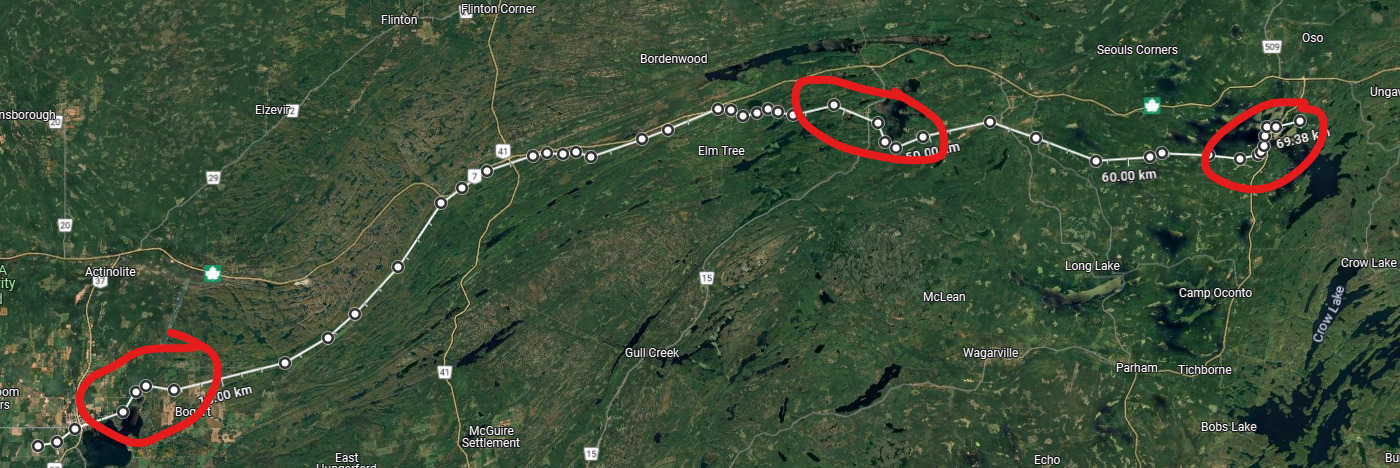
Voici un exemple de à peu près les libertés que je me suis permis en ce qui a trait à sortir de l’emprise, sauf dans des zones plus proches de Peterborough où je suis allé sur une route verte pour gagner de la vitesse, j’ai relativement suivi les emprises.

Au final, pour un service qui s’arrête aux principaux points requis par le gouvernement fédéral (Toronto, Peterborough, Ottawa, Montréal, Laval, Trois-Rivières et Québec), je réussis à avoir un temps de 4h00. On voit donc que même avec un passage par Peterborough sans bypass les temps de trajet pourraient être très compétitifs.
3 « J'aime »

It is not a question of saving mileage but rather keeping the corridor closer to population centers along the lakeshore like Kingston that would be pertinent to serve, with additional “local service” instead of in the middle of the woods.

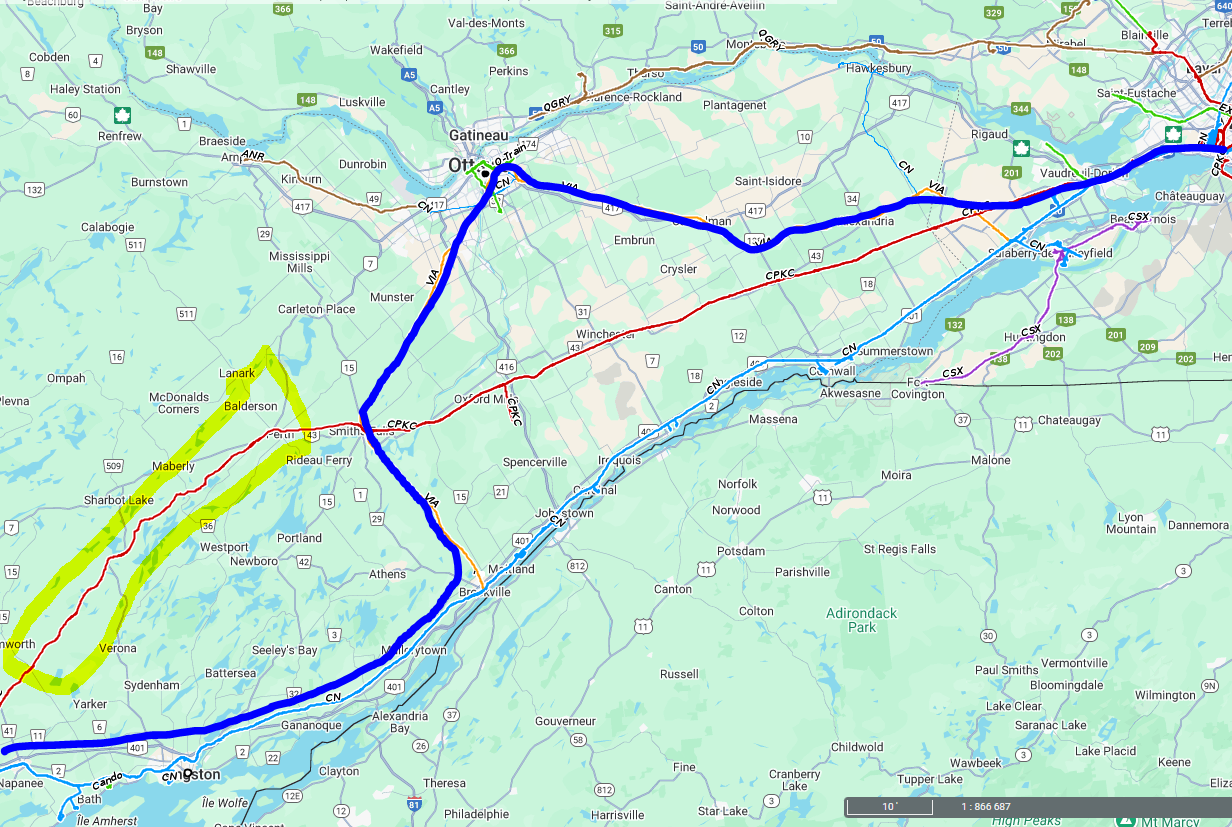
One compromise would be to upgrade and use the Brockville and Smith Falls subdivisions to reach Ottawa from Kingston and avoid the inverted T network.

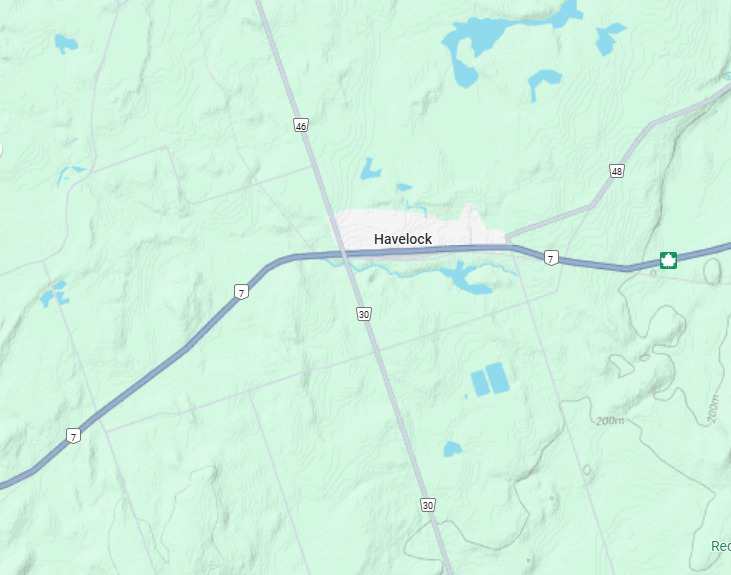
Keep in mind that there is quite some hilly terrain west of Smith Falls (look how curvy the Belleville sub in yellow is) and that there is a gap between Havelock and Smith Falls where a new ROW needs to be cleared. The land near the lake is flatter and it might even be possible to use the 401 ROW in some straight segments.

Having Peterborough locked in the project conditions was not the best idea, given the population size and it’s excentric position vs the lakeshore corridor cities. Kingston has a larger population size and a major university thus driving greater demand for HSR service.

It make little sense to only serve Kingston with an “upgraded” local service using shared CN trackage that would still make the trip to either Toronto or Montreal in 2h or more and no connection to Ottawa.

Now that he have to serve it, I’d see 3 options for Peterborough, either:

  • A “regional local” station around Bewdley and some synchronized bus service to downtown
  • A “super GO Train” express line along existing tracks, could be electrified and 200 km/h max speed
  • We divert the main line north again

2 « J'aime »

I feel like where the line should be is far enough from the lakeshore to limit expropriation costs and stay far from population centers, but not too far in the Canadian Shield in order to limit costly bridges and tunnels that would be required.

I don’t really understand why Peterborough is always included in this… What Peterborough really needs is a fast connection to Toronto.

1 « J'aime »

A few things:

Firstly, Kingston and Peterborough are very different cities with very different futures, but one thing they aren’t so different in is population. Kingston CMA is 172,000 residents, while Peterborough is 128,000. The average daily traffic demand between Peterborough and Toronto is orders of magnitude higher than Kingston-Toronto because Peterborough is so much closer. People regularly commute to Toronto, Scarborough etc from Peterborough and vice-versa. (i.e higher ridership for a train)

2nd. the whole reason Peterborough is in the network originally is because it allows for the TO-OTT-MTL TGV to be one route which significantly reduces the amount you’d have to spend to have an hourly or better frequency between those 3 cities. It’s also not possible to serve Ottawa, Kingston and Montreal in one route efficiently. Not only would it add 100+ km of new track to build to serve Ottawa, but the frequency on both routes would be 1/2.

3rd. Another reason the TGV will not go along the lakeshore is because it’s not meant to be a milk run, like some suggest over and over. Kingston, Oshawa, Cobourg, Port Hope, Napanee, Cornwall, Gananoque are all happily served by 5-10 daily VIA trains. Attempting to serve these places with a TGV reduces the speed and simplicity of the network and honestly, why build a train that goes +200 km/h if it’s gonna stop every 45 km?

If we agree we aren’t gonna stop at every town, then what is the difference in population between the south route and north route? Only about 50,000 which is the dif between PTBO and KGON , which is negligible given the pop of the corridor.

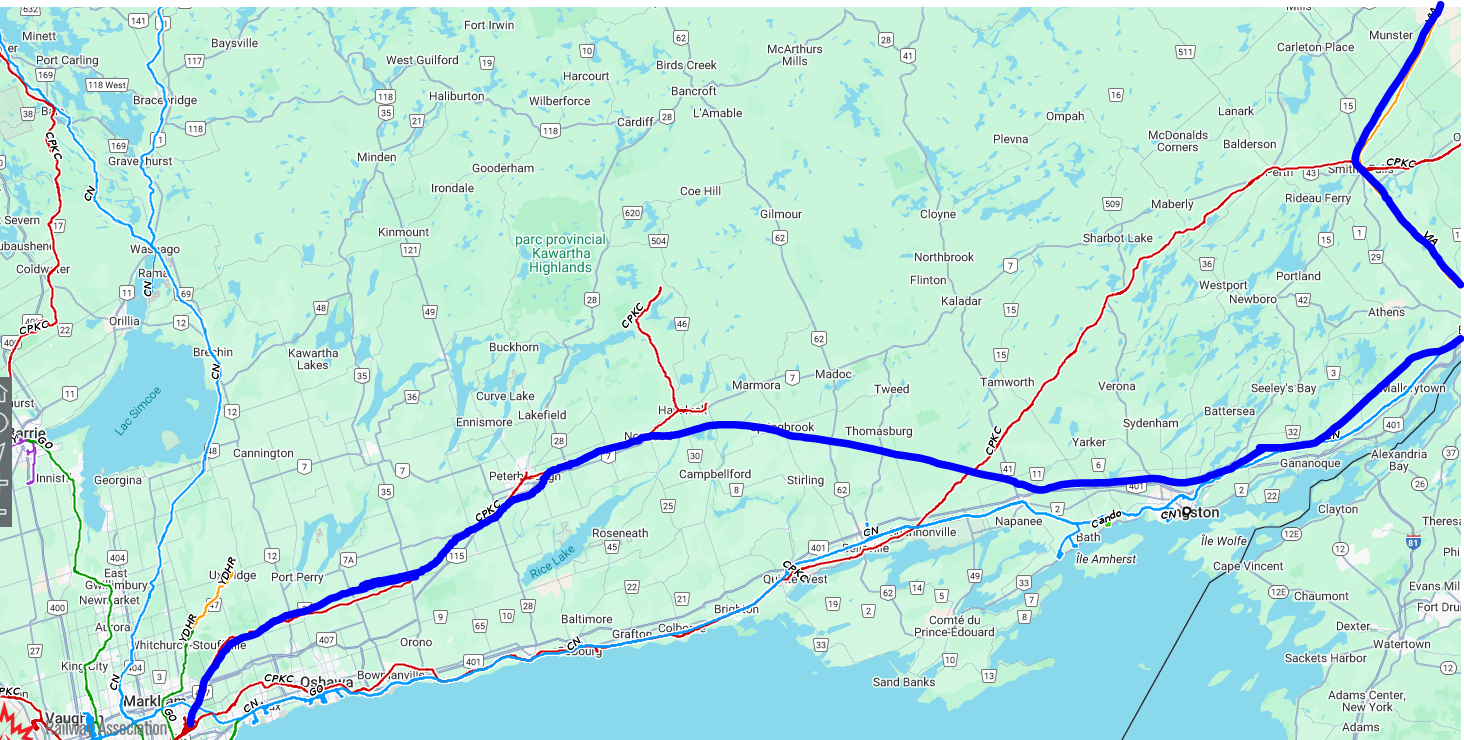
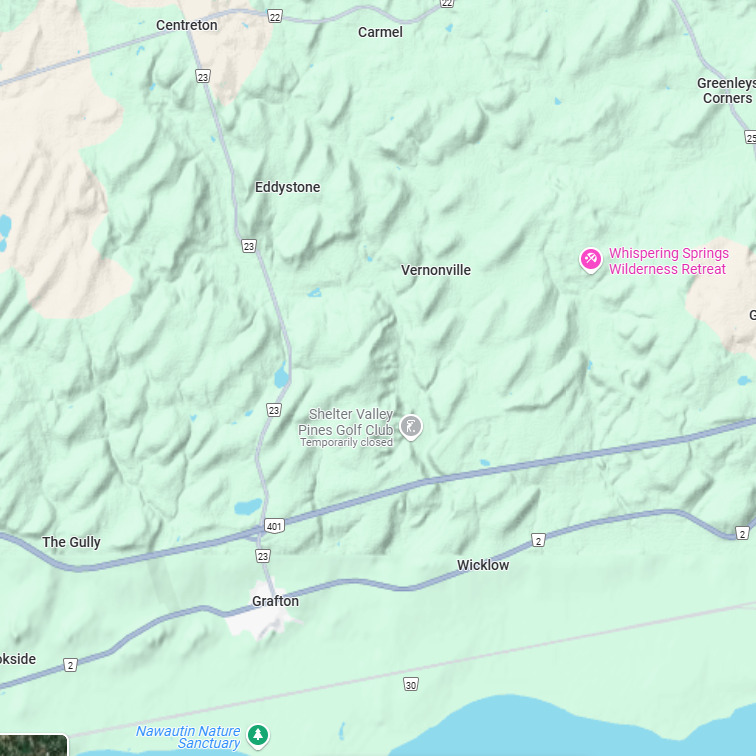
If you try to follow the lakeshore, but just a little north, well you encounter another problem. The entire area south of Peterborough, north of the lakeshore swamps, and east of peterborough is extremely hilly. Thankfully, it’s actually flatter near hwy 7, hence why they built a rail line there in history.
Img 1: 401 corridor Oshawa and Belleville


img 2: Hwy 7 before Tweed

Finally, there is an existing corridor in the north. Even if we can only use the ROW for 50% of the route, and the other 50% has to be new infra to avoid hills and towns, it remains that 50% is existing right of way. Trust me, you can’t build a TGV is the ROW of the 401, it’s not like the 40 for example. Ontario east of Kingston is rolling hills, and the 401 goes up and down them the whole way at slopes much higher than a TGV is meant to handle. There are also overpasses and interchanges every 5-10 km the entire route, all of which would have to be rebuilt. It’s akin to trying to put a TGV in the median of the 15 in complexity.

TLDR; the pros and cons

Via PTBO pros : capture the ptbo-tor commuter shed; existing ROW for majority of the route; less expropriations; less overpasses to construct; less towns to contend with politically; shorter; allows for service of Ottawa, Montreal and Toronto in one shot; less agricultural land destroyed; simpler

Via PTBO cons: 50,000 less people served; Terrain between Tweed and Maberly could be difficult (70 km)

5 « J'aime »

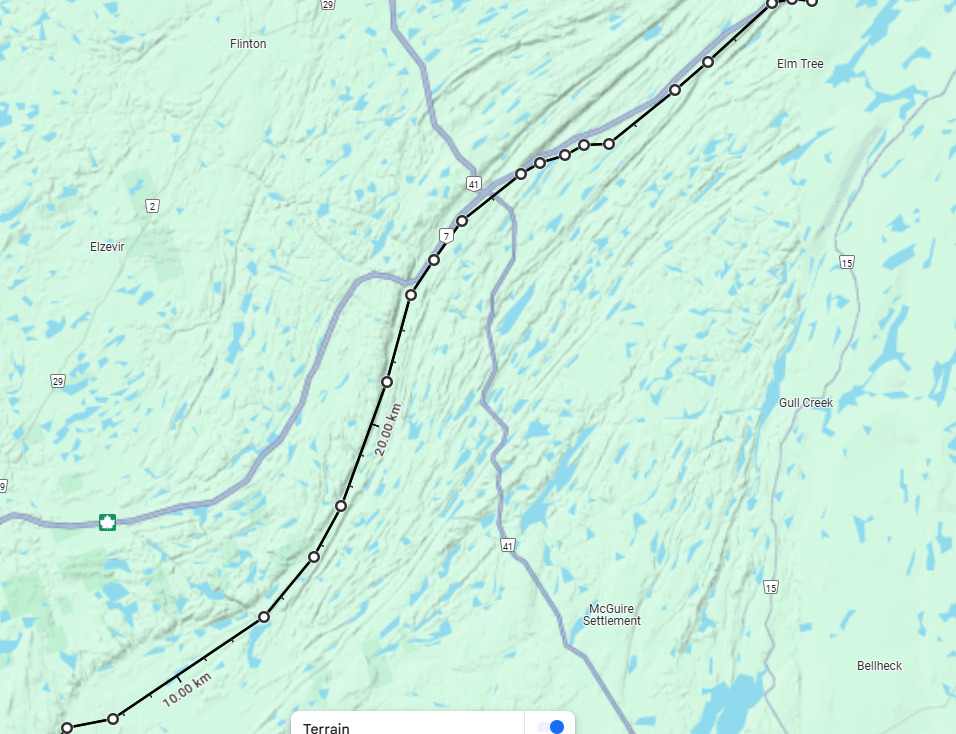
This is the existing train line through the canadian shield. Note that the only significant curves are all related to lakes or towns, which will have to be bypassed anyway. The rest of the route is pretty arrow straight, because of the linear glacial rock formation.


it’s actually quite easy to build a train line when all the hills run in the direction you’re going.

2 « J'aime »

I don’t really buy this… You said it yourself, what Peterborough needs is a fast connection to Toronto. Not Ottawa, not Montréal, not Québec City. Why does it have to be connected to high speed rail? Build a GO Transit rail line there and give them hourly service and they’ll be just as happy as the lakeshore cities having 5-10 Via trains a day.

This line exists, yes. It will have to be entirely rebuilt, especially if we want 300km/h trains going through there… We can use the corridor without stopping at Peterborough anyway.

Here’s what (I think) the needs are:

  • A fast, regional connection between Peterborough and Toronto
  • A high speed connection between Toronto and Ottawa
  • A high speed connection between Toronto and Montréal
  • A fast connection between Ottawa and Montréal (I don’t want to say regional because there are 200km between the two cities, but it doesn’t have to be high speed either).

With this in mind, why do we need to respond to these needs with a single solution?

My point about the HSR bypassing Ottawa and Peterborough is that the high speed line could naturally continue passed Perth/Smith Falls in a straight line all the way to Vaudreuil, enabling much faster service to Montreal, while also connecting at Smith Falls with the line to Ottawa (which is already Via owned and has good speed (160km/h).

There’s a few more cons.

  • Mitigations against wildlife impacts (both figurative and litteral) are more important
  • More new infrastructure is needed to get to the edge of the Toronto urban area vs. piggybacking on existing investments on the lakeshore route
  • It’s not just Kingston vs. Peterborough, but the entire lakeshore corridor that benefits from being able to transfer to a TGV from off of the milk-run at some intermediate station (I think either Belleville or Napanee would be easiest).

It’s not a straight forward choice either way, the pros/cons are complicated and a detailed plan needs to be presented to see whether either one or both works.

Unfortunately, I disagree on all counts.

Provincial studies have shown time and again that a GO train to Peterborough simply isn’t worth it, for a simple reason. There is virtually zero population on the rail corridor between Markham and the southern boundary of Peterborough, a distance of almost 80 km (longer than any exo line). Simply put, it’s a better corridor for intercity rail. This is actually another reason why Peterborough is privileged. If VIA was to follow the Lakeshore, you have to contend with frequent (4-8 tph, more in the future) GO trains from Oshawa to Toronto, whereas on the Havelock subdivision, you have a smooth, uninterrupted corridor that, with a small bit of wiggling around CP in Scarborough, gets you to Union without disrupting GO at all. This is important, because GO does not give VIA priority at all, and often, VIA trains are actually delayed by GO honestly yeah, a full 12 car 2000 person train in rush hour is more important than a 4 car half full VIA.

As for the second point, there’s a reason VIA has always privileged consolidating Toronto, Ottawa and Montreal. It’s just the business case. We like to pretend like HSR/HFR is a surefire slam dunk, but it honestly isn’t in the Canadian context. I would have to refer to all of the reports that have been done on this question for a source.

Essentially, for X amount of dollars, we can serve Canada’s 3 largest cities. Or, for X+Y dollars, we can serve Canada’s 3 largest cities, but separately. Why pay more for less frequency and connectivity, and more required infrastructure, when it’s proven it can be done cheaper in one shot, with only approximately 5% travel time impact. I personally believe in the final HSR plan, the Ottawa bypass will be dropped for this reason.

5 « J'aime »

I agree more detailed analysis has to be done yes.

I disagree that it’s easier and less impactful to get to Union via the Lakeshore than the north. There are far more environmentally sensitive areas along lake Ontario than through the historical logging areas of hwy 7. Including but not limited to 2 national parks, a half dozen provincial parks, many many river crossings and the like. You also can’t really piggyback off the existing infrastructure for the reason I stated above, involving GO transit. The Lakeshore east corridor is already extremely busy, in future it will be 5x busier with GO expansion. To integrate a TGV into this mess would be a nightmare and would require enormous infrastructure through Toronto, whereas coming in from the north, there is no GO transit to contend with, and the historical CP corridor is relatively wide and less populated than the Lakeshore.

Note: I am biased because I’m from Peterborough originally, j’habite maintenant a Montreal, mais l’avis de VIA rail est quand même de mon bord, et c’est inchangé depuis 2015. Jamais dans l’analyse du projet HFR ou HSR a-t-on trouver un raison pour ne pas suivre le corridor Hwy 7 et desservir Peterborough. Idem pour Trois-Rivières.

I’ll say this again; for such a project, there’s not all that much added value in bypassing Ottawa. The HydroOne/Hwy7/Havelock sub corridor is fine; that conversation needs to be decoupled from the one about the line stopping or not at Peterborough.

1 « J'aime »

One key reason is operational convenience. Train frequency is still going to be somewhat limited (about a train every 30 minutes), so splitting this frequency between trains bypassing and trains through Ottawa will make passengers wait longer, often more than the time saved by a bypass. A single service pattern is also better able to handle surges in demand, say for Canada Day in Ottawa.

stopping at peterborough or not is the same argument as stopping at TR or not. However i don’t think anyone suggests not stopping at TR

Given that this is a vision thread I’m not talking about the current project, but rather what I think would be best if we had all the budget and frequencies in the world.

Montréal-Ottawa would benefit from having a lot more frequencies than Montréal-Toronto. It’s so much closer. Swiss style, 200km/h, half hourly connections would work great and not necessitate high speed rail.