You could answer your own questions if your critical thinking went further than a) “this is different, so it’s bad” or b) “this reminds me of an airline, so it’s bad.” It’s cynical to believe there is no reasoning behind VIAs policies. Traveling almost weekly with VIA, I hear the same misconception you are perpetuating from some people.
When I say save time, I mean to allow the train to leave earlier.
First of all, no passenger is required to arrive early, it is a recommendation. If it is such a burden to your busy schedule, you can arrive a 2 minutes before departure. So how does arriving early save time?
First, baggage handling. It takes time to process the checked luggage. Arriving early means that employees can gather all the checked baggage down at the platform to load it on the train as soon as is is ready. The alternative? Trying to triage the baggage as 400 riders are trying to embark, the train will be waiting awhile
Second, accessibility. Riders with mobility issues need assistance to descend. Because riders arrive early, these clients can be brought to the front of the line and given priority assisted boarding. The alternative? Someone with a cane slowing descending blocking the way, or having to stop the descent to set up the wheel chair lift for another.
Given the choice of habituating riders to being early or being last minute, the choice is clear.
There are in & out trains, meaning Montreal is a stop on the route, or trains starting from Montreal. For in and out, 5 minutes is allotted for any who needs to get off the train, and another 5 to embark. There are frequent delays. For departing trains, the time is 30 minutes to embark. If ever you are waiting any longer than the 30 minutes, it is most likely a delay caused by CN.
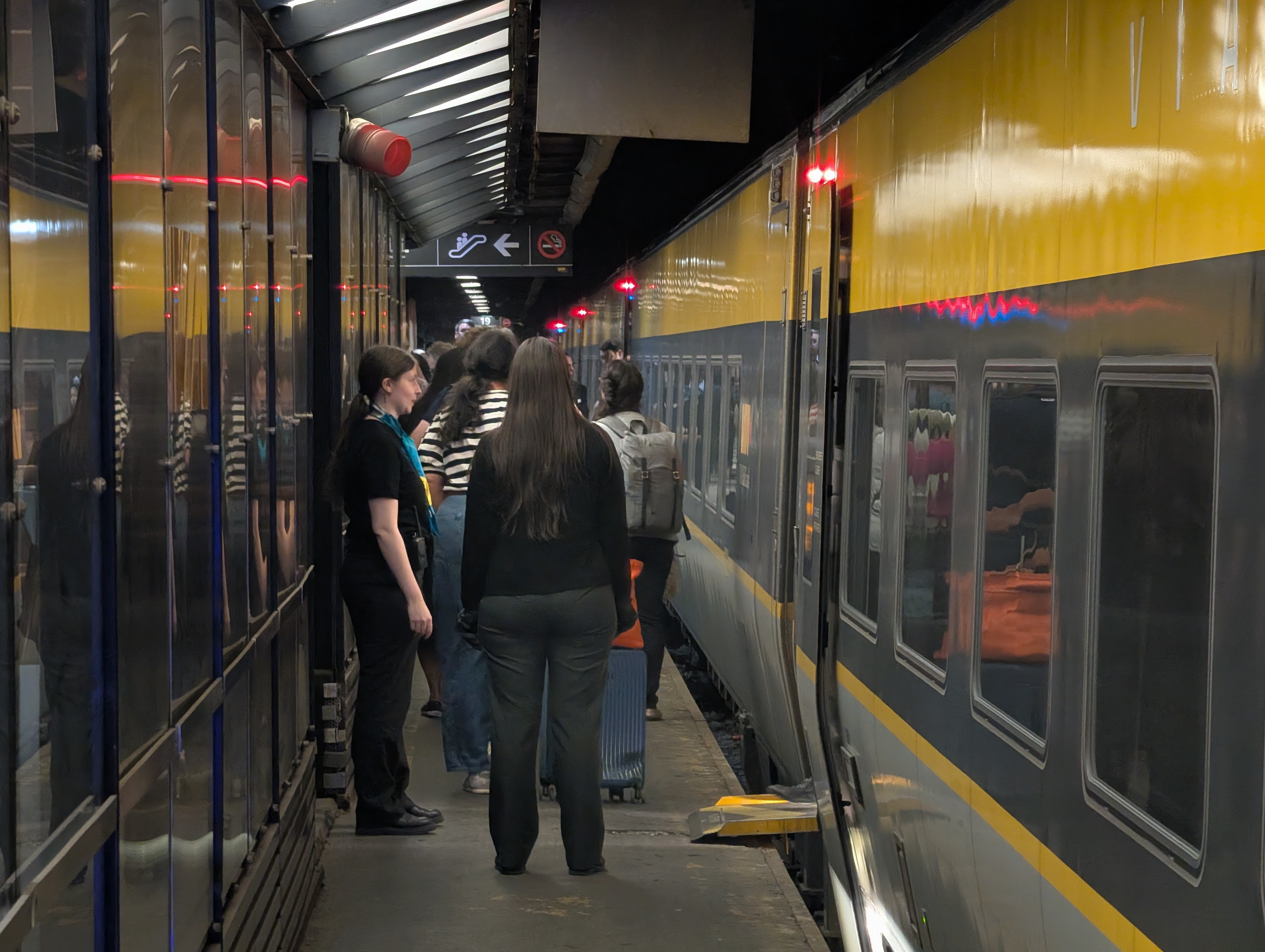
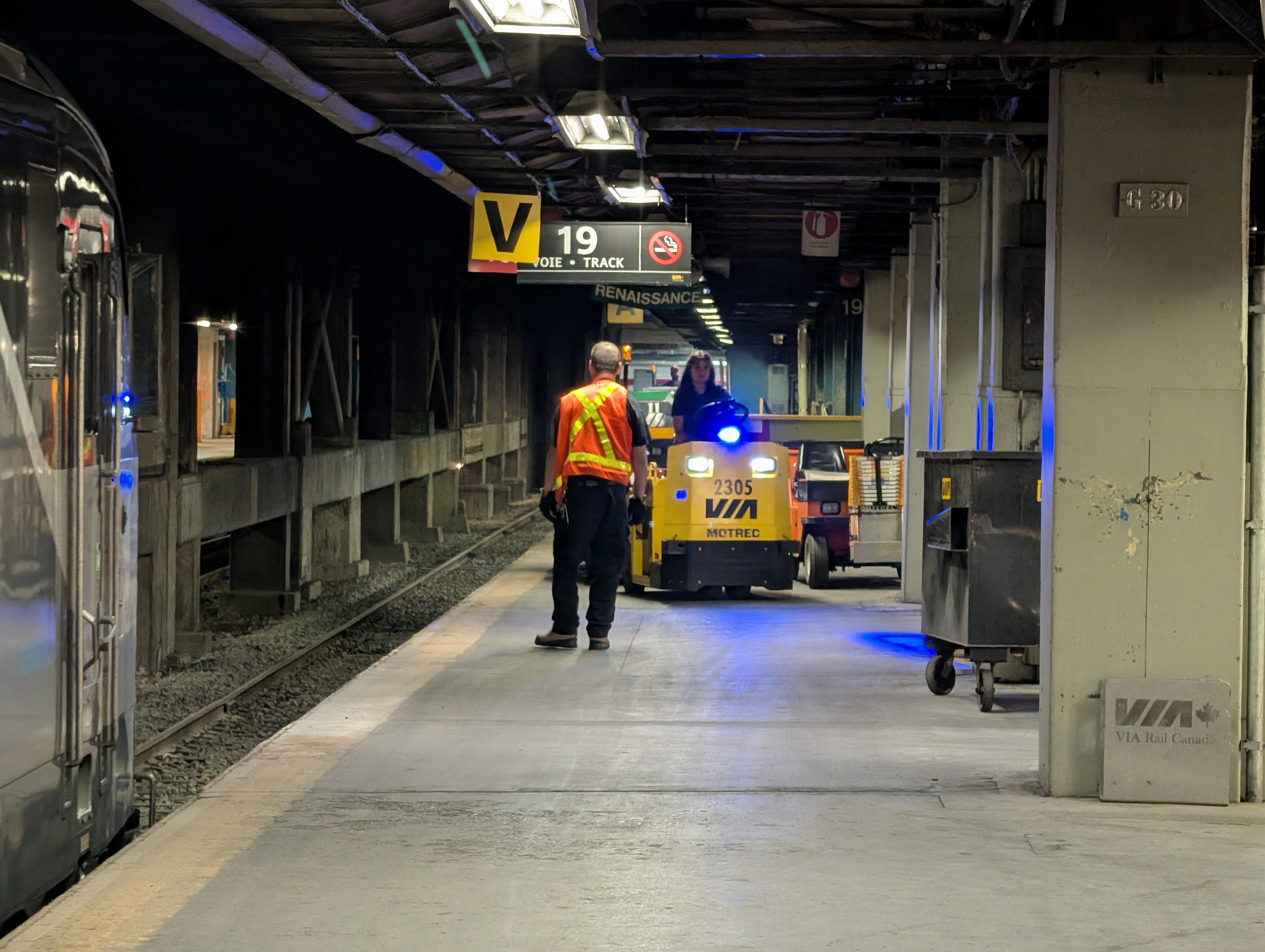
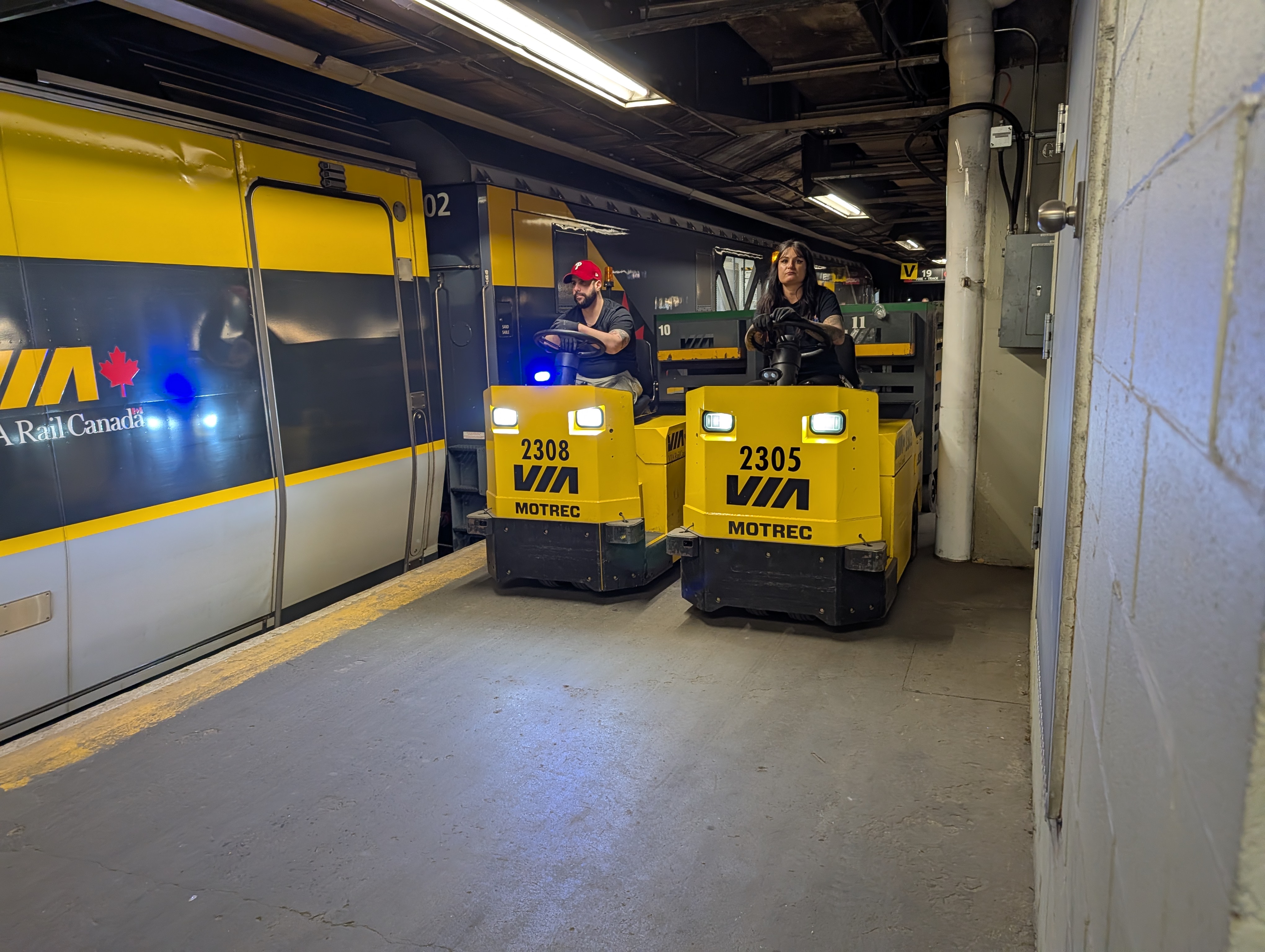
The platform is too tight. Imagine riders from a multiple trains waiting bellow, or family waiting to greet someone arriving in town, people disembarking, as well as the VIA employees driving their carts around.
VIA platforms are outdoors in the harsh elements. Even the Montreal and Toronto platforms are cold in winter. Why are you in such a rush to discomfort? It’s like having the choice of waiting for your taxi in your home, or standing at the street in the rain to save 2 minutes.
Even if VIA implements your time saving proposals, what will it change besides making a more stressful and dangerous experience? CN will deny requests for new timeslots for VIA, there are no high frequency VIA lines. If I am in charge of VIA and I have a line that can only have two trains pass per hour, my focus will be on making sure the trains don’t miss the timeslot and then use the time to offer a comfortable experience for customers.
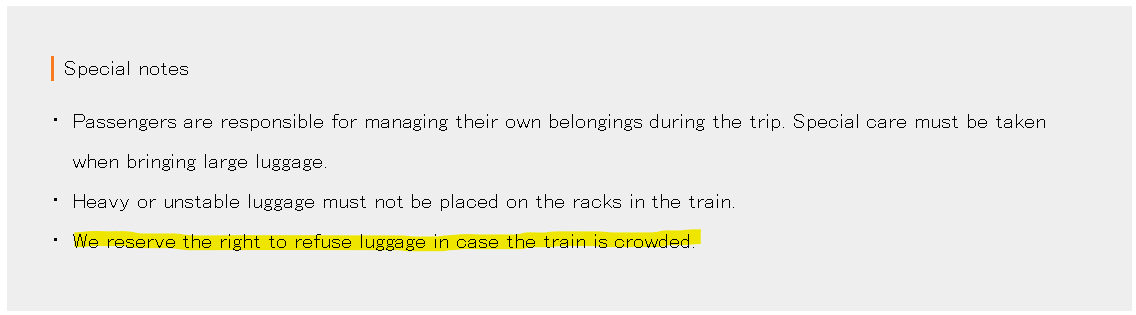
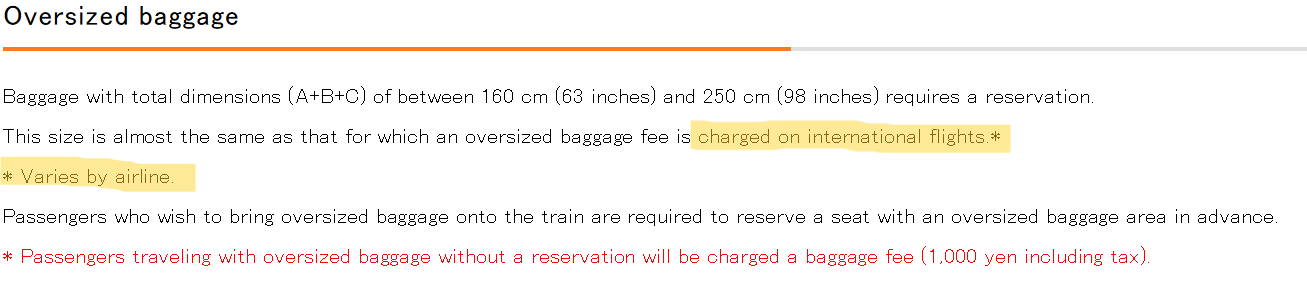
VIA enforces baggage weight limits primarily to protect baggage handlers from injury. Amtrak has the same policy. The Shinkansen trains have a max 30 kg per bag policy, as well as many other passenger rail networks. Many VIA riders are coming from to or from an airport, so adopting the baggage weight standards set by IATA just simplifies the experience for customer moving through rail and air travel.
A safety precaution in case the train attendant is incapacitated in say a derailment and riders have to exit the train on their own. Safety procedures seem useless or redundant until you need them.
VIA does have dining cars, just not on trains between Quebec city and Toronto. Most passengers trips in that corridor are under 4 hours, meaning a snack suffices. A full dining car was deemed not viable financially, especially with many bringing their own food.
That’s false. Depending on your fare, a fee may apply for selecting your seat, be it window or not. If you leave the default assigned seat, there is no fee.
Amtrak, Eurostar, Indian Railways use dynamic pricing. Dynamic pricing exists in many pricing models, not just airlines.