Alto (TGV Québec-Toronto)

Je ne suis pas sûr que la liaison MET - Toronto soit si populaire que ça. En plus, ça m’étonnerait qu’AC s’installe à saint Hubert sous peu étant donné qu’ils bénéficient de tarifs préférentiels à yul.

C’est d’ailleurs pour ça que ça a poussé Porter à chercher une solution de rechange en construisant le terminal à Saint Hubert.

Leur investissement dans Alto a vraiment pour objectif d’aller chercher du revenu sur les trajets Montréal - Toronto tout en réduisant leurs vols sur ce trajet pour libérer des portes. D’autant que les moyens courriers comme le 321 XLR qu’ils ont commandés sont capables de vols transatlantiques. Pour la compagnie, c’est gagnant gagnant, d’autant que c’est principalement jazz, une entreprise indépendante, qui opère une bonne partie des vols pour Air Canada et qui assume une bonne partie du risque.

Mon point sur MET, c’était que le quasi départ de Porter de YUL va libérer des portes domestiques. AC a aucun intérêt à s’installer au MET.

Je comprends ton point, mais vu que le TGV ne sera surement pas rentable (et c’est correct) je ne vois pas où AC pense aller chercher du revenu avec ça… le point de libérer de la place sur l’international, je peux comprendre à court terme… mais d’ici l’inauguration du TGV, YUL aura une nouvelle jetée internationale…

4 messages ont été fusionnés à un sujet existant : Vision - Alternatives à ALTO (TGV Québec-Toronto)

Pour Air Canada, YUL est saturé. Je crois qu’ils voient bien que les vols Montreal-Toronto vont diminuer et cela va leur permettre d’offrir d’autres liaisons plus payante dans l’espace restreint de YUL par exemple. Pour Toronto je ne connais pas la situation.

2 « J'aime »

:melting_face:

Version archivée pour contourner le paywall : https://archive.ph/Jy6JD

Pour l’Union des producteurs agricoles (UPA) et la Fédération de l’agriculture de l’Ontario (FAO), l’expertise agricole n’est pas suffisamment intégrée au projet de TGV Toronto-Québec. Les deux organisations demandent ainsi la suspension du processus actuel jusqu’à la réalisation d’une étude d’impact agricole indépendante et approfondie.

Il me semble qu’Alto indique clairement que les événements en présentiel sont des séances d’INFORMATION :woman_facepalming:t2:

Au-delà de la question de l’expertise agricole, les deux organisations remettent également en cause la nature des rencontres organisées par Alto dans les différentes régions visées par le corridor.

«Il faut faire attention au terme consultation. Ce qu’ils font, ce sont des soirées d’information. On nous informe sur ce qu’est le projet, mais on ne consulte pas réellement sur les impacts», estime Martin Caron.

Du côté ontarien, Paul Maurice estime également que les préoccupations du milieu agricole ne sont pas pleinement reconnues dans le processus actuel.

1 « J'aime »

J’apprécie bien l’approche prise pour cette étape. L’UPA et ses membres doivent penser que tout le monde attendait l’équipe d’Alto avec une brique et un fanal, mais avant de passer aux doléances, ce n’est pas mauvais de s’informer sur différentes facettes d’un projet… surtout avec toute la désinformation que certains politiciens et groupes se sont empressés de propager.

J’espère vraiment que ces discussions de “stalling” et que le NIMBYism ne déraillent pas le projet : ça fait des décennies qu’on attend un projet de rail de cette envergure. Avoir de l’opposition est un élément normal de tout projet, et c’est bien de pouvoir débattre et connaître toutes les perspectives pour que le projet bénéficie le plus de gens et ait le moins d’impact négatif possible, mais je ne veux absolument pas que cela résulte à une annulation complète du projet comme le REM de l’Est.

Il faut vraiment que les personnes qui sont POUR le projet donnent leur voix aussi : tout ce que j’entends du média est le côté négatif. On ne peut pas rester sur le côté et voir ce projet dégringoler comme les dizaines d’autres projets en transport en commun au Québec et au Canada.

Le statu quo n’est pas acceptable.

N.B. Je me demande quels ont été à l’époque les réactions des travailleurs agricoles à proximité des TGVs européens avant, durant et après leur construction. Peut-être qu’on pourrait en apprendre d’eux et avoir leur perspective aussi…

5 « J'aime »

@Res260 est-ce que Contruisons Montréal suit le projet? Ce n’est pas de l’habitation, mais le groupe s’intéresse plus largement aux infras non?

On suit le projet mais on se concentre beaucoup sur les élections provinciales en ce moment, on a rien de spécifique pour Alto. On est quelques uns à s’être pointés à la séance d’information pour s’informer et essayer de suggérer des idées pro-logement à Alto, mais c’était pas un effort concerté et planifié.

Fun fact Construisons Montréal a été créé en réponse et à la suite de l’annulation du REM de l’Est. La mission s’est par la suite recentrée sur le logement, par contre.

Il est encore possible de soumettre un mémoire à Alto jusqu’à fin mars. CM n’a pas le bandwidth nécessaire pour lead ça, mais ça pourrait être vraiment nice de se mettre en gang (les gens du forum) pour écrire un mémoire de support. On pourrait facilement transformer ça en lettre d’opinion et contacter des médias pour la faire publier, si on amasse assez de support interne. Jpourrais faire de la mobilisation de mon bord pour ramasser des co-signataires dans CM.

14 « J'aime »

Je serais partant pour cela! Le plus de signatures, le mieux ce sera pour le projet et pour que l’attention se prête de ce côté plus positif.

1 « J'aime »

Faut juste que quelqu’un prenne le lead là-dessus! Je peux contribuer un peu à la rédaction mais je ne peux pas être la personne principale.

1 « J'aime »

Residents who might be impacted by the route, like Ben Hammond, are pushing back, saying this project does nothing for them and may very well threaten their way of life.

“I feel that there is a divide between the urban and the rural people now, the urban people just don’t understand. It’s nice to hop on a train and go to Toronto and be back at supper time but the environment, the ecosystems that they destroy, the communities they destroy, the family businesses — it’s not worth it,” Hammond said. “I don’t want to see it, quite honestly. I’ll fight tooth and nail to keep it off.”

[…]

Elisabeth Arbaud who helped organize the protest says this project is not worth the cost.

“Saving a couple of hours at max by ruining people’s lives this is not progress,” Arbaud said.

Alto high-speed rail: Protesters in Hawkesbury oppose train

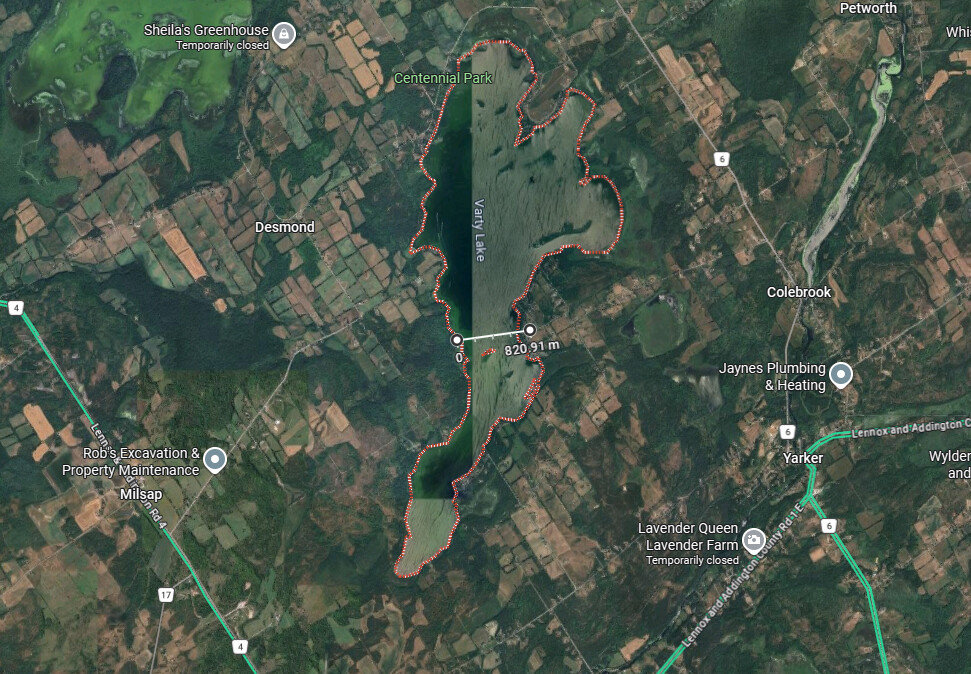
Standing on the ice along the shoreline of her property, Heather Coulson Levy pondered what the addition of a high-speed rail track would look like at Varty Lake, a 600-hectare water body ringed by seasonal houses. In the summer, it is a busy recreational spot, with residents and visitors boating, fishing and just enjoying their days by the lake.

But Varty Lake also straddles the study corridor for the southern route of a proposed high-speed rail project that would run from Toronto to Quebec City. If the southern option is selected as the final route, the track would likely cross the lake.

Trains travelling 300 km/h between Peterborough and Ottawa would cross the lake every 20 minutes or so.

“Devastation is the word that comes to mind,” Levy said.

Levy acknowledged her property likely wouldn’t be expropriated for the project, but she would be left with a lake with a high-speed rail line.

Her plans to spend her retirement gardening have been set aside as she founded Save Stone Mills to organize community opposition to the rail project.

“I’m not an expert. I’m not a politician. I’m not a train builder and I’m not an economist. But now I’ve lived, slept and breathed high-speed trains,” she said, and plans to host public information meetings against the project in townships where Alto is not planning any open house.

[…]

“This is the Great Wall of Ontario,” said Lanark County resident Kim Davis, who is trying to inform residents living along the northern route. “If it gets built, it’s essentially going to sever eastern Ontario in half, north to south. If they build it where they want to build it, whether it’s the northern or southern route, eastern Ontario is going to be cut in half.

“I really don’t think most people from Central Frontenac north even know about it,” Davis said. “I don’t think there’s enough information coming from Alto for people to get a realistic and rational understanding of what it is.”

[…]

In mid-January Alto, the Crown corporation tasked with developing the high-speed rail line, unveiled the study corridor and launched a public consultation period.

The company is, until the end of March, collecting public input about the project, including comments about the eastern Ontario route options.

That process includes 70 open houses and 10 online sessions in communities along the route. Additional open house have been planned along the route after public demand.

[…]

Emerging from the public consultations has been a divide between urban and rural residents in surrounding communities about how the government would manage to protect farmland versus overarching support for the high-speed rail project, saying it will be an economic boon for the next generation.

Toronto-based transportation expert, Stephen Wickens, told CBC Radio’s Ontario Morning show that these debates mirror the discussions that occurred in France in the 1970s calling the discussions “remarkably similar.”

“The public opinion was actually generally quite against it, and a lot of the opposition, certainly in the rural areas, came from that fear of the barriers to high-speed rail will and can create,” Wickens said. “They mitigated it significantly with a lot of underpasses in France.”

But when the high-speed rail service opened in 1981, Wickens said, the support was overwhelming.

Rural residents seek to derail Canada's high-speed rail project | The Kingston Whig Standard

1 « J'aime »

In favour of high-speed travel

“We first experienced high speed train travel in France and Italy last May. Yes, it is amazing to be able to travel vast distances in a short period of time, at upwards of 350 km/hour. Yes, the sensation of ‘flying’ is surreal. Yes, we were able to see and do much more on our trip because of this ability to get from one city to another in a matter of hours. This could be the next step in Canada’s evolution as a world class country. We are planning a much broader trip this spring, all due to this mode of transportation. Moving forward, as a country, always comes at a cost.” — Camille

“Except for boat travel, trains are the least disruptive to the environment and surrounding residents. Canada needs more rail lines, and it would get people to pollute less, have less accidents and speed up travel.” — John

“I understand that nobody willingly wants to give up their property when large-scale projects require expropriation. That’s completely understandable. However, this is often how major infrastructure projects are carried out, and for good reason. Trains operating at very high speeds require much straighter track layouts than conventional rail, which means the route cannot simply bend and curve around every community that refuses to co-operate. As a result, while the concerns of affected property owners are real, opposition in these situations can end up looking like another form of NIMBYism, where broader public progress is being blocked in order to protect individual perceived interests.” — Bernard

“I wonder what the farmers debated when the 401 was planned, or the Trans-Canada Highway or the current rail system? … Sometimes one has to bite the bullet in order to move forward and hope that elected officials do their best to accommodate those that will be affected.” — Greg

“People had the same concerns over the St Lawrence Seaway, Highway 401 and even the existing railway. We have an opportunity for a once-in-a-century infrastructure project that will provide an environmentally friendly solution to a huge transportation solution. While I wish them the best, we can’t allow a small number of concerned individuals to scuttle this project.” — Chris

“The people in this corridor have been given a heads up on what could happen. Why not plan ahead, diversify and expand your business elsewhere? When the time comes for your business to be expropriated and you are ready to act, you will only profit. In the case of the honey farm, expansion is doable and within the years it will take they will also be able to determine if their son actually wants to inherit the family farm. Many kids don’t.” — Steven W

“This is why we’ve never had a serious high-speed rail plan before … I am sympathetic at the disruption that moving would cause, but bees can certainly be moved. Carney said some sacrifices would need to be made. Of course everyone thinks it is someone else that needs to do that sacrificing.” — Dave

Readers share their takes on Canada’s new high-speed

8 « J'aime »

Frustrated by what they said is a lack of information coming out about the proposed high-speed rail project, a group of local academics have begun producing their own research studies.

Alto HSR Citizen Research has tapped into about a dozen experts in geology, environmental studies, medicine and other fields to look into questions they said are not answered.

[…]

“We want to give people the information so they can advocate.”

The research, often prompted by requests from the public, has touched on issues such as the rail line’s potential impact on minor hockey, school transportation and snowmobiling.

“I wrote a piece about minor hockey because my neighbour said, you know, this is gonna screw up minor hockey boundaries, and he’s right,” Davidson said.

“I wrote a piece about turkeys because I hadn’t realized we have 100,000 turkeys down here. I know there’s a lot. They’re in my backyard. They fly, I’ve had them fly in front of my car. What happens when a turkey hits a high-speed train?”

“These are things that are crucially important.”

Local researchers fill information gap in high-speed rail debate | The Kingston Whig Standard

1 « J'aime »

Good god.
:melting_face:

6 « J'aime »

La bonne nouvelle c’est qu’en ce moment l’opposition ne fait vraiment rien pour se rendre crédible…

Je veux dire sérieux le hockey junior pour empêcher un projet si important :sweat_smile:

6 « J'aime »

Time to can this project. No one thought of the turkeys!

1 « J'aime »

le deuxième article parle d’un corridor de 60 mètres de large clôturé - d’où ça sort ce chiffre???

1 « J'aime »

Évidemment que Alto va aller construire un méga pont pour traverser un lac de minimalement 800m de large alors qu’il est facilement contournable. :man_facepalming:

Il se dit franchement beaucoup d’âneries. S’il fallait constamment écouter tout et tout le monde, on aurait RIEN construit.

16 « J'aime »

Quand on s’asume à calculer sur Maps la largeur de l’emprise d’une ligne TGV en France ou en Espagne, selon l’environnement et la largeur du talus, c’est jamais plus de 50m, et c’est souvent plutôt autour de 30. Les voies seules c’est 20, mais il faut compter un extra pour la construction et le talus.

6 « J'aime »