Ailleurs au Canada - Politique municipale et provinciale

Dossier en 2 articles dans La Presse sur les élu(e)s de la génération Z

Élections municipales | La génération Z à l’hôtel de ville

Les 18 à 34 ans sont de loin le groupe d’âge le moins représenté parmi les élus aux dernières élections municipales. Mais de jeunes politiciens comptent bien changer la donne et faire évoluer leur municipalité. Un dossier de William Thériault.

1 Like

Les députés ontariens tombent en vacances demain et ne reviendront que le 23 mars (!). Le parlement ontarien n’a siégé que 51 jours cette année.

2 Likes

La question est claire :wink:

L’agence électorale de l’Alberta a déclaré avoir approuvé une proposition de question référendaire sur la séparation de la province du Canada.

La question est la suivante : Êtes-vous d’accord pour que la province de l’Alberta cesse de faire partie du Canada pour devenir un État indépendant ?

Élections Alberta indique que les promoteurs du projet, l’Alberta Prosperity Project et son directeur général, Mitch Sylvestre, ont jusqu’au début du mois de janvier pour nommer un responsable financier pour la pétition, après quoi la collecte des signatures pourra commencer.

M. Sylvestre, président de l’association de circonscription du Parti conservateur uni de la première ministre Danielle Smith, a quatre mois pour recueillir un peu moins de 178 000 signatures. S’il y parvient, la question sera soumise aux Albertains dans le cadre d’un référendum.

C’est le genre de question simple, directe et sans ambiguïté que le PQ devra soumettre s’il décide d’aller en référendum.

L’agence électorale de l’Alberta a donné le coup d’envoi de la course pour recueillir suffisamment de signatures en vue de l’organisation d’un référendum sur la séparation de la province du Canada.

Élections Alberta dit que l’Alberta Prosperity Project et son directeur général, Mitch Sylvestre, ont jusqu’au 2 mai pour recueillir un peu moins de 178 000 signatures en vue de l’organisation d’un référendum sur la question.

Séparation de l’Alberta : une nation autochtone poursuit la province

La Nation crie de Sturgeon Lake poursuit le gouvernement de l’Alberta, le procureur général du Canada et le directeur général des élections de la province après le lancement de la campagne pour la séparation de l’Alberta du Canada.

Le document accuse l’Alberta de faciliter le mouvement séparatiste dans la province sans le consentement explicite des nations autochtones. La nation crie de Sturgeon Lake accuse également le gouvernement fédéral de manquer à son obligation constitutionnelle de protéger les droits issus des traités.

Suite de l'article

Il semble [que le gouvernement albertain] prend des mesures pour faire plaisir à un petit groupe de personnes.

Une citation de Sheldon Sunshine, chef de la Nation crie de Sturgeon Lake

Le chef de la Nation crie Sturgeon Lake, Sheldon Sunshine, critique notamment la modification des règles des référendums d’initiative populaire au début du mois de décembre.

Dans un communiqué, le chef indique ceci : Aucune séparation de l’Alberta du Canada ne peut avoir lieu sans le consentement des Premières Nations.

Nous sommes toujours relégués au second plan. Je pense qu’il est temps que les gouvernements comprennent le point de vue des Premières Nations.

Une citation de Sheldon Sunshine, chef de la Nation crie de Sturgeon Lake

Il estime que la pétition souverainiste va entraîner une ingérence étrangère, des problèmes économiques, sociaux et juridiques pour la population albertaine et toutes les Premières Nations de la province.

Les indépendantistes pas inquiets pour l’instant

Le directeur général de l’Alberta Prosperity Project, Mitch Sylvestre, qui propose la question référendaire, indique que son équipe révisera l’exposé de demande, mais que, pour l’instant, la récolte de signatures poursuivra son chemin.

Nous verrons bien comment cela se passera, mais nous avons beaucoup de personnes prêtes à se mettre au travail ici, dit-il.

La question référendaire de l’Alberta Prosperity Project est la suivante : Êtes-vous d’accord pour que la province de l’Alberta cesse de faire partie du Canada pour devenir un État indépendant?

Cette question a d’ailleurs été approuvée par Élections Alberta avant Noël.

Notre intention n’est pas de nuire aux Premières Nations. Nous sommes absolument déterminés à ne pas le faire, dit Mitch Sylvestre.

Citée dans l’exposé de la demande, Élections Alberta n’a pas fait de commentaires sur la situation du directeur général des élections, indiquant qu’elle est incapable d’aborder des questions juridiques.

Heather Jenkins, la porte-parole du ministre de la Justice de l’Alberta, a fait savoir que le gouvernement reconnaît et respecte les droits issus des traités.

Comme cette affaire est devant les tribunaux, le gouvernement de l’Alberta n’a pas de commentaires particuliers à faire à ce sujet.

Le bureau du ministre de la Justice fédérale, Sean Fraser, n’a pas répondu à la demande de CBC/Radio-Canada avant la publication de cet article.

1 Like

Pendant des décennies, les partisans de l’unité canadienne ont eu les yeux rivés sur le Québec. Cependant, aujourd’hui, c’est dans l’ouest du pays que les mots « séparation » et « indépendance » résonnent avec le plus de vigueur. Depuis le début du mois, les partisans d’une Alberta indépendante parcourent la province pour promouvoir leur projet.

En Alberta, où l’aliénation de l’Ouest est un thème récurrent depuis le Programme énergétique national (PEN) imposé par Pierre Elliott Trudeau dans les années 1980, le mouvement séparatiste n’est plus un phénomène marginal.

Perçu comme un pillage des ressources de la province au profit de l’est du pays, le PEN a laissé des marques profondes, nourrissant l’idée voulant que le système fédéral soit structurellement injuste envers l’Alberta.

Le mouvement pour la séparation a pris de l’ampleur sous Justin Trudeau. L’imposition de mesures environnementales, notamment la taxe sur le carbone, a été perçue par plusieurs comme une attaque directe contre l’industrie pétrolière. La réélection des libéraux sous Mark Carney, malgré l’abolition de la taxe sur le carbone, a cristallisé le mouvement, estime le politologue Frédéric Boily, du Campus Saint-Jean de l’Université de l’Alberta.
[…]

C’est le contexte international qui déterminera la direction à prendre, autant pour l’Alberta que pour le Québec. Car la peur de la prise de contrôle du pays par les USA en fera réfléchir plus d’un. En effet diviser nos forces actuellement ne peut que servir les intérêts d’un président Trump disjoncté.

Only 29% of Albertans support independence, poll finds

From packed town halls to long lines for petition signings, the Alberta separatism movement appears to be gaining momentum.

A referendum on the issue could be triggered in 2026 if enough signatures are gained.

But as Heather Yourex-West explains, new polling shows the majority of Albertans would prefer to stay in Canada.

Referendum en Alberta sur l’immigration et la réforme constitutionnelle.

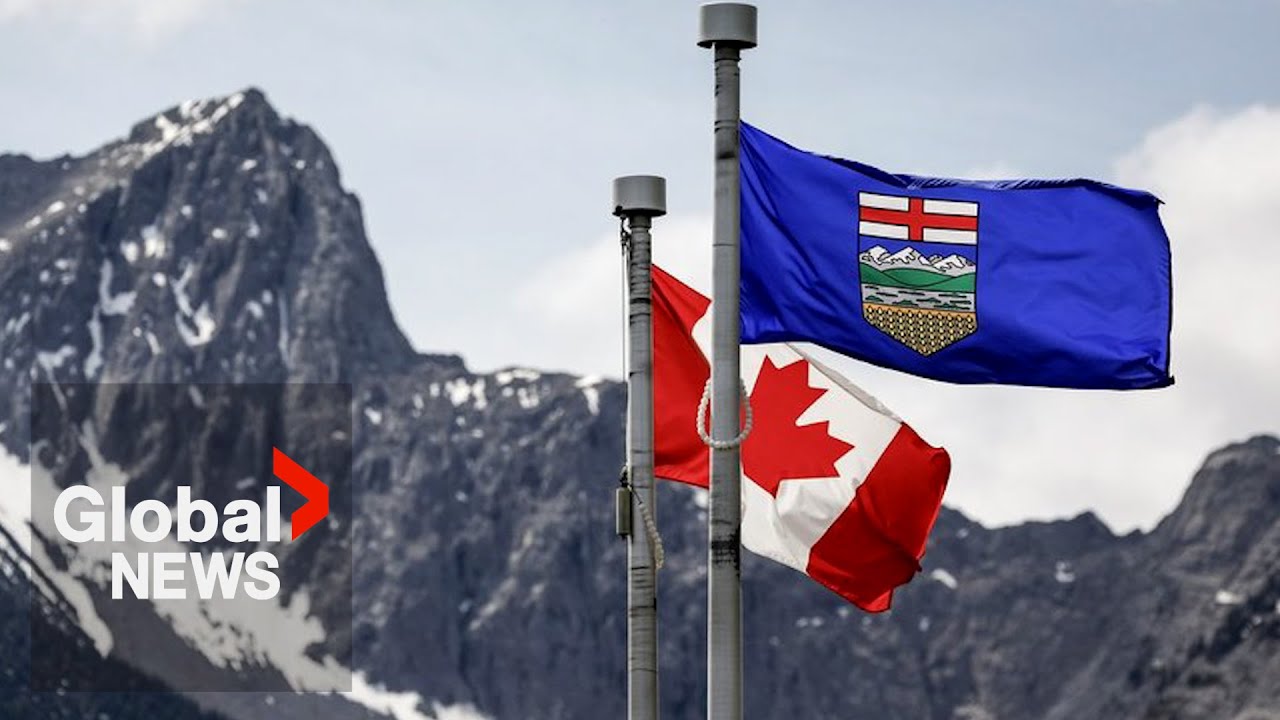
BREAKING: Premier Danielle Smith calls for fall referendum on immigration and constitutional reform

Alberta Premier Danielle Smith announced that in the fall, Albertans will be asked to vote on a series of referendum questions focused on immigration policy and constitutional reform.

On Thursday, Feb. 19, during a TV Broadcast address, Smith said on Oct. 19, Albertans will be asked to vote on a series of questions aimed at giving the province greater control over immigration and strengthening its position within Canada.

“The changes we need to make to immigration are a significant departure from the status quo, and therefore, I am seeking a referendum mandate from Albertans to implement them,” she said.

Alberta’s fall referendum will ask voters about immigration and constitutional changes. Non-constitutional questions focus on controlling immigration levels, prioritizing economic migrants, restricting access to some social programs for non-permanent residents, and requiring proof of citizenship to vote. Constitutional questions would explore provincial authority over courts, federal programs, and the Senate.

Smith said Albertans identified these issues during the Alberta Next panels and in last year’s online submissions.

“The fact is, Alberta taxpayers can no longer be asked to continue to subsidize the entire country through equalization and federal transfers, permit the federal government to flood our borders with new arrivals, and then give free access to our most-generous-in-the-country social programs to anyone who moves here,” she said.

The announcement comes as the province faces fiscal pressure from a drop in oil prices and rapid population growth.

Smith said since she was sworn in as premier, she has seen the price of oil drop by around $30 a barrel from $90 USD. in 2022 to $60 USD. With higher oil prices, the province recorded significant surpluses, including an $11.6-billion surplus in 2023, which was used to build up the Heritage Fund and pay down provincial debt, Smith said.

Each $1 drop in the price of oil means roughly $750 million less in oil royalties for the province. The result – what had been an $11.6 billion surplus in 2023 at $90 oil, has turned into a large budget deficit at $60 oil,” Smith said. “This is not the first crash in oil prices our province has faced, nor will it be the last.”

While oil revenues have declined, Alberta’s population has grown rapidly. Smith said the province has added nearly 600,000 people over the past five years, bringing the population to more than five million.

She attributed much of that growth to federal immigration policies under former Prime Minister Justin Trudeau.

“Although sustainable immigration has always been an important part of our provincial growth model, throwing the doors wide open to anyone and everyone across the globe has flooded our classrooms, emergency rooms and social support systems with far too many people, far too quickly,” Smith said.

Smith emphasized that immigration has long played an important role in Alberta’s economic growth, but argued that current levels are unsustainable.

Smith outlined what she called a three-part strategy to address the province’s fiscal challenges.

The long-term plan centres on growing the Alberta Heritage Savings Trust Fund to $250 billion by 2050. The fund has grown from about $16 billion in 2021 to nearly $32 billion today.

In the medium term, Smith said Alberta aims to double oil and gas production and exports to more than eight million barrels per day by 2035.

“Alberta will double our pipeline capacity over the next 10 years, and our oil producers will grow and fill that pipe,” she said. “We will not permit Alberta’s and Canada’s most valuable resource deposit, worth almost $10 trillion, to remain in the ground to the detriment of millions of Canadians.”

In the short term, Smith ruled out “drastic cuts” to social services, saying approved wage increases for doctors, nurses and teachers will remain in place and help attract the needed professionals to the province.

Instead, the government will seek to restrain spending growth below the combined rate of inflation and population growth, cut bureaucracy, improve program efficiency and expand income testing for social programs.

“We will continue to limit overall government spending increases to below inflation and population growth, implement more income testing for social programs so they are more financially sustainable, and critically, we will address head on the challenge of out-of-control immigration levels that are overwhelming our core social services,” Smith said.

The referendum will ask voters whether they support Alberta taking increased control over immigration to reduce overall levels, prioritize economic migrants and give residents priority for new jobs.

Non-constitutional referendum questions:

  • Do you support the Government of Alberta taking increased control over immigration for the purpose of decreasing immigration to more sustainable levels, prioritizing economic migration and ensuring Albertans have first priority to new employment opportunities?
  • Do you support the Government of Alberta introducing a law mandating that only Canadian citizens, permanent residents and individuals with an Alberta approved immigration status will be eligible for provincially funded programs, such as health, education and other social services?
  • Assuming that all citizens and permanent residents continue to qualify for social support programs as they do now, do you support the Government of Alberta introducing a law requiring all individuals with a non-permanent legal immigration status to be resident in Alberta for at least 12 months before qualifying for any provincially funded social support programs?
  • Assuming that all citizens and permanent residents continue to qualify for public health care and education as they do now, do you support the Government of Alberta charging a reasonable fee or premium to individuals with a non-permanent immigration status living in Alberta for their and their family’s use of the healthcare and education systems?
  • Do you support the Government of Alberta introducing a law requiring individuals to provide proof of citizenship, such as a passport, birth certificate, or citizenship card, to be eligible to vote in a provincial election?

Additionally, the referendum will also ask whether the government should work with other provinces to pursue constitutional changes.

Constitutional referendum questions:

  • Do you support the Government of Alberta working with the governments of other willing provinces to amend the Canadian Constitution to have provincial governments, and not the federal government, select the justices appointed to provincial King’s Bench and Appeal courts?
  • Do you support the Government of Alberta working with the governments of other willing provinces to amend the Canadian Constitution to abolish the unelected federal Senate?
  • Do you support the Government of Alberta working with the governments of other willing provinces to amend the Canadian Constitution to allow provinces to opt out of federal programs that intrude on provincial jurisdiction, such as health care, education, and social services, without a province losing any of the associated federal funding for use in its social programs?
  • Do you support the Government of Alberta working with the governments of other willing provinces to amend the Canadian Constitution to better protect provincial rights from federal interference by giving a province’s laws dealing with provincial or shared areas of constitutional jurisdiction priority over federal laws when the province’s laws and federal laws conflict?

Smith added that she is looking forward to creating an immigration policy that “puts the needs of Albertans first” and make “Alberta stronger and more sovereign within a united Canada.”

“I want you to know how confident I am in the judgment of Albertans on these and other delicate issues,” Smith said. “Although there are some politicians and commentators that fear direct democracy, such as referendums, I do not. I trust the judgment of Albertans.”

https://www.stalbertgazette.com/the-latest/breaking-premier-danielle-smith-calls-for-fall-referendum-on-immigration-and-constitutional-reform-11902364

Ça brasse au conseil municipal de Chertsey dans Lanaudière

Le fonctionnement du conseil municipal de Chertsey, dans Lanaudière, a été affecté par des conflits alimentés par des allégations de manquement déontologique, de conflits d’intérêts, d’intimidation et de harcèlement psychologique, constate un observateur du ministère des Affaires municipales et de l’Habitation du Québec.

Dans son rapport, résultat d’une analyse réalisée pendant 13 semaines, à l’automne 2025, à la suite d’allégations signalées au ministère, Marc-André Complaisance ne note toutefois aucun manquement grave en matière d’intégrité municipale ou de contravention aux lois.

Selon lui, l’usage maladroit ou inapproprié des médias sociaux et des correspondances entre élus transmises par courriel ou texto semble avoir accentué les conflits. « Faute d’une intervention adéquate pour résoudre ces conflits, les relations et le climat de travail au sein du conseil municipal se sont détériorés », note-t-il.

« J’ai observé des comportements, des gestes ou des paroles qui m’apparaissent contraires aux normes d’éthique et de déontologie », écrit l’observateur, sans fournir plus d’explications sur la nature de ces comportements.

« Les interventions de plusieurs élus, notamment en séance du conseil, n’ont donc pas contribué à mettre en place une culture éthique au sein de la Municipalité et à renforcer la confiance des citoyens envers le processus de prise de décisions », ajoute-t-il.
[…]

Treize municipalités régionales de comté (MRC) demandent au ministère de l’Environnement, de la Lutte contre les changements climatiques, de la Faune et des Parcs (MELCCFP) de revoir les modalités de l’entente de délégation pour la production des nouvelles cartes de zones inondables depuis 2024, selon des documents obtenus par Radio-Canada.

Ces MRC craignent des poursuites judiciaires et affirment qu’elles ne peuvent pas s’acquitter d’une telle responsabilité sans financement adéquat.

Depuis 2021, les municipalités doivent demander au gouvernement de leur déléguer, par entente, la responsabilité d’établir les limites des zones inondables sur leur territoire.

Elles doivent ainsi s’entendre avec le ministère pour produire les cartes basées sur le Cadre réglementaire pour la gestion des milieux hydriques et des ouvrages de protection contre les inondations, en vigueur depuis le 1er mars.

Or, à trois reprises depuis juin 2025, la Fédération québécoise des municipalités a interpellé le MELCCFP au nom de ces treize MRC afin que les balises de l’entente soient revues, sous peine de refus.
[…]

British Columbia is abandoning daylight savings time changes starting this Sunday and is moving to “Pacific Time” (UTC -7 hours), not to be confused with “Pacific Standard Time” or “Pacific Daylight Savings Time” which are different.

https://www.cbc.ca/news/canada/british-columbia/b-c-adopting-year-round-daylight-time-9.7111657

6 Likes